10 Soothing Skincare Habits for Inflamed PCOS Skin
Your medicine cabinet likely holds a dozen colorful bottles and tubes promising clear, calm skin. The products usually miss the mark, leaving your face redder than before. Many women with PCOS find their skin acts up with stubborn pimples and patchy irritation, making mornings a frustrating fight. A small change to your daily routine can make a big difference for delicate complexions. The list details ten practical PCOS skin habits to help calm bumpy skin.
1. Gentle Cleansing Routine
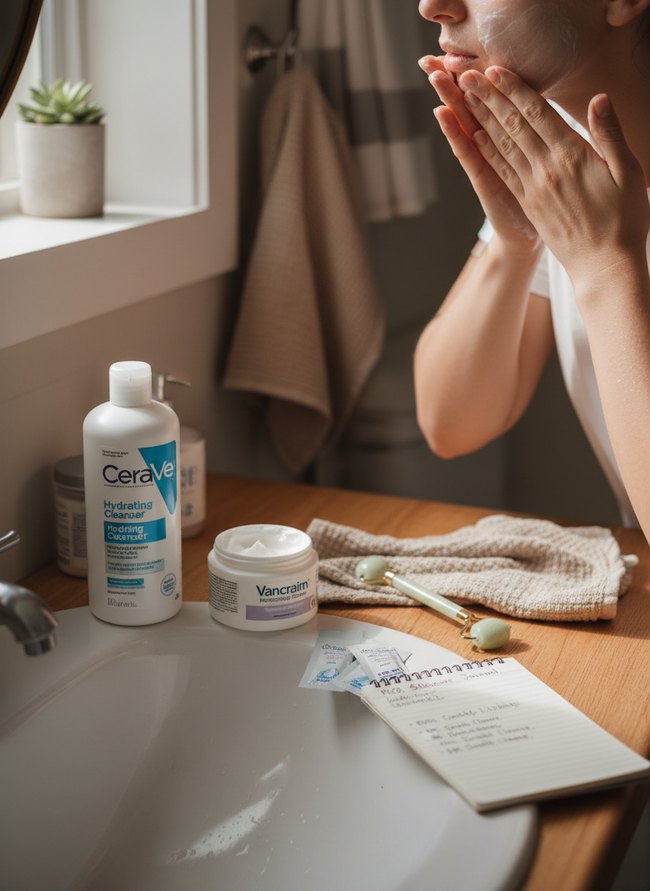
A person gently rubs white cream onto their face, showing a key PCOS skin habits step. A white bottle of hydrating cleanser sits next to a small white jar of cream on a light wooden counter. Always use soft, upward motions when applying products to delicate skin.
2. Anti-Inflammatory Diet Focus

A bright white tablet displays an article about soothing pcos skin habits, resting on a light wooden countertop. Several colorful bowls of food surround the tablet, including roasted vegetables and fresh berries. Daily meals should include many different colorful plants.
3. Stress Reduction Practices
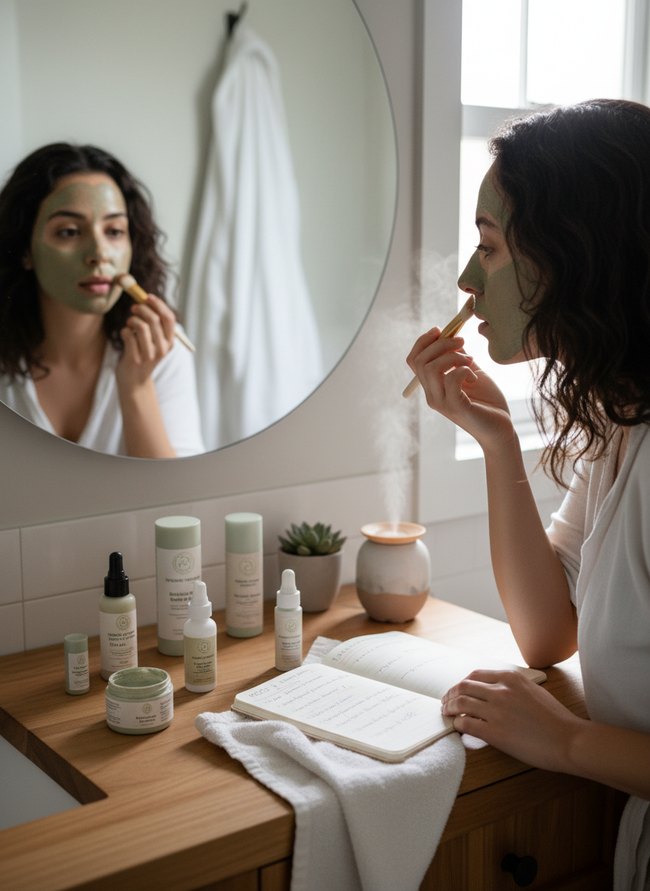
A woman applies a pale green clay mask to her face with a soft bristle brush. PCOS skin habits can include soothing skincare routines. A gentle face mask calms irritated skin.
4. Hormone Balancing Supplements
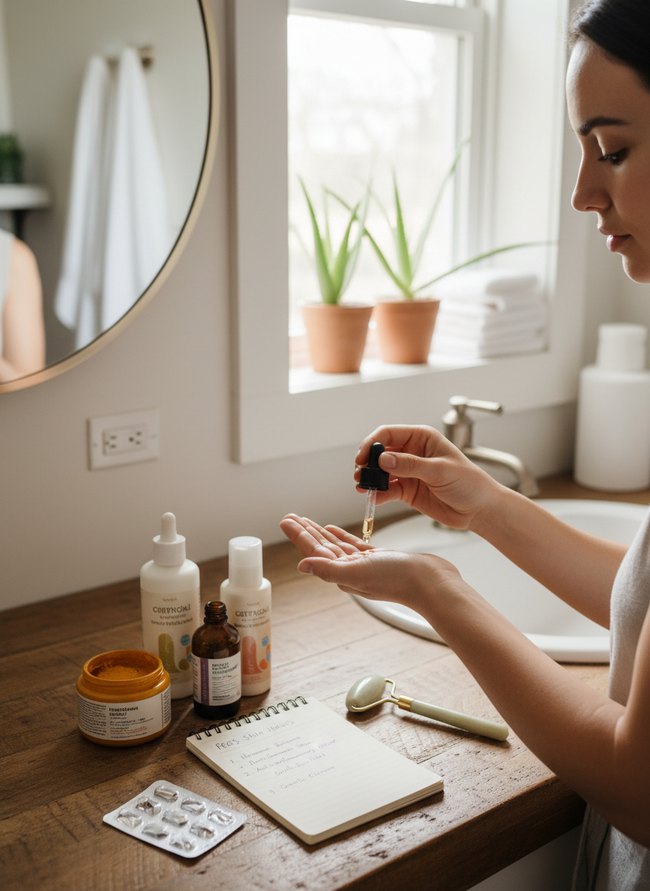
A woman’s hands carefully dispense a few drops of amber liquid from a glass dropper bottle into her open palm. The drops represent hormone-balancing supplements, a useful part of a PCOS skin habits routine. Look for supplements that support clear, healthy skin.
5. Regular Exercise Regimen
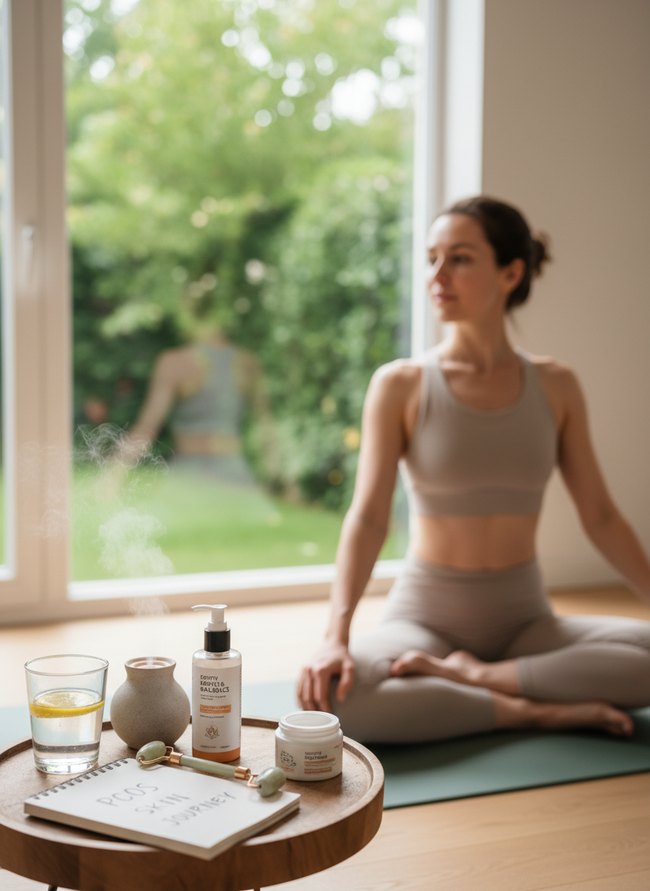
A woman sits cross-legged on a green yoga mat, wearing light beige workout clothes. Daily movement helps manage PCOS skin habits by reducing stress and improving blood flow. Consistent exercise routines promote better skin health.
6. Non-Comedogenic Product Use
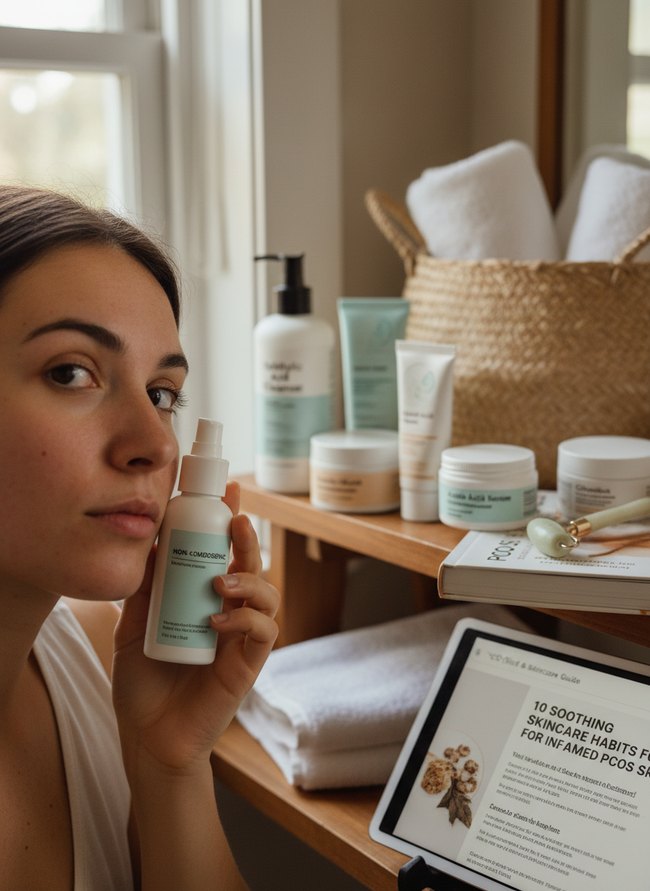
A woman holds a white bottle labeled “Non-Comedogenic” with a mint green strip near her face. The facial serum helps avoid clogged pores, which can worsen pcos skin habits. Shoppers should always look for products that say “non-comedogenic” to keep skin clear.
7. Consistent SPF Application
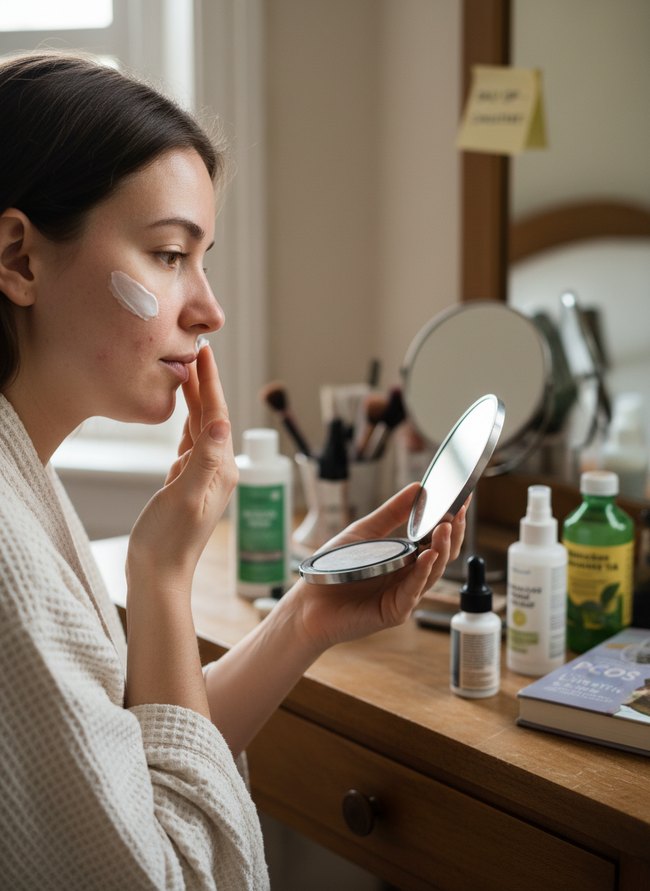
A woman applies thick white cream to her cheek and upper lip, using a small round mirror to guide her hand. Her PCOS skin habits should always include daily sunscreen, even on cloudy days. She must reapply the cream every two hours for strong protection.
8. Targeted Spot Treatments
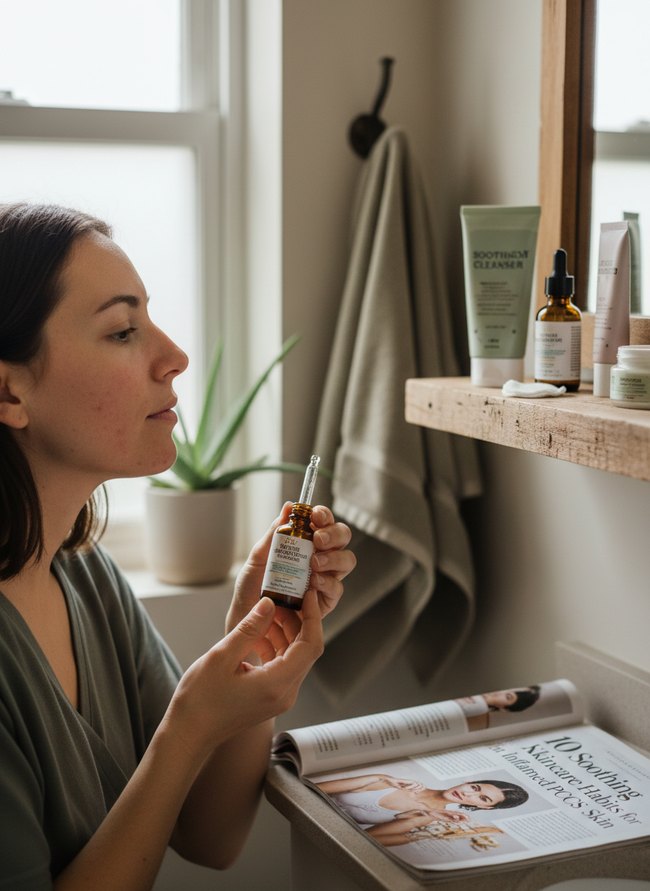
A woman with dark hair holds a small amber glass bottle with a clear dropper. She examines the white label on the bottle, preparing to apply a targeted spot treatment for her PCOS skin. Readers should choose a product with gentle ingredients to avoid further irritation.
9. Adequate Hydration Intake
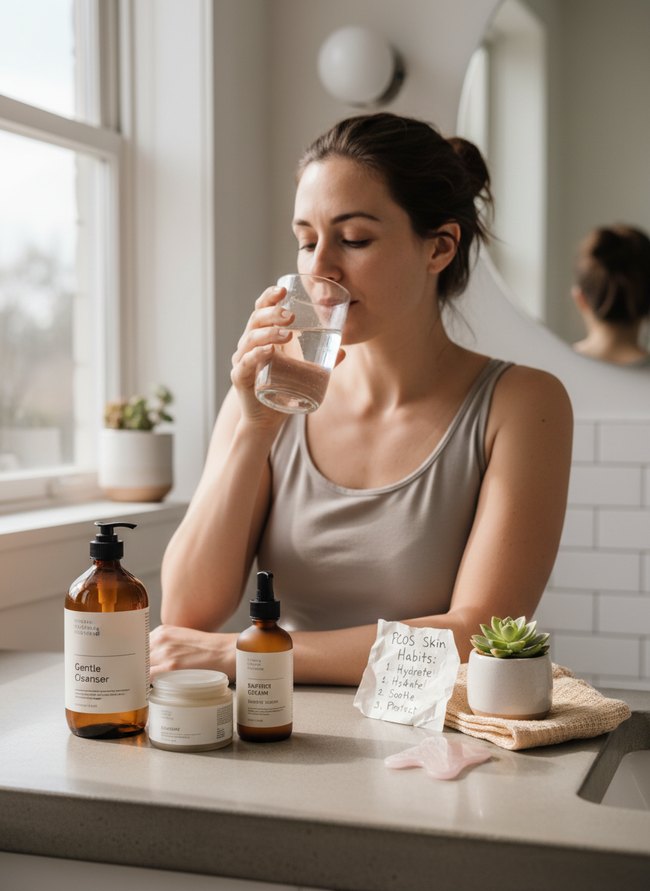
A woman sips clear water from a short glass, showing a simple way to hydrate the body. Drinking enough water supports healthy skin and overall well-being. Drink at least eight glasses of water every day.
10. Mindful Sleep Schedule
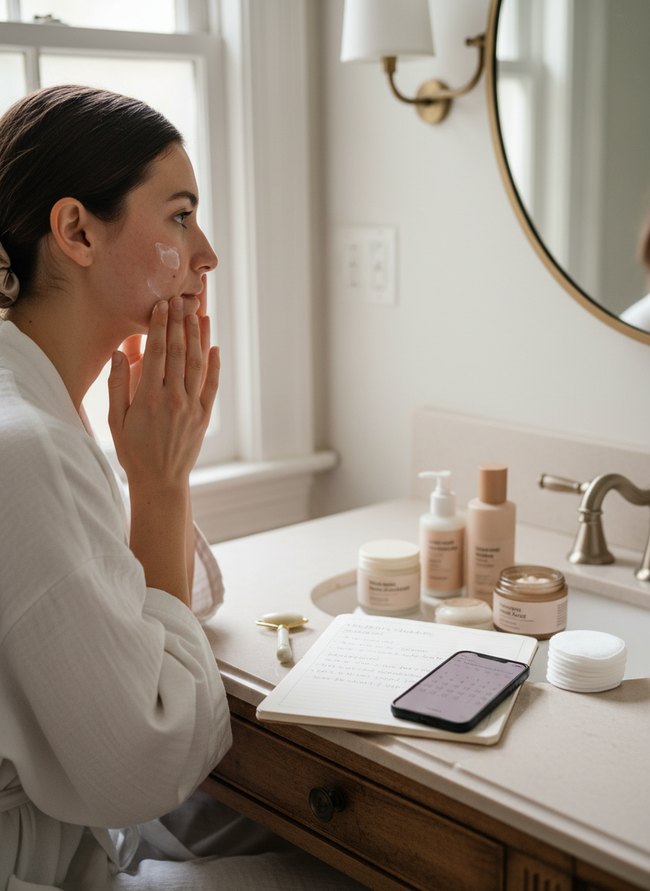
A woman gently applies white cream to her cheek, a key part of good PCOS skin habits. Her daily calendar on a black phone sits open on the light countertop, showing a clear plan. Your own bedtime routine must include a consistent sleep schedule; the schedule helps your skin heal overnight.
Beyond the Basics: Skincare Product Placement for Maximal Impact on PCOS Skin
Most people smooth a thin film of moisturizer onto their face, thinking more is better. That common mistake often leaves your inflamed skin feeling greasy and overwhelmed. Instead, you need to layer products with purpose for proper **PCOS skin** care.
Many women apply serums after their heavy creams. This common product order blocks the small molecules of your treatment serum from soaking deeply into your pores. A better method involves starting with a lightweight, water-based serum right after cleansing. Its clear liquid soaks into your warm skin. Then, you can press in a thicker, creamy moisturizer. This two-step process allows each product to work its own magic on your red skin.
Another usual habit involves rubbing creams vigorously into your skin. Aggressive motions can irritate already sensitive areas. Gently patting products onto your face with flat fingertips reduces redness and prevents pulling on delicate skin. Your fingertips apply a thin, even coating. This gentle touch helps your skin absorb the product without extra stress.
Decoding the Duds: How to Spot Ingredients That Secretly Sabotage Your PCOS Skin Efforts
Most people think “natural” means good for their skin, especially for managing PCOS skin issues. Many brands push plant extracts and essential oils as gentle solutions. However, a fuzzy gray patch on the ingredient list often hides problems.
Your skin often reacts poorly to common plant oils. Eucalyptus oil, a pale yellow liquid, can trigger intense redness. Lavender oil, a purple fragrant oil, frequently causes irritation. These strong plant oils worsen inflammation, a key problem with PCOS.
Other items, like thick mineral oil, trap dirt inside pores. Petrolatum, a waxy white substance, also clogs pores. These heavy ingredients create tiny blockades, leading to more breakouts. A clear, gentle cleanser helps remove impurities without stripping skin.
Even “non-comedogenic” labels on a sleek silver tube sometimes mislead. Companies can use a broad definition. You need to read every tiny word on the back of the bottle. Look for precise words like “fragrance-free” and “oil-free.”
Many believe active ingredients always help. Strong retinoids, a pale yellow cream, can cause dryness and flaking. This dryness sometimes makes your body produce more oil. Your skin then creates even more breakouts. A simple routine with fewer products often works best for calming inflamed skin.
Which Idea Will You Try First?
That’s 10 different takes on pcos skin habits. The best ideas above are usually the smallest moves — one material, one layout shift, one piece of furniture in the right place. Pick whichever room feels closest to your space and start there before tackling the rest.
Found an idea worth keeping? Save this post to your Pinterest board so it’s waiting for you when you’re ready to start your own project.