Why PCOS Causes Acne: A Beginner Friendly Explanation
The red mark on your chin feels like a cosmic joke. Your face shows a new crop of tiny bumps every morning. PCOS acne causes trouble, and plenty of women dealing with the condition feel like they’re fighting a losing battle against their skin. The stubborn spots and deep cysts are not random occurrences. A hormonal storm brews inside your body, sending signals that directly impact your complexion. The internal process drives the frustrating breakouts you see reflected in your bathroom mirror. Your body makes too many male hormones, prompting skin glands to overproduce thick oil. Hair follicles trap this sticky sebum and dead cells, creating perfect conditions for bacteria to thrive. The resulting inflammation leaves angry red pimples and painful bumps. We will peel back the layers on this common skin challenge.
1. Hormonal Imbalance Explanation
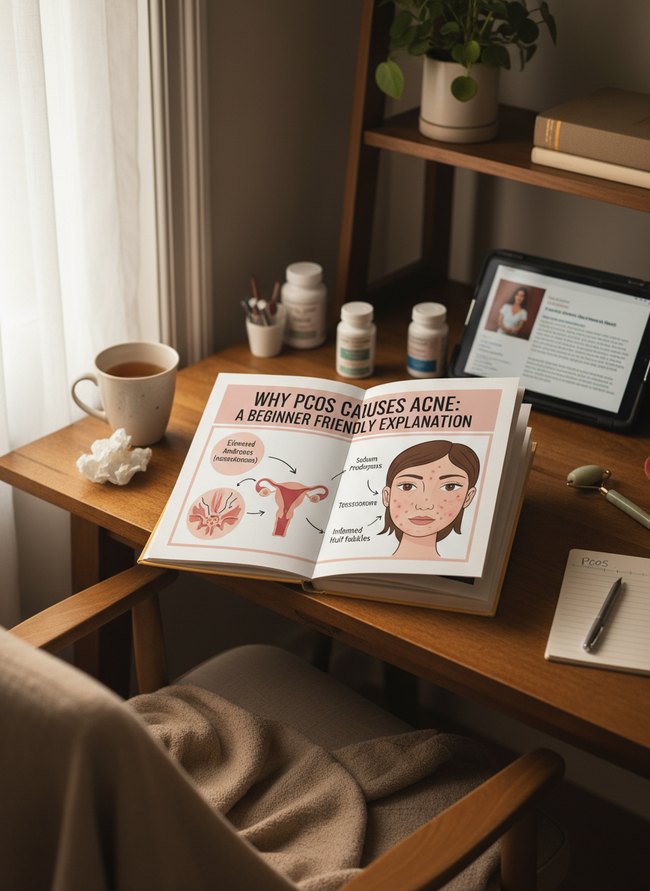
A large open book on a wooden desk clearly explains why PCOS causes acne with simple diagrams. The book shows how hormonal imbalance leads to inflamed hair follicles and skin breakouts. The visual guide helps you grasp the specific PCOS acne causes; focus on how your body’s internal systems contribute to acne.
2. Androgen Overproduction Clarity
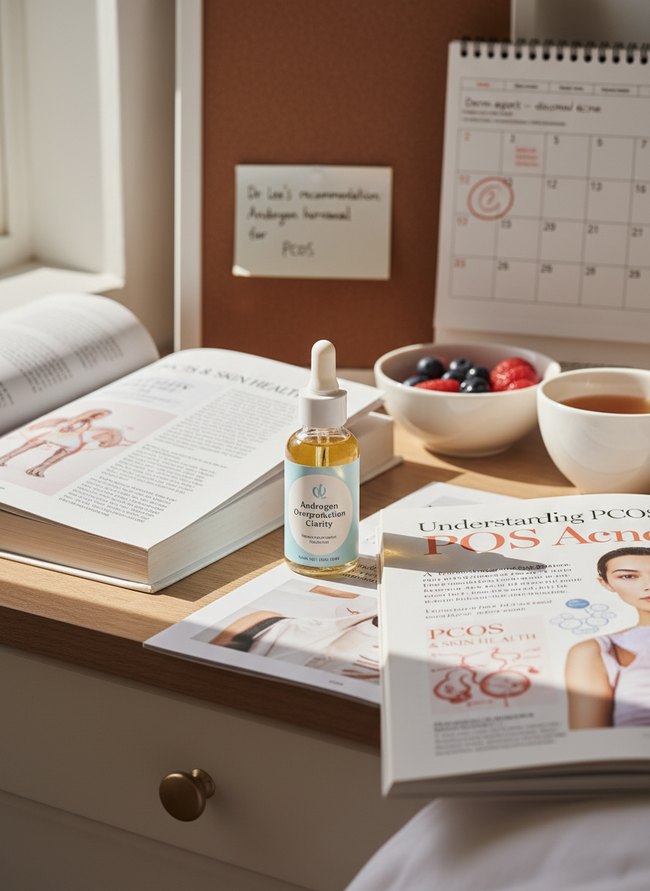
The small glass bottle of “Androgen Overproduction Clarity” serum stands on a light wooden desk, ready for use. The serum helps with PCOS acne causes by targeting extra androgen hormones. Always read the ingredients label on any new skincare product.
3. Insulin Resistance Overview
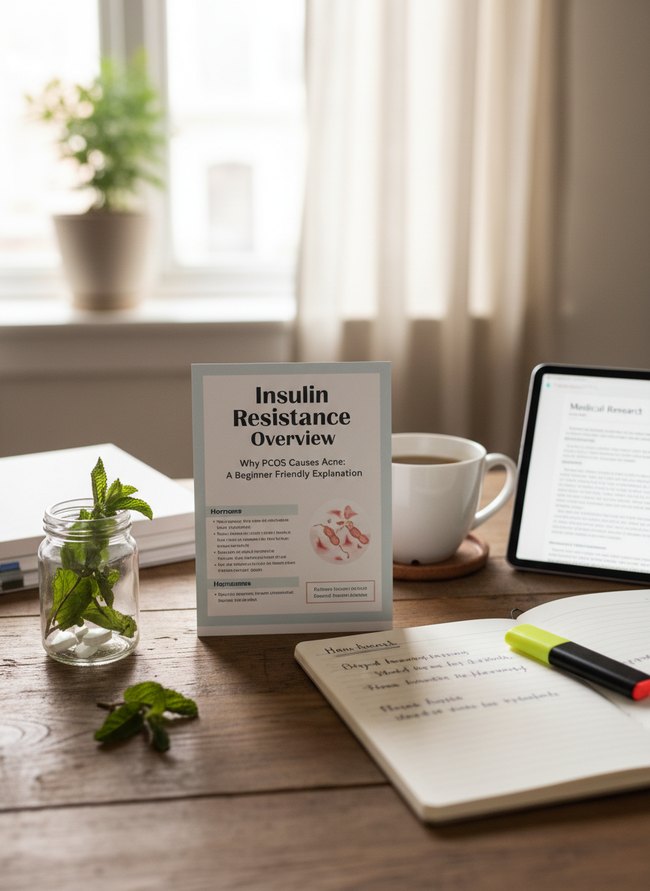
A white informational card clearly titled “Insulin Resistance Overview” stands upright on a rustic wooden table. The card explains how insulin resistance contributes to PCOS acne with clear, simple text. Understanding insulin’s role helps manage skin issues.
4. Inflammatory Response Breakdown
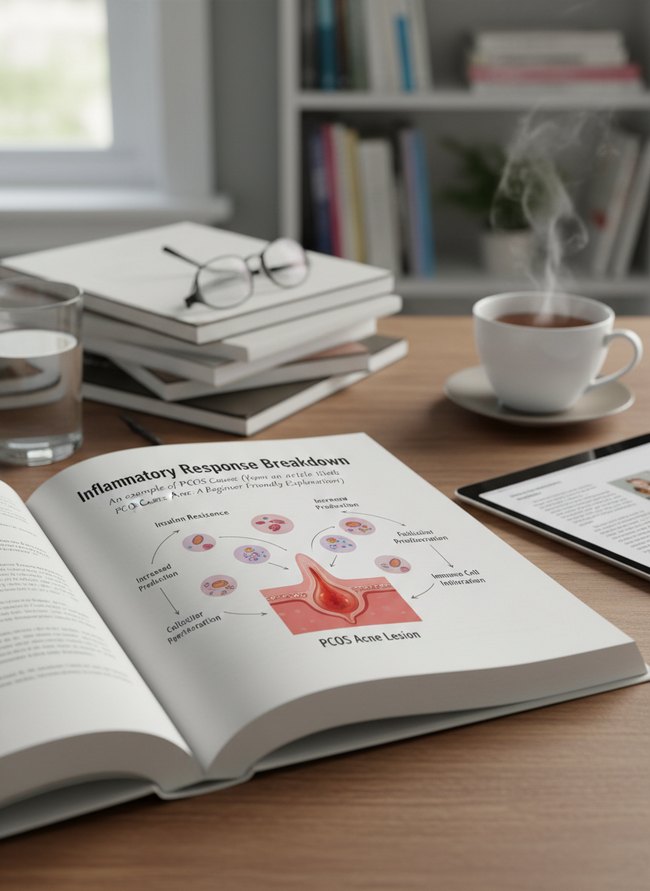
The open book shows a clear diagram explaining how PCOS acne causes an inflammatory response. The diagram illustrates the complex steps leading to a red, raised lesion on the skin. Understanding these pathways helps you target the root causes of your breakouts.
5. Sebum Production Increase
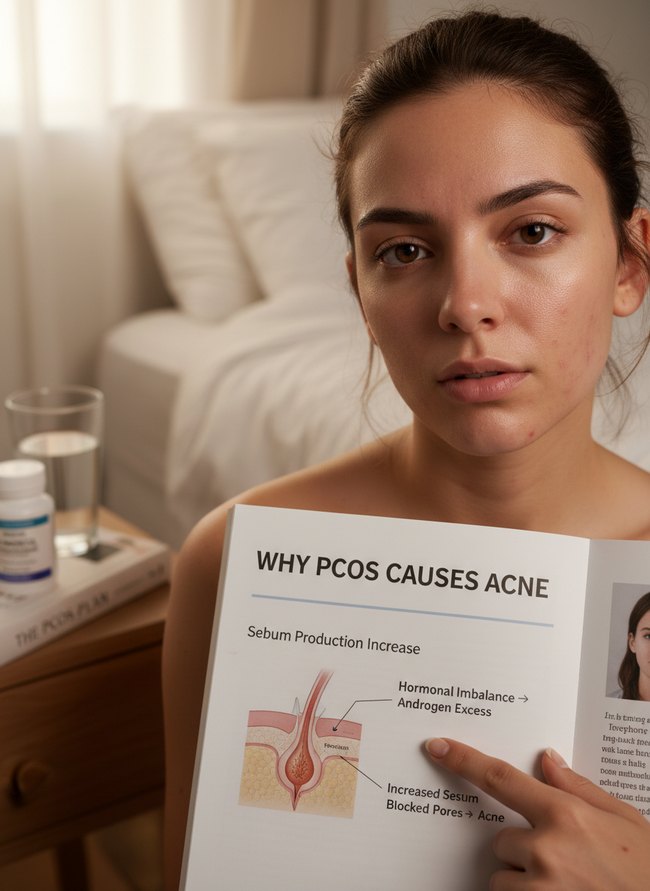
A page in the foreground shows a medical diagram detailing how sebum production leads to acne. The diagram illustrates increased sebum blocking pores and causing acne, a key aspect of PCOS acne causes. Hormonal imbalances can increase oil production on your skin.
6. Follicular Hyperkeratinization Insight
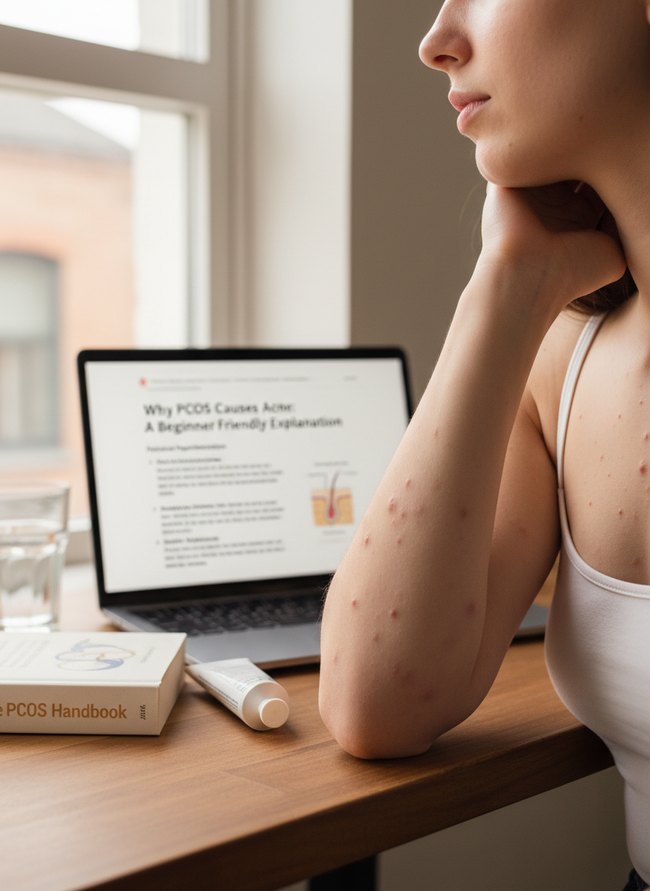
The young woman’s bare arm shows many small red bumps on her skin. The bumps illustrate a common symptom of PCOS acne, often appearing on upper arms and chest. Affected skin needs gentle care to avoid making the bumps worse.
7. Genetic Predisposition Factors

A white open textbook displays a bold title, “Why PCOS Causes Acne: A Beginner Friendly Explanation,” under warm afternoon sunlight. The book shows how PCOS acne links to genetic predisposition factors, explaining hormonal imbalance and insulin resistance. Your family history can play a role in developing these skin issues.
8. Stress Impact Connection
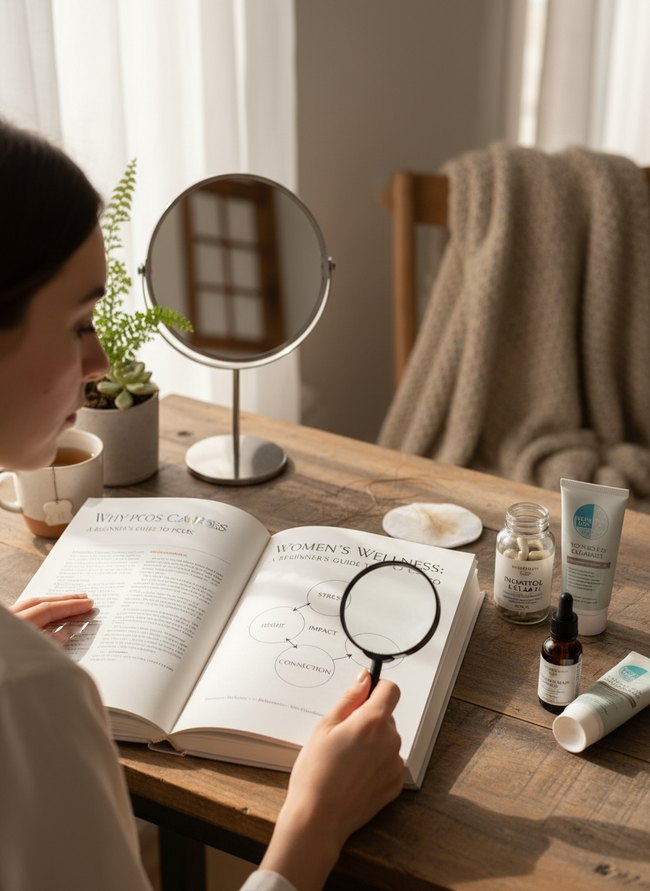
A person reads an open book titled “Why PCOS Causes,” focusing on a diagram about stress, impact, and connection. Recognizing the link between stress and PCOS acne helps manage outbreaks. Daily pressures affect your body.
9. Dietary Influence Explanation
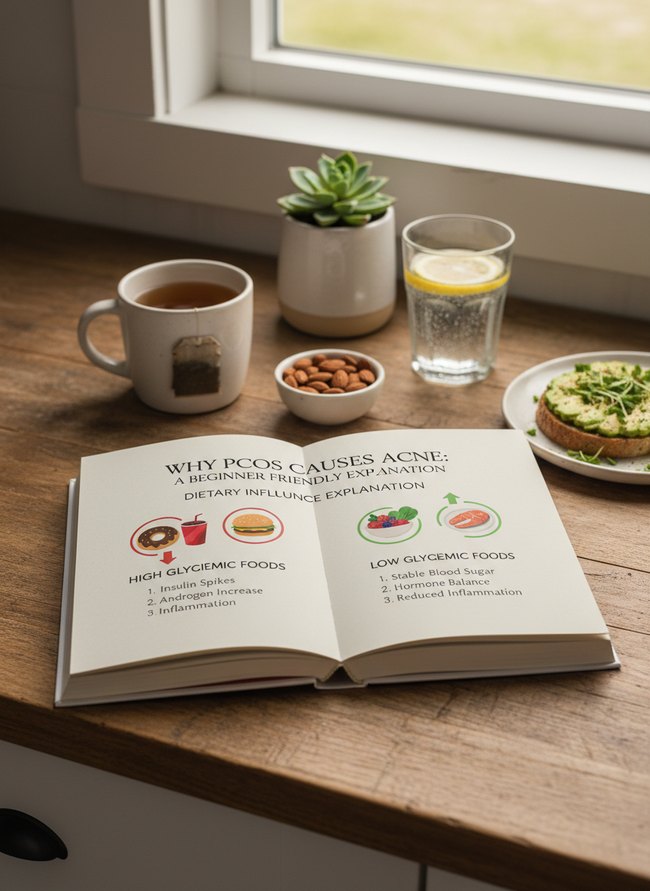
The open white book clearly explains how different food types relate to PCOS acne causes. One page shows high glycemic foods like a donut and burger cause insulin spikes and inflammation. The opposite page suggests low glycemic foods such as berries and salmon promote hormone balance and reduce inflammation. Whole, unprocessed foods help manage skin health.
10. Gut Microbiome Role
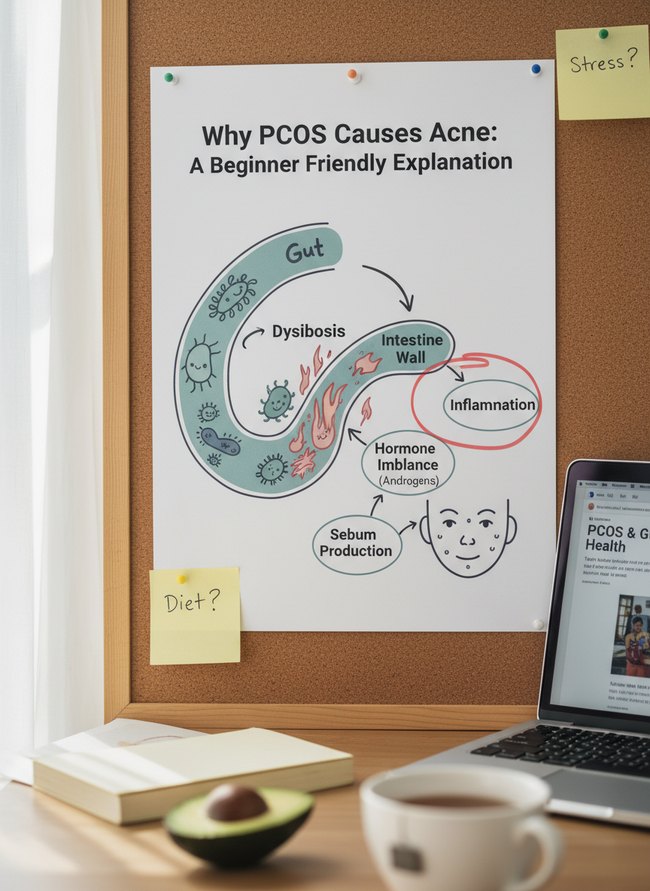
A detailed cork board diagram clearly illustrates the link between gut health and acne. The diagram shows how gut dysbiosis, an imbalance of gut bacteria, can lead to inflammation and hormone imbalance, both key pcos acne causes. A varied, whole-food diet supports a healthy gut microbiome.
11. Environmental Toxin Link
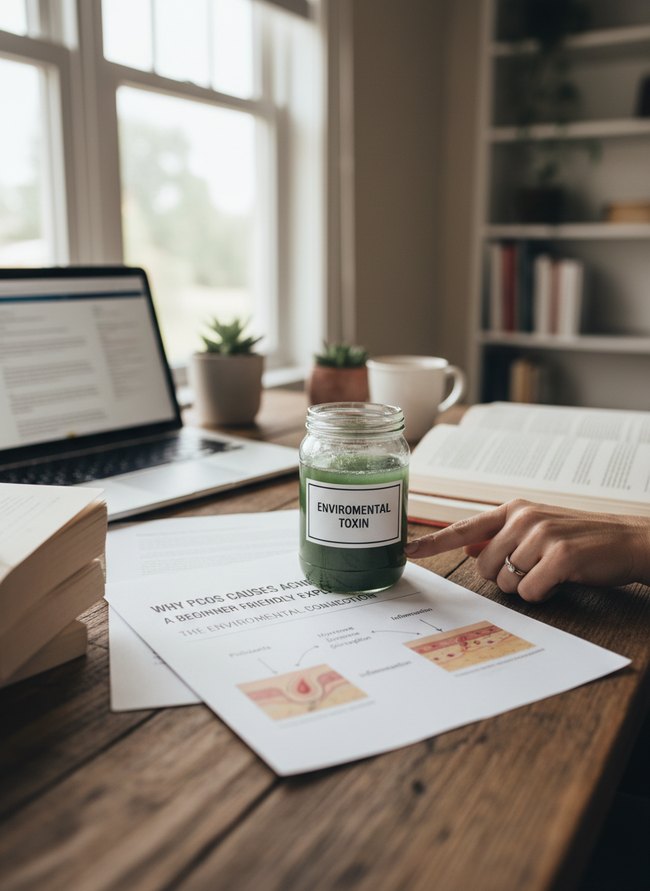
A clear glass jar, filled with dark green liquid, sits on a wooden desk. A white label on the jar clearly states “ENVIRONMENTAL TOXIN,” pointing to a significant factor in PCOS acne causes. Daily products may contain hidden toxins that affect skin health.
12. Medication Induced Factors
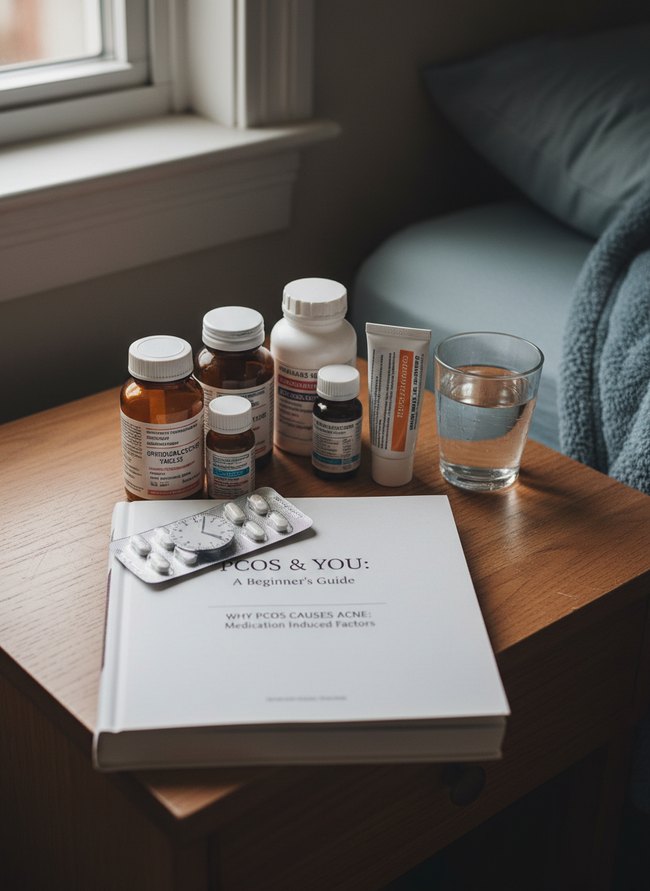
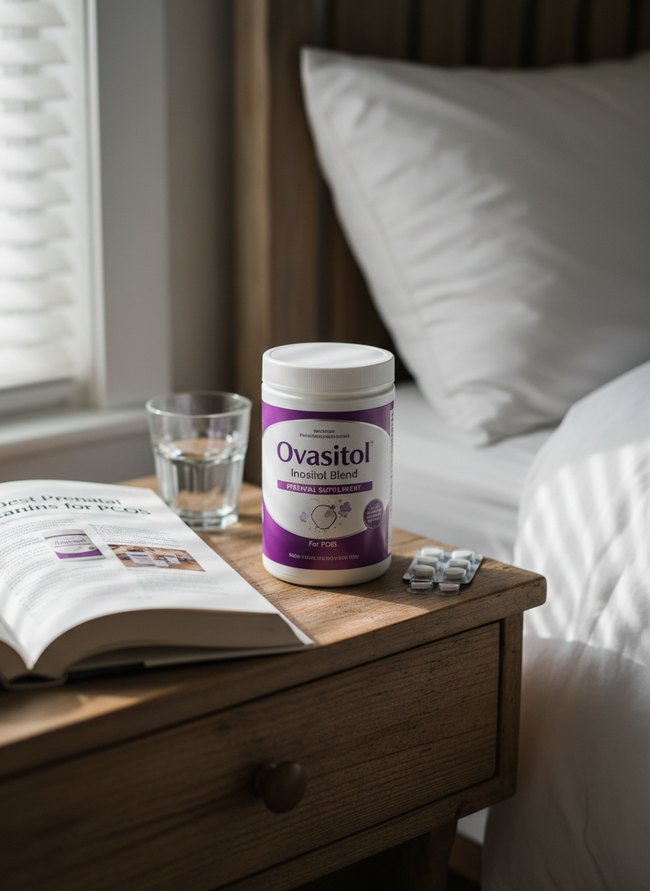
Several amber and white pill bottles stand on a warm brown wooden nightstand beside a clear glass of water. A white book titled “PCOS & YOU: A Beginner’s Guide” sits on the nightstand, explaining that medication can cause PCOS acne. Patients should always discuss new or worsening acne with their doctor if they take daily medication.
My Skincare Routine is Top-Notch, So Why Is My Skin Still Breaking Out with PCOS?
Most people believe a clean face is all it takes for clear skin. Your daily foaming cleanser and blue glass serum might keep surface dirt away. However, acne with PCOS often comes from deeper issues, like elevated androgen hormones. These invisible chemical signals tell your oil glands to churn out thick sebum. Many folks attack surface pimples with harsh charcoal masks. That strategy strips natural oils, making your skin feel dry and tight. A better approach involves tackling the root cause inside your body. Doctors often suggest spironolactone pills or birth control to calm those overactive hormones. You might also consider adding spearmint tea, two cups daily, which some studies link to lower testosterone levels. Focus on internal balance for long-term improvement, not just external scrubbing. A truly effective plan for PCOS acne means looking beyond just your bathroom counter.
I’ve Tried All the Spot Treatments – What Am I Missing About PCOS Acne?
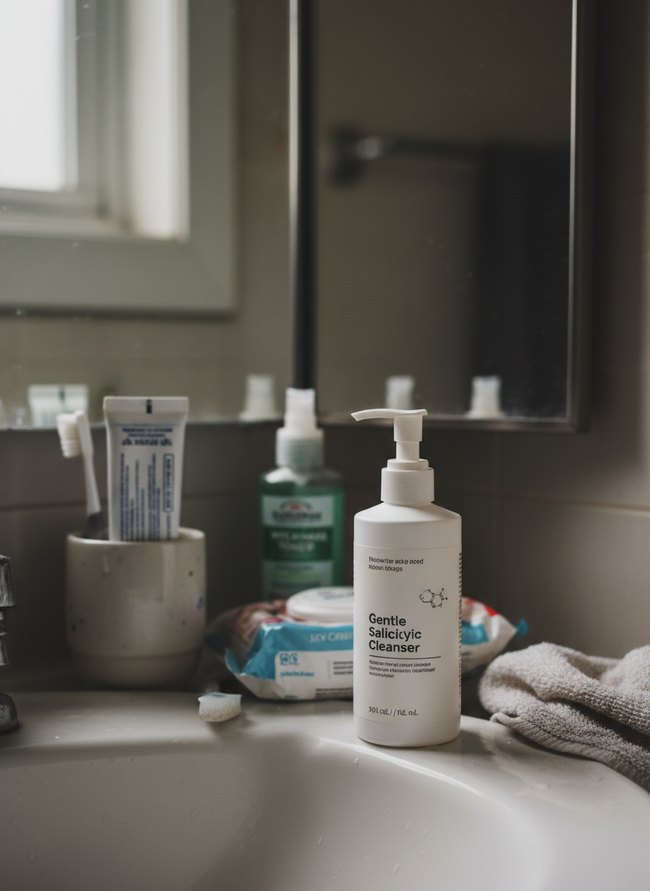
A shiny chrome faucet might suggest a quick fix for your skin troubles. Many people dab thick creams on their red pimples, believing surface treatments solve the problem. Those tiny white dots sometimes need more than just topical care. You see a fiery red bump, you grab the smallest tube of salicylic acid. This common approach misses a deeper issue in PCOS acne.
Most drugstore products target bacteria on the skin’s top layer. Your skin’s actual challenge often comes from inside your body. High androgen levels, like testosterone, boost oil production in your sebaceous glands. This excess oil then clogs pores and creates angry bumps. A silver framed mirror shows breakouts that keep coming back. Spot treatments offer a fleeting moment of calm. True skin improvements begin with balancing those internal hormones. Consider a diet low in processed sugars. You could try spearmint tea, a light green liquid, to help calm androgen activity. Your doctor can discuss medical options too, like spironolactone pills. These small white tablets block androgen receptors. Addressing your hormones brings lasting change.
Which Idea Will You Try First?
That’s 12 different takes on pcos acne causes. The best ideas above are usually the smallest moves — one material, one layout shift, one piece of furniture in the right place. Pick whichever room feels closest to your space and start there before tackling the rest.
Found an idea worth keeping? Save this post to your Pinterest board so it’s waiting for you when you’re ready to start your own project.