What a Fertility Friendly Day Looks Like With PCOS
A simple wood bedside table often holds more than just a glass of water for many women. Most online articles on fertility routines completely miss the layered daily actions involved when managing Polycystic Ovary Syndrome (PCOS). The pieces often suggest a single magic bullet, ignoring the interconnected web of choices that shape a woman’s health. Daily choices, from the soft morning light entering your bedroom to the warm herbal tea in your ceramic mug, significantly impact your body’s complex systems. The article outlines the deliberate, small steps that contribute to a supportive fertility routine with PCOS. A detailed daily structure helps regulate the hormonal imbalances that PCOS often creates. Each subsequent section below details a specific part of a day, showing how mindful living can build a stronger foundation.
1. Mindful Morning Ritual
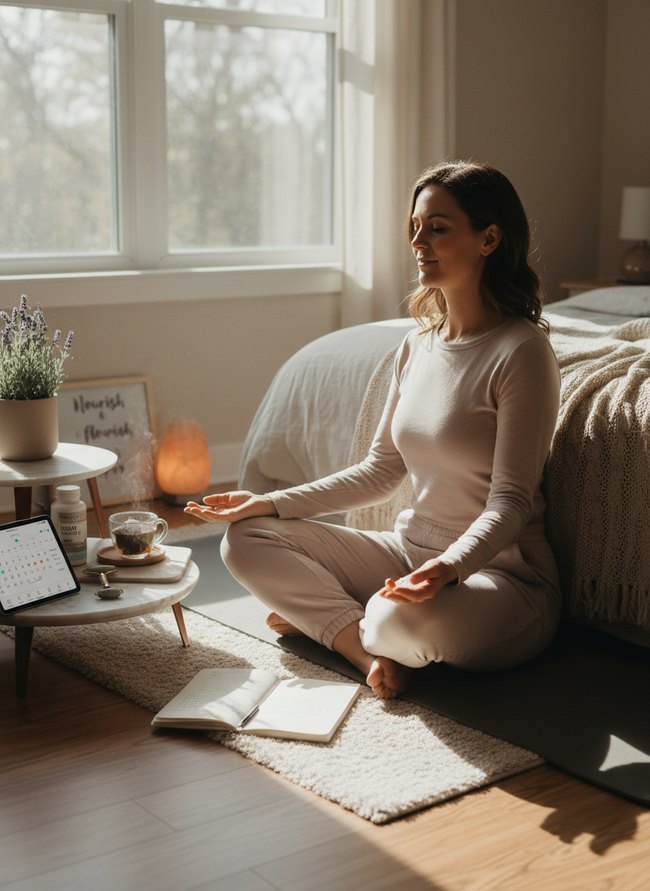
A woman sits cross-legged on a dark green yoga mat, embodying a mindful fertility routine. Warm morning sunlight streams through a large window, illuminating her light-colored clothing and the small marble side tables beside her. A clear glass teacup steams on a small wooden coaster, complementing a white bottle of supplements and a glowing orange salt lamp. Prioritize creating a dedicated, peaceful space for your daily mindful practice.
2. Balanced Breakfast Planning
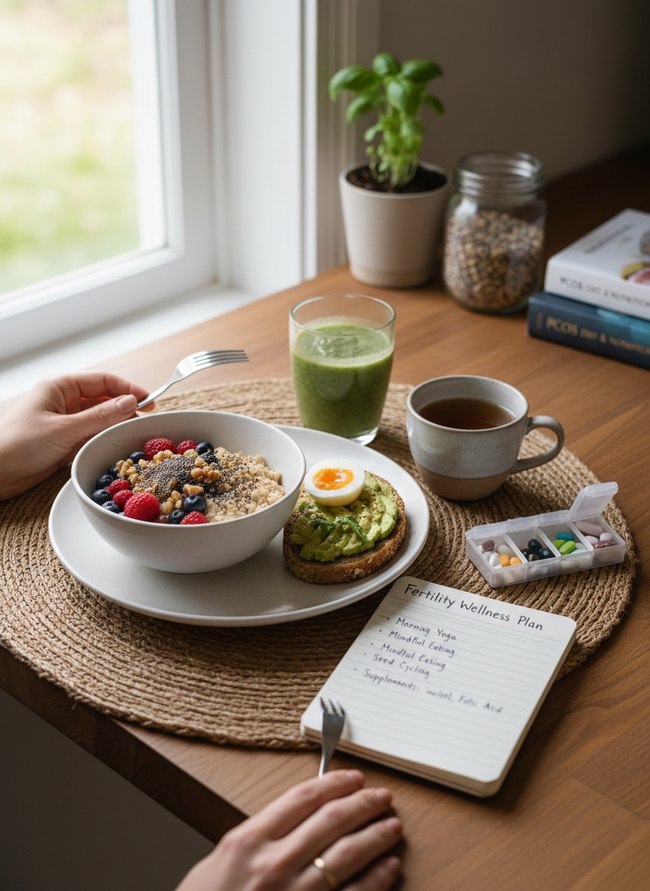
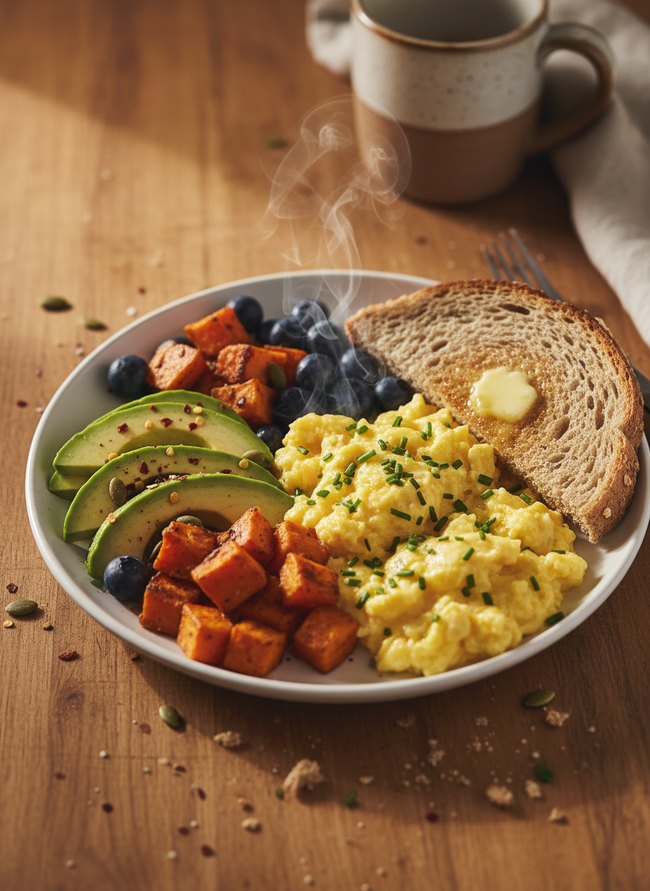
The small notepad with “Fertility Wellness Plan” clearly written out makes the pcos fertility routine actionable and visible. A clear plastic pill organizer filled with colorful supplements and a book titled “PCOS Diet & Nutrition” nearby reinforce the dietary focus. A woven jute placemat grounds the varied breakfast items, offering a simple texture. Steal the written plan for your own balanced breakfast planning.
3. Gentle Movement Practice
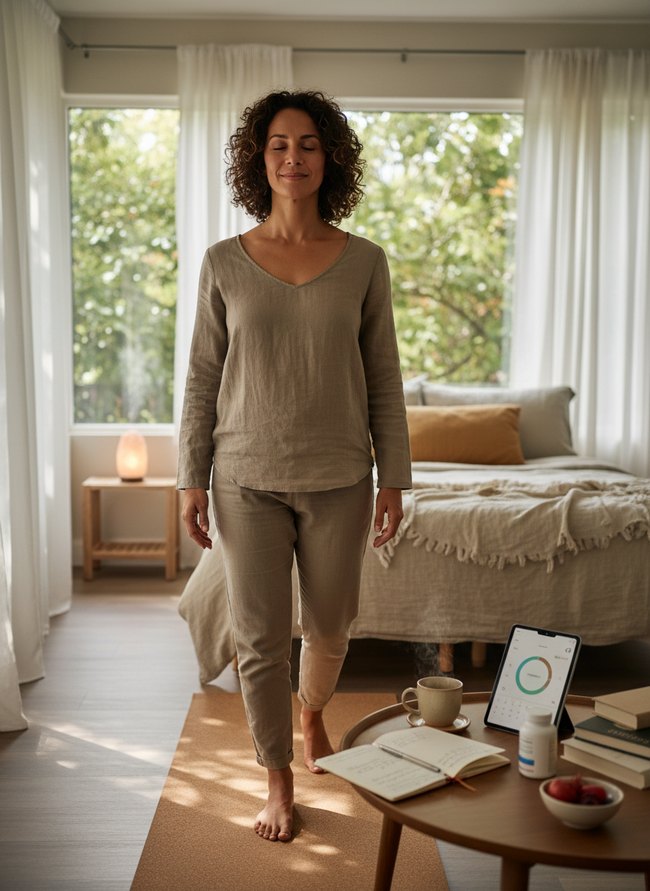
A cork yoga mat defines a peaceful zone for a gentle fertility routine. The clear physical boundary helps you focus on mindful movement. A light linen outfit and soft white curtains create a calm backdrop. You should steal the idea of using a dedicated mat to mark your movement space.
4. Stress Reduction Meditation
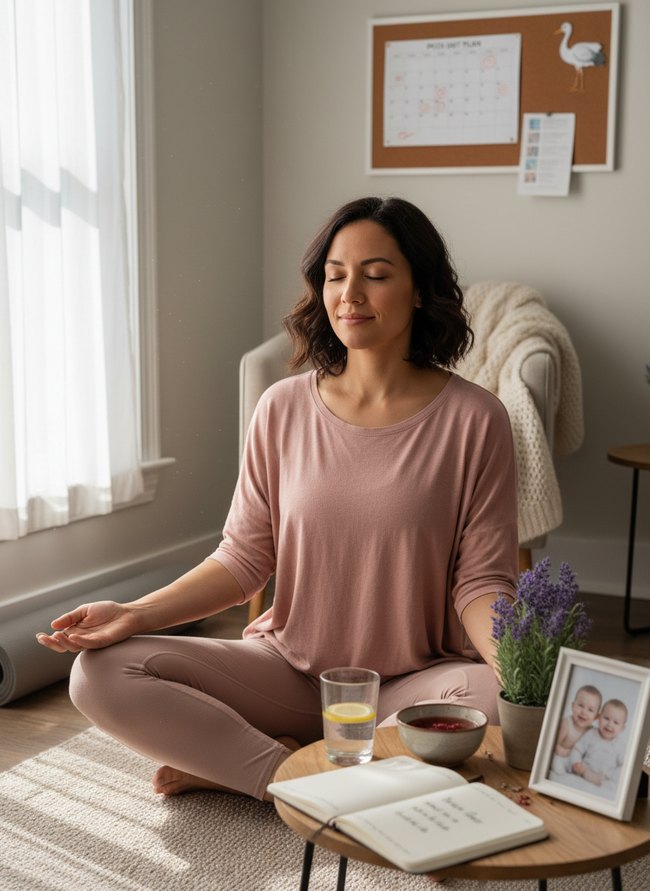
The woman’s calm posture and closed eyes demonstrate a simple stress reduction meditation, a key part of a fertility routine. Her soft pink loungewear creates a relaxed visual, suggesting comfort during this quiet time. A small lavender plant on the round wooden table adds a touch of natural peace to the scene. The focused stillness is the primary success of this moment.
5. Nutrient-Dense Meal Prep
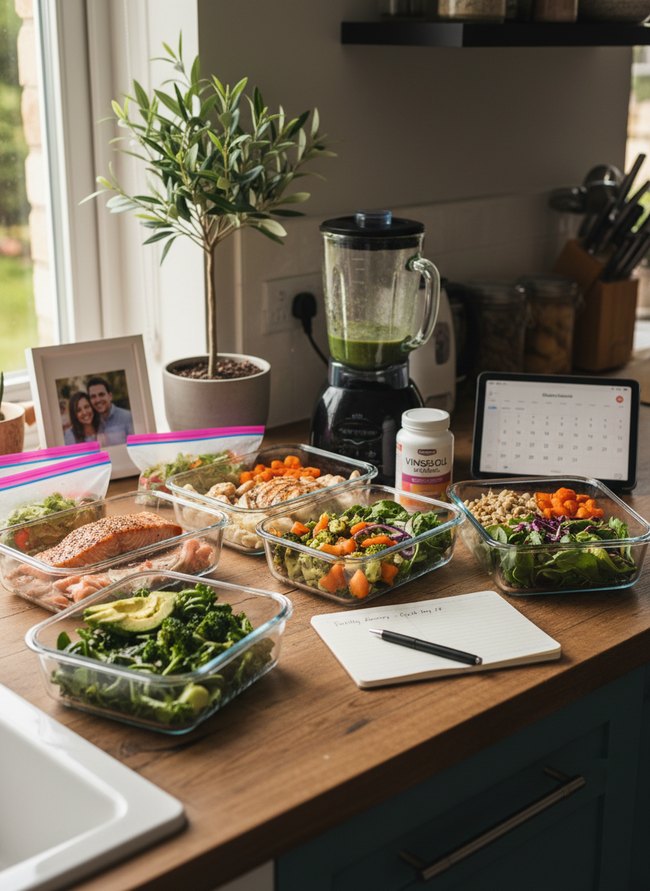
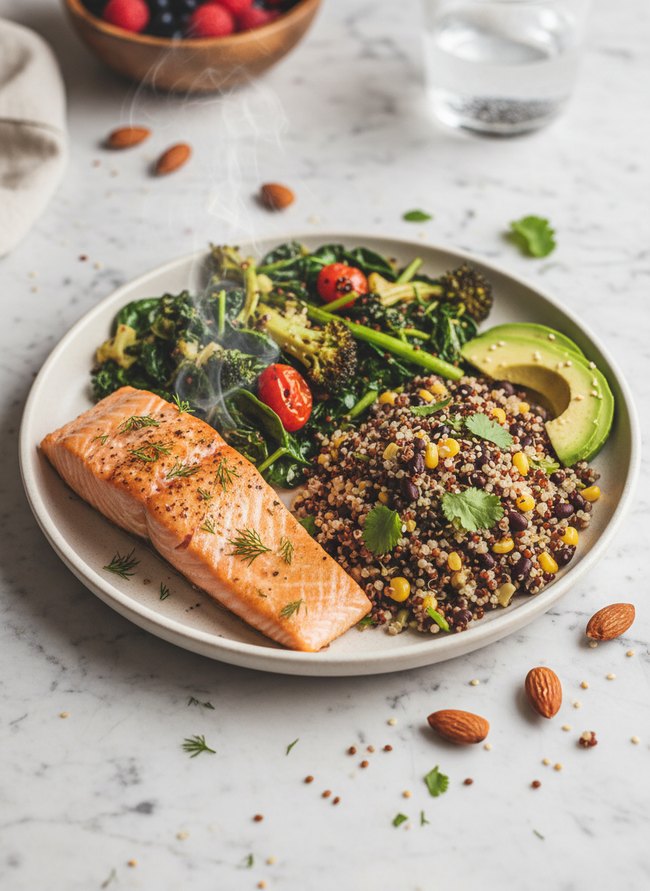
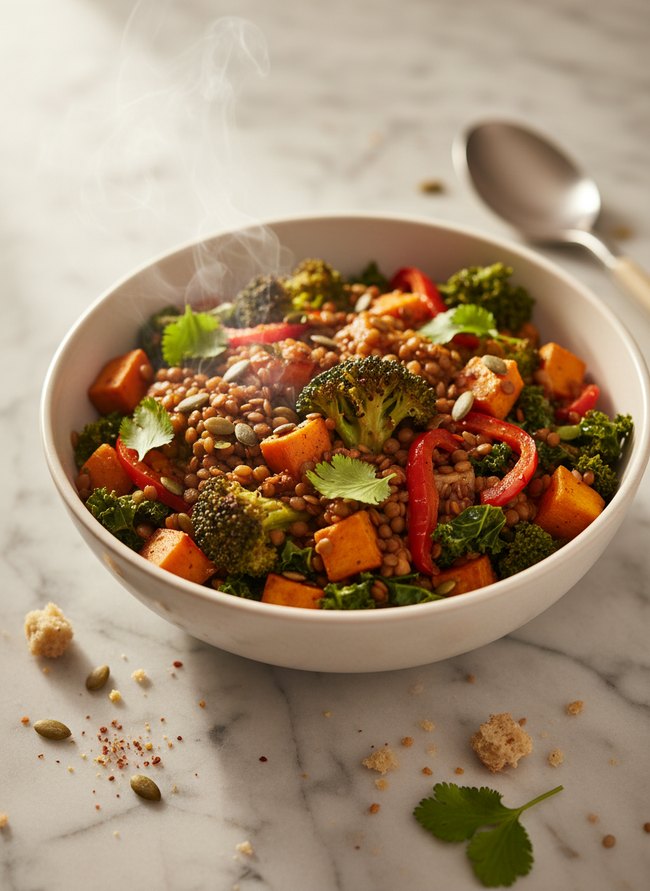
Glass containers clearly display each nutrient-dense meal, making healthy choices easy to grab. Colorful vegetables and lean proteins are quickly visible, which helps you stick to your fertility routine pcos plan. A small white notebook and black pen on the warm wooden countertop offer space for logging daily food intake. The clear food storage offers visual accountability.
6. Evening Wind-Down Routine
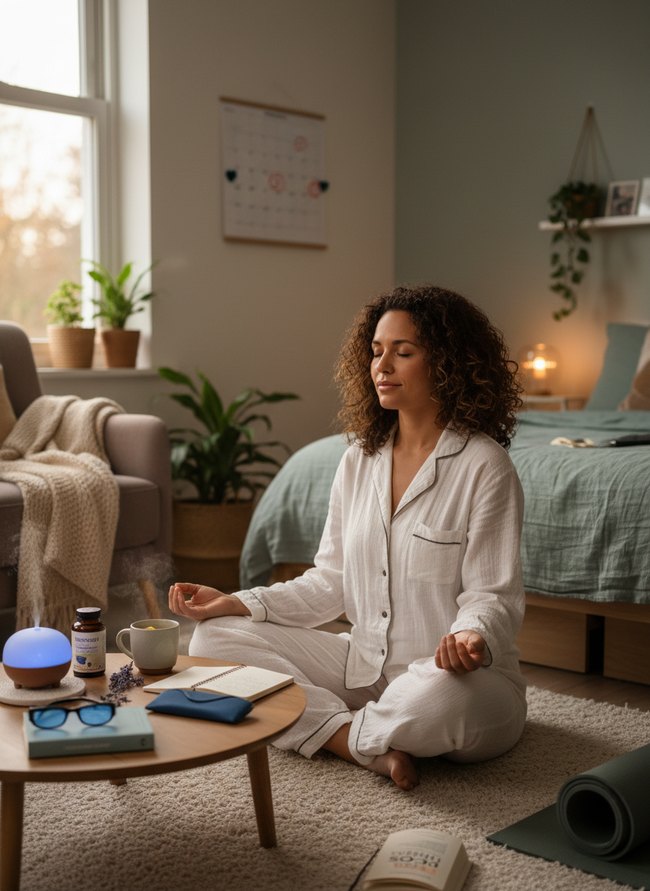
A light blue diffuser on a wooden coaster creates a calming visual element. A person in white cotton pajamas sits on the cream shag rug, meditating next to a small wooden coffee table. The fertility routine pcos setup includes a warm tea mug and a journal, promoting a peaceful evening wind-down. Copy the intentional use of soft, ambient lighting.
7. Supplement Integration Strategy
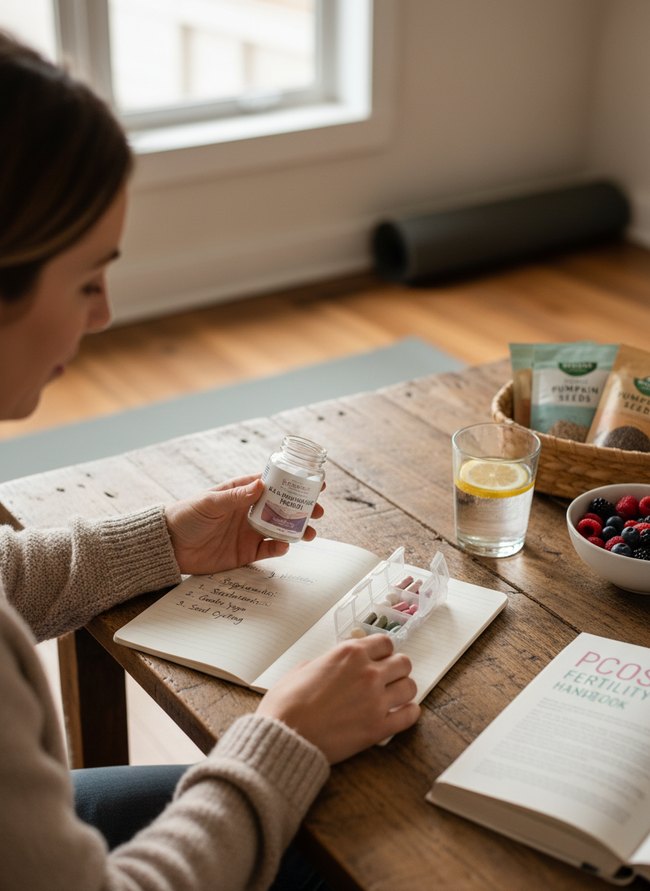
A clear daily pill organizer makes tracking fertility routine PCOS supplements simple. A small white bowl filled with dark berries and a tall glass of lemon water offer healthy food and drink options. Readers can easily adapt this organized approach for their own daily supplement regimen.
8. Sleep Hygiene Focus
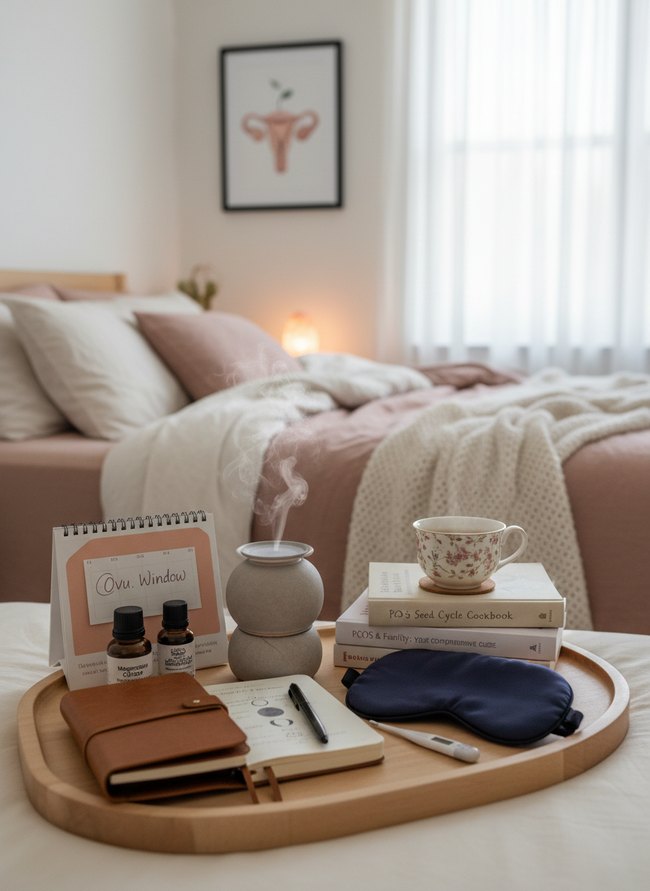
A soft, warm bedside lamp creates a calming glow, signaling nighttime rest. A ceramic diffuser releases gentle steam, setting a tranquil mood for your fertility routine. A dark blue sleep mask and a personal journal sit nearby on a wooden tray, ready for peaceful slumber.
9. Hydration Tracking Habit
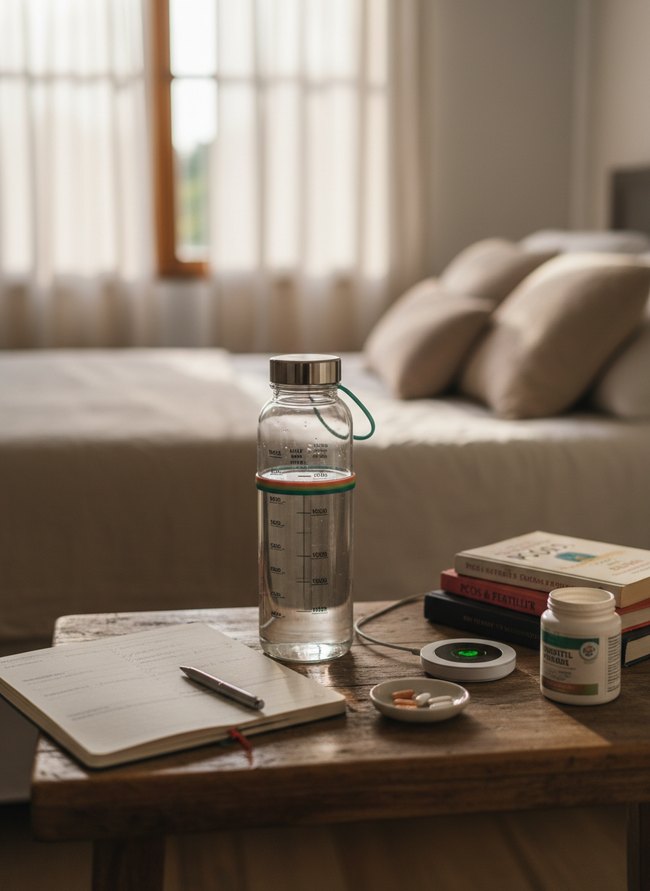
A clear glass water bottle with measurement markings stands prominently on the light brown wooden table. The visible hydration tracker keeps daily water intake top of mind for a fertility routine. A small white dish holds a few colorful pills, while a thick white supplement bottle and two thick books rest nearby. You should steal the idea of placing the water bottle front and center.
10. Mind-Body Connection Affirmations
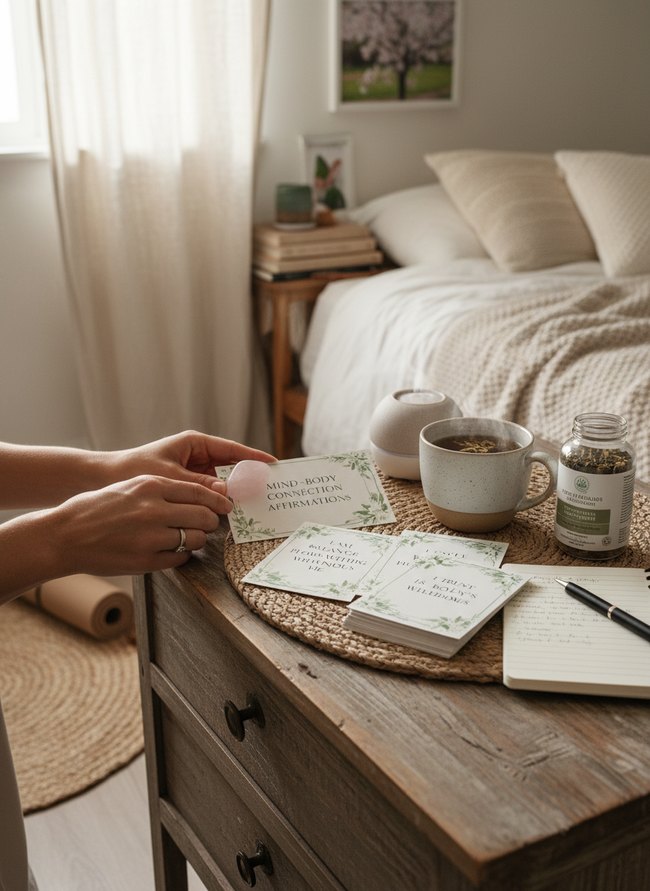
Small affirmation cards, set on the woven jute mat, create a focused space for a fertility routine. Green-bordered cards, paired with a speckled ceramic mug and clear glass jar of tea, promote a calm, centered mindset. A light pink rose quartz crystal, held above one card, adds a soft, spiritual element to the scene. Steal the dedicated ritual space.
11. Cycle Awareness Journaling
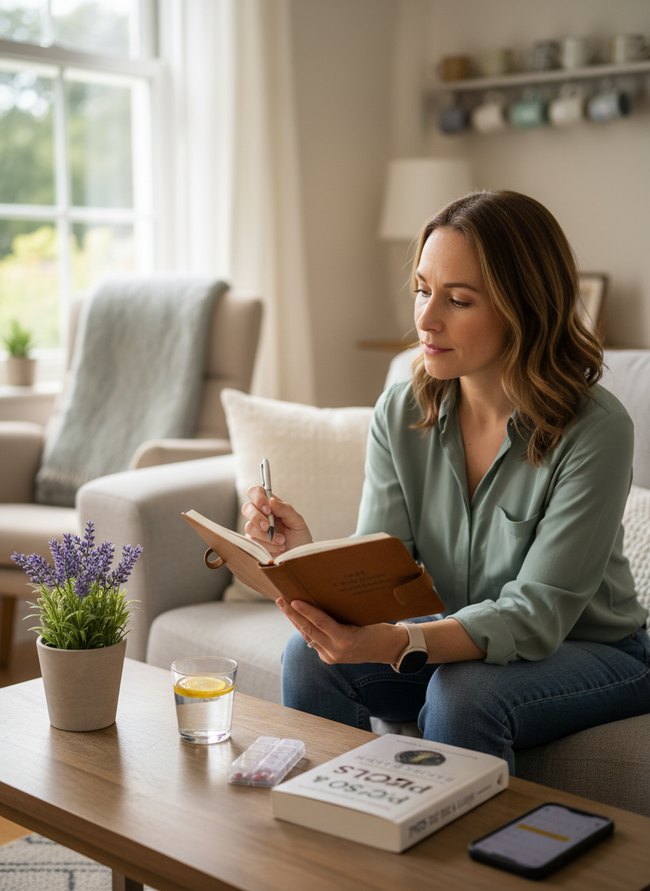
The woman holds a brown leather journal, actively writing in it, which illustrates the core concept of cycle awareness journaling for a fertility routine for PCOS. Her calm posture and the natural light from the large window suggest a peaceful, consistent practice. A white book titled “PCOS & PREGNANCY” rests on the wooden coffee table, providing additional context for the fertility routine. Reclaim dedicated journaling time.
12. Scheduled Relaxation Breaks
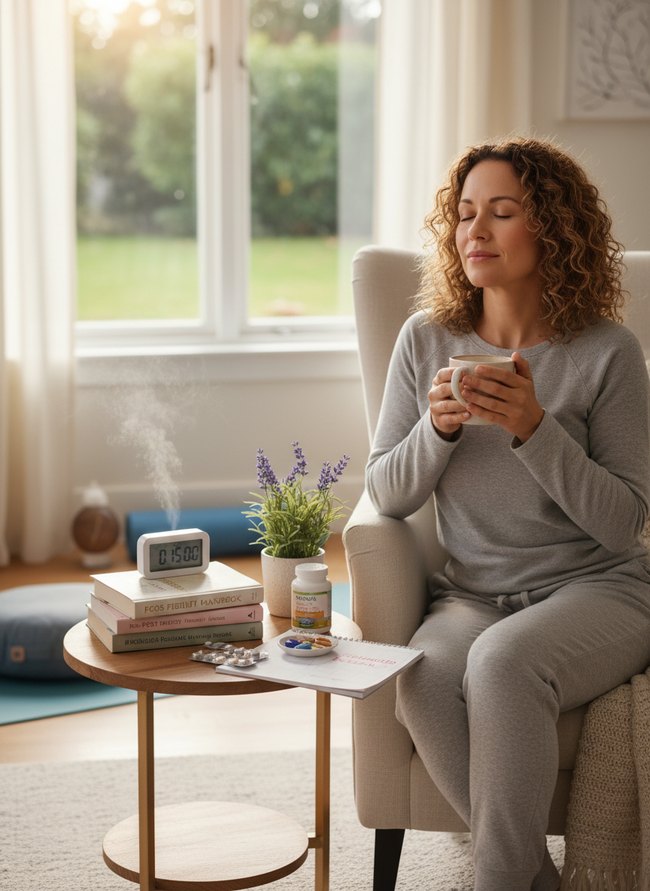
A visible timer on the small, round wooden table clearly sets a dedicated fifteen-minute relaxation period. The specific cue helps build a consistent fertility routine by creating a clear boundary for rest. A white ceramic diffuser gently releases mist, and a small potted lavender plant adds a calming green detail. The timer is the key takeaway here.
The ‘Chronobiotic’ Kitchen: Optimizing Meal Timing for Circadian Regulation in PCOS Management
Meal timing directly influences the body’s internal clock and impacts hormone levels for women with PCOS. A round copper clock, with bold black numbers, hung above a clean oak breakfast nook, visually reinforces this idea. Skipping breakfast or eating dinner late disrupts natural circadian rhythms, making hormone regulation harder. Many women with PCOS find that eating regular, balanced meals throughout the day supports steadier blood sugar and insulin levels. Think of a long maple countertop holding three glass jars, one filled with oats, another with mixed nuts, and the third with dried berries, showing good breakfast ingredients. Erratic eating patterns, like grabbing a honey-toned granola bar at noon then eating a large meal at 10 PM, send mixed signals to your endocrine system. A consistent meal schedule, perhaps with a small, waist-high pantry door opening to reveal neatly stacked ceramic bowls and whole grain pasta, helps your body anticipate nutrient intake. This predictability aids in managing the hormonal imbalances often seen in PCOS management. Your body thrives on routine, much like a well-oiled machine.
Mitochondrial Bioenergetics and Targeted Supplementation: A Deep Dive into CoQ10 and Myo-Inositol Efficacy
Mitochondrial health directly impacts fertility, especially with PCOS. Tiny cellular powerhouses inside egg cells need specific fuel to work their best. A golden CoQ10 capsule, a daily ritual for many, directly supports these energy factories. Myo-inositol powder, a fine white dust mixed into morning water, helps cells use insulin better. This improved insulin action gives mitochondria the energy they need.
Many people overlook this cellular foundation. They might focus on broad dietary changes without targeting these microscopic workers. A well-placed supplement bottle on a honey-toned wooden counter reminds you of your daily intake. Myo-inositol specifically helps regulate blood sugar, a common issue for many women with PCOS. Poor mitochondrial function means less energy for egg development.
Healthy mitochondria contribute to better egg quality. These small organelles, with their folded inner membranes, power the complex process of cell division. Your daily fertility routine for PCOS, featuring these targeted supplements, builds a strong internal environment. This focused approach, like a carefully chosen heirloom quilt, provides comfort and function.
Which Idea Will You Try First?
That’s 12 different takes on fertility routine pcos. The best ideas above are usually the smallest moves — one material, one layout shift, one piece of furniture in the right place. Pick whichever room feels closest to your space and start there before tackling the rest.
Found an idea worth keeping? Save this post to your Pinterest board so it’s waiting for you when you’re ready to start your own project.