How to Track Ovulation With PCOS Even With Irregular Cycles
A brass compass sits on the dark wooden desk, pointing toward different paths for a fertility journey. Some women want detailed data, embracing daily routines for a clearer picture of their cycle. Others seek simplicity, preferring less frequent checks for a calmer approach to PCOS ovulation tracking. Each method offers a unique balance between effort and insight for women with irregular cycles. Your choice reflects your priorities for personal time and information depth. Different tools offer varied levels of daily involvement and data collection. Each option brings distinct benefits and small sacrifices. The following methods help you navigate these choices.
1. Basal Body Temperature Tracking
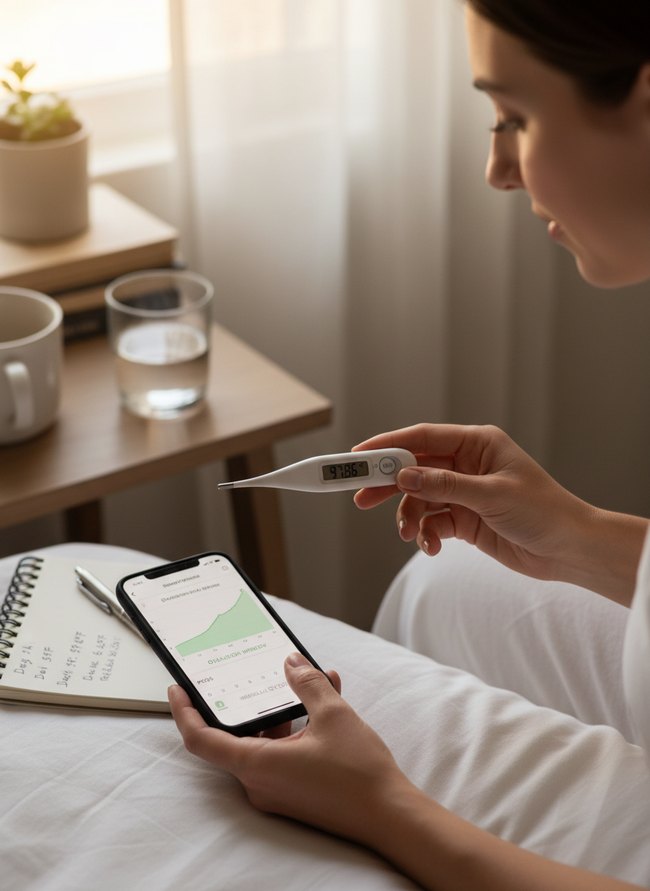
A white digital thermometer displays a 97.86-degree reading for PCOS ovulation tracking. Your choice to use a simple oral thermometer trades instant results for a daily routine that builds a long-term data picture. A black smartphone shows a green graph of temperature patterns, allowing visual tracking of subtle body changes.
2. Ovulation Predictor Kit Usage
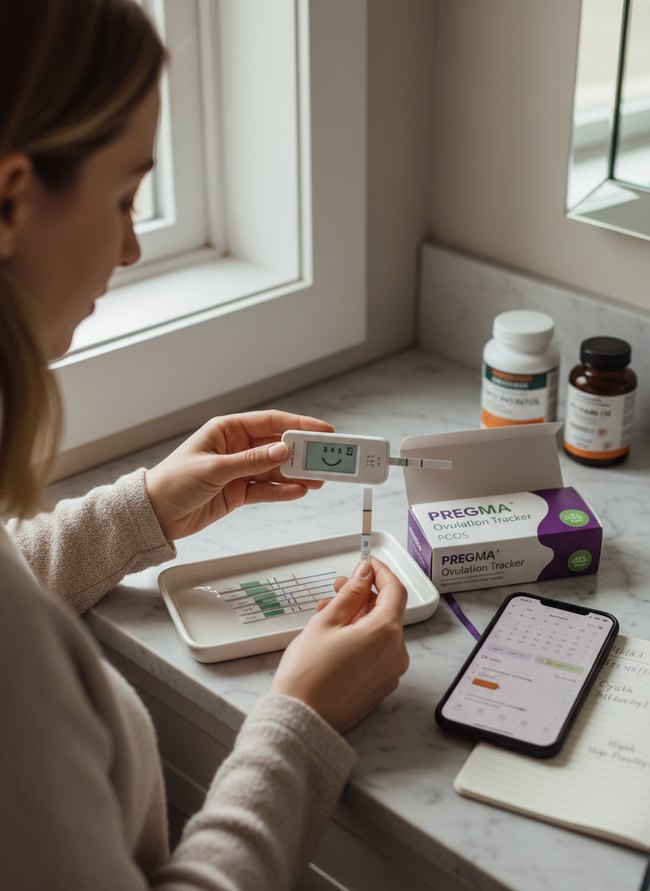
The digital ovulation reader displays a clear happy face symbol. Users can choose a quick digital result over interpreting faint pink lines themselves. A small white tray holds several used test strips, showing a progression of green lines. The reader trades away the guesswork of traditional PCOS ovulation tracking for direct feedback.
3. Cervical Mucus Observation
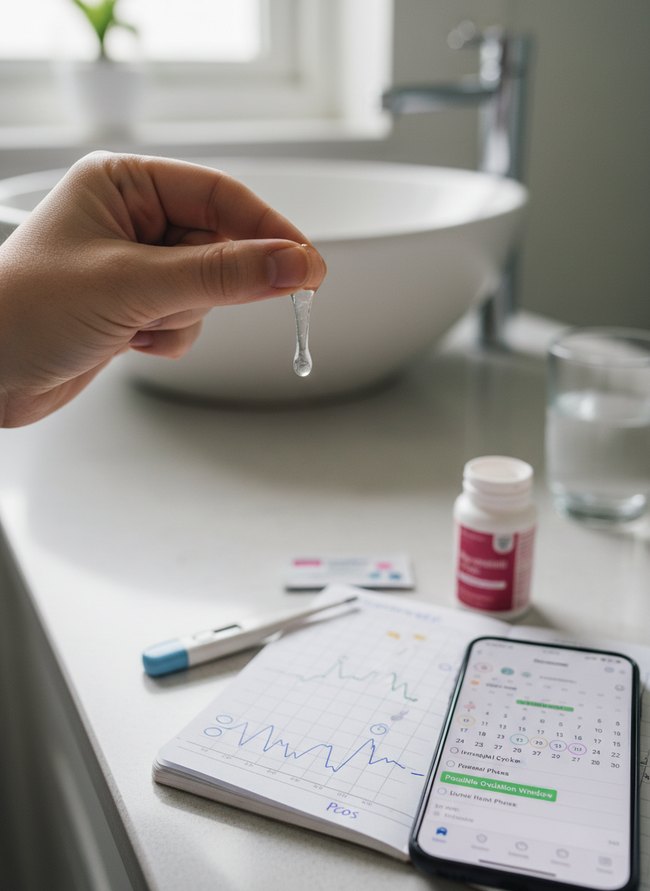
A pale hand holds a clear, viscous drop, stretching the fluid between two fingers over a bright white countertop. Choosing this method for PCOS ovulation tracking offers direct physical insight but requires careful, daily observation of your body’s subtle changes. A small white notebook with blue graph lines and a black smartphone display a calendar, providing visual aids for tracking your cycle information.
4. Fertility Charting Method
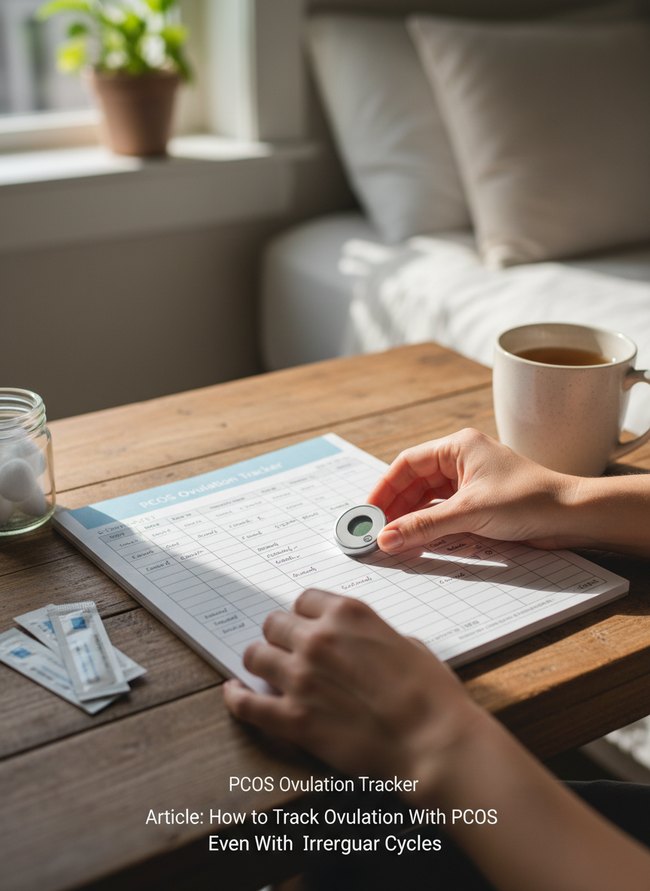
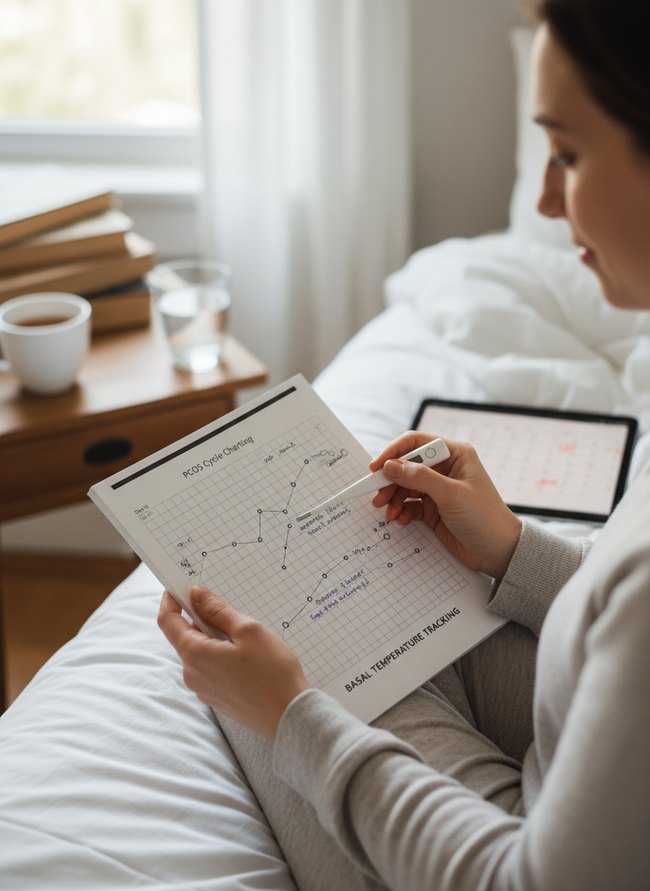
The paper PCOS ovulation tracking chart offers a tangible record, trading immediate digital insights for a simple, hands-on approach. A small round temperature tracker sits on the light wooden table, providing a physical tool to chart daily temperature. The ceramic mug of warm tea beside the white chart suggests a calm, focused morning routine for taking readings.
5. Digital Fertility Monitor
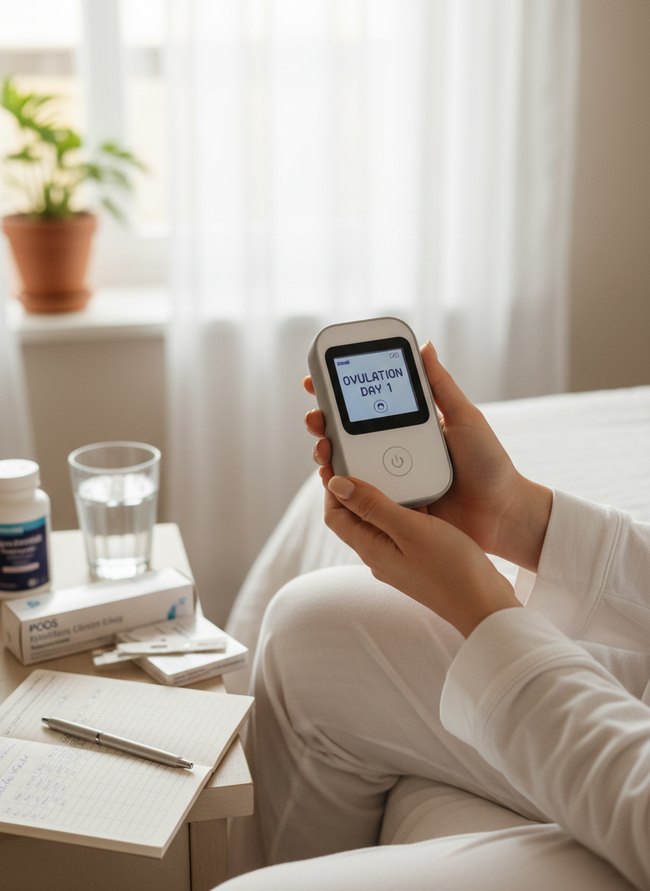
The small gray monitor displays clear black text, offering precise timing for your cycle. A digital fertility monitor offers detailed data, trading away the simplicity of a paper chart. A green potted plant sits on a white window sill behind the woman, adding a soft natural touch to the indoor space.
6. Hormone Level Monitoring
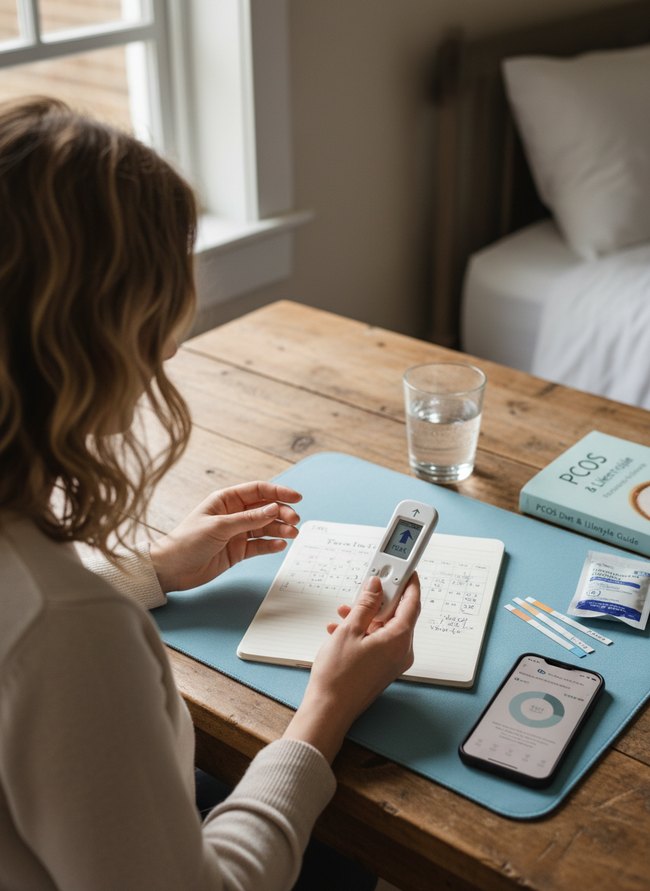
A white plastic fertility monitor displays an upward blue arrow, showing a rising hormone level. Women can choose a digital tracker for PCOS ovulation tracking, trading instant readings for the effort of manual logging. A handwritten journal captures daily data, offering a tangible record.
7. Cycle Tracking App
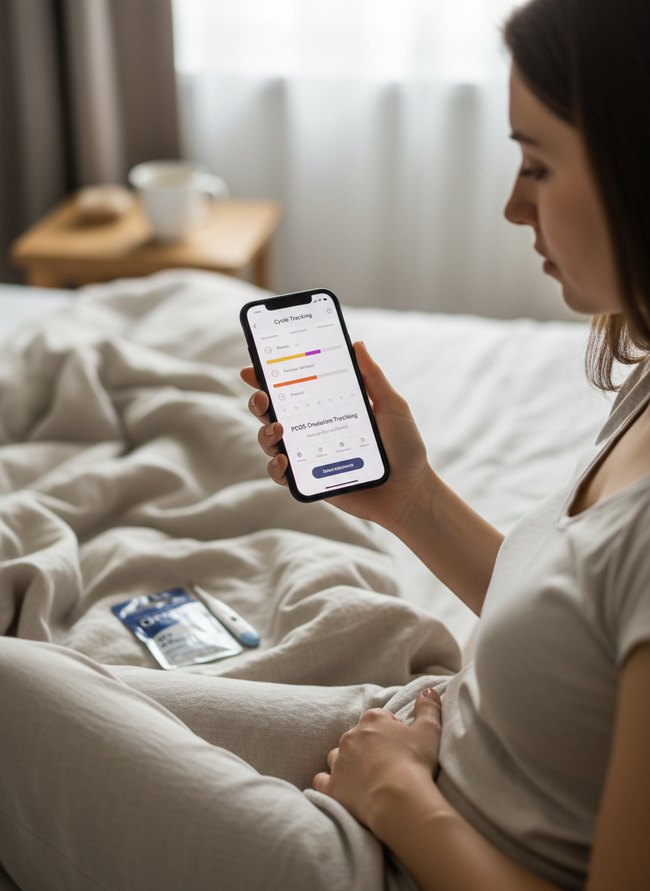
A black smartphone screen shows a cycle tracking app, displaying colorful bar graphs. A digital PCOS ovulation tracking method trades manual record-keeping for automated data entry. A tiny blue thermometer rests on the rumpled gray bedsheet, ready for daily temperature input.
8. Saliva Ferning Test
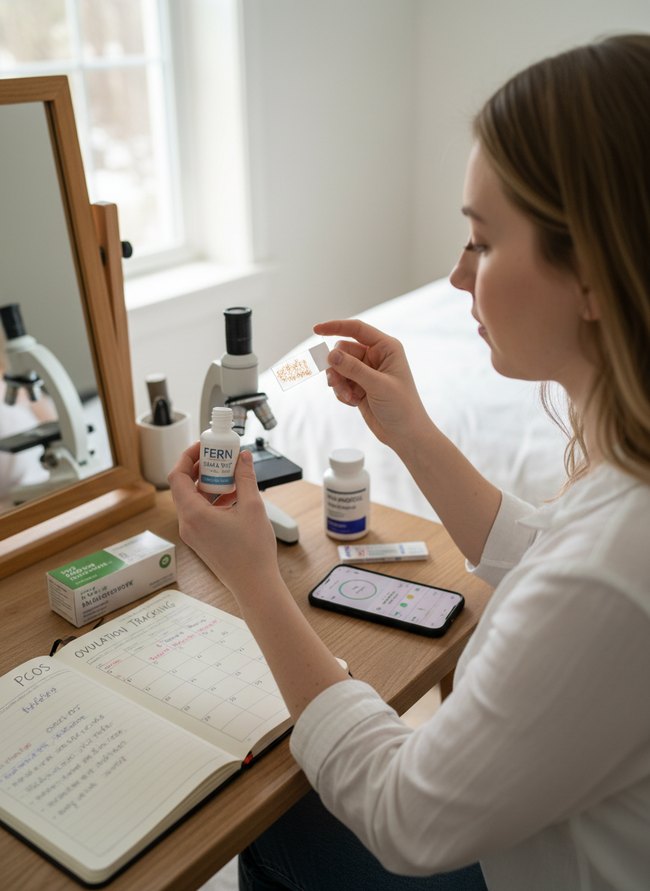
A woman holds a small glass slide with tiny amber crystals, examining the fern pattern for PCOS ovulation tracking. Her hands also hold a white plastic bottle, labeled “FERN,” suggesting a choice for a saliva ferning test over other methods. A black mobile phone displays a circular green graph on a light wooden desk, offering digital insight into her body’s cycles.
9. Transvaginal Ultrasound Mapping
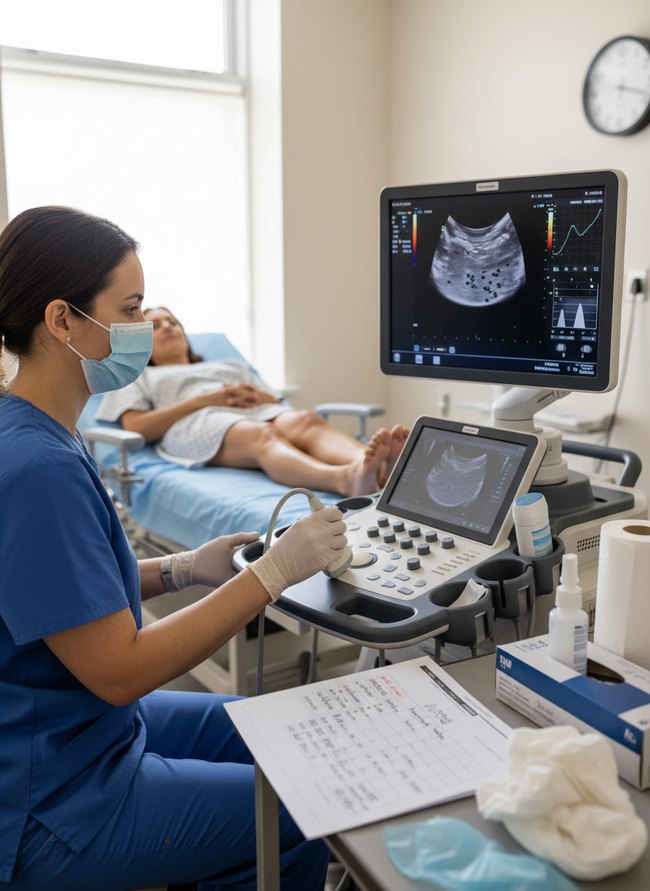
The medical monitor displays dark gray ultrasound images of a woman’s reproductive organs. You choose a detailed medical exam over a simpler home test to understand your body’s cycles more clearly. A health professional operates the white ultrasound wand, gathering internal data for PCOS ovulation tracking.
10. Progesterone Blood Test
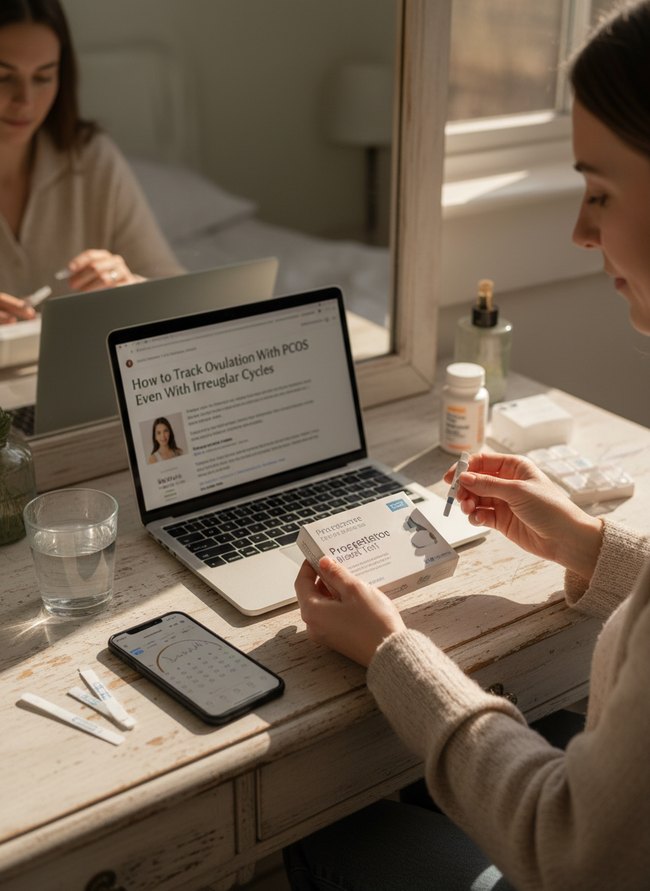
A white box for a progesterone blood test sits in a woman’s hands, showing a direct approach to PCOS ovulation tracking. Her laptop screen displays an article about tracking irregular cycles, offering detailed instructions. A clear glass of water and a dark smartphone with a calendar display rest on the distressed wooden desktop nearby.
11. Timed Intercourse Guidance
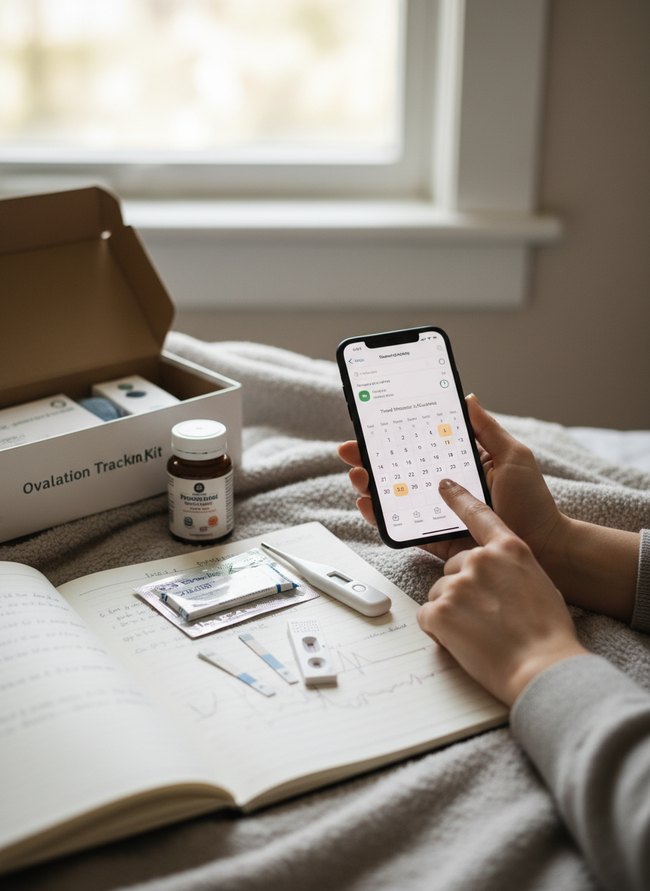
A woman’s hands hold a dark gray smartphone, its bright screen displaying a calendar with highlighted dates. Choosing a PCOS ovulation tracking app offers digital convenience over paper records, trading tactile experience for instant data organization. A white oral thermometer and two small white ovulation test strips rest on a cream-colored notebook, ready for daily use. The tracking kit and brown bottle of prenatal vitamins sit nearby, representing a structured approach to fertility.
12. Integrated Tracking System
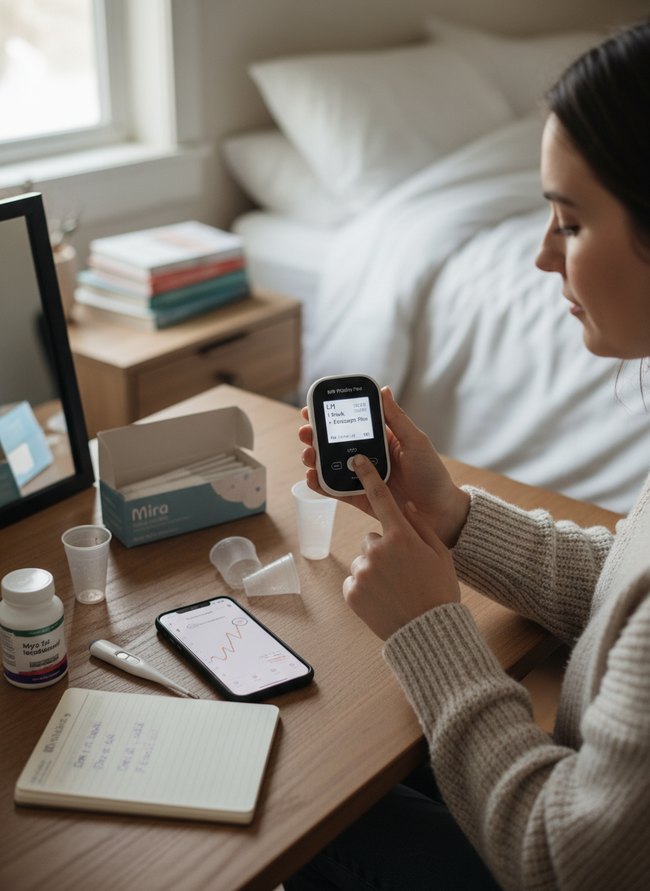
A small white monitor displays fertility data on a dark screen. You could choose a compact PCOS ovulation tracking device, gaining quick, on-the-spot readings. However, the device means giving up the detailed trend analysis a larger system might offer, like the red graph on the black smartphone beside the monitor. A handwritten paper notebook on the brown wooden table provides space for personal notes.
Should I Bother with Ovulation Predictor Kits (OPKs) if My Cycles are Super Irregular?
Your home design faces a fork in the road: should you buy an ovulation predictor kit? These small white sticks measure hormone levels in urine. Many women with polycystic ovary syndrome (PCOS) find their cycles too erratic for simple tracking. Buying a large box of these narrow strips costs money. Using many kits to find one fertile window creates frustration.
Some women prefer a different approach. They choose not to use these urine tests. This saves money on testing supplies. Women avoid the daily stress of searching for a hormone surge. You embrace a slower, more natural pace.
Other women choose to use these kits. They like the tangible data. A colored line on a small plastic stick offers clear information. Tracking ovulation with PCOS provides a deeper understanding of your body. This path suits those who enjoy detailed self-monitoring. You get specific insights into your unique cycle patterns.
Consider your budget first. Think about your patience level. A larger financial investment leads to more daily testing. Your personal comfort with uncertainty guides this decision.
Basal Body Temperature (BBT) Tracking: Is It Worth the Daily Effort if I’m Already Exhausted?
Your choice involves adding a pearl-white basal body thermometer to your morning routine. Measuring your body’s temperature every single morning before getting out of your soft cotton sheets requires commitment. This method provides a helpful temperature shift confirmation of past ovulation, but it does not predict future ovulation. A small digital thermometer offers data points for a helpful overall pattern. However, for someone waking up in a deep exhaustion fog, this daily task feels like a heavy gray burden. You must decide if seeing that tiny temperature rise on a small screen justifies the morning effort.
For women with some energy reserves, BBT charting offers valuable insight into your cycle’s overall rhythm. You gain a clearer picture of your specific body’s rhythm over several months. Yet, for someone consistently battling deep fatigue, adding another daily chore will likely lead to frustration and missed readings. If your energy stores feel low, skip this method; focus on less demanding options. A woman with ample morning time and a desire for detailed cycle understanding will find the BBT data very helpful.
Which Idea Will You Try First?
That’s 12 different takes on pcos ovulation tracking. The best ideas above are usually the smallest moves — one material, one layout shift, one piece of furniture in the right place. Pick whichever room feels closest to your space and start there before tackling the rest.
Found an idea worth keeping? Save this post to your Pinterest board so it’s waiting for you when you’re ready to start your own project.