Low Carb vs Balanced Carb: Which Is Better for Insulin Resistance
Blood sugar numbers feel like a roller coaster. Many folks wrestle with insulin resistance, trying to get bodies back on track. Numerous diets promise quick fixes, but real change takes more than a fad. Some people swear by a low-carb approach, cutting down on sugars and starches. Other individuals find better results with a balanced plate, including whole grains and many colorful vegetables. Both paths offer solid benefits for the body, but one road might fit a specific lifestyle better. A smart plan gives lasting power over health. The article will break down the key differences between low carb vs. balanced for insulin resistance.
1. Ketogenic Glucose Management Solution
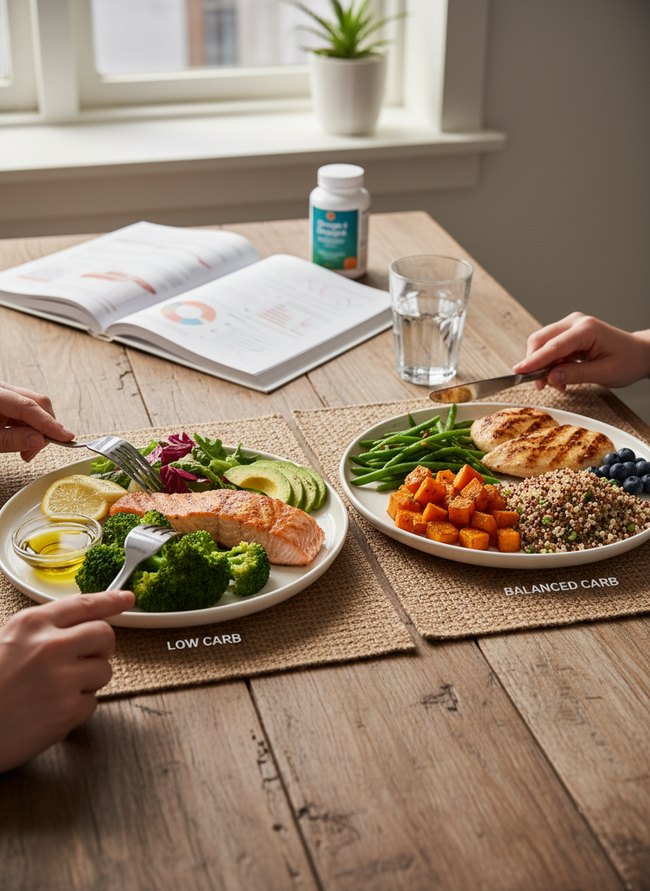
The low carb plate features a grilled salmon fillet with green broccoli florets and sliced avocado. A balanced plate, designed for insulin resistance, offers grilled chicken breast, roasted orange sweet potato cubes, and green quinoa. The low carb approach changes your plate’s colorful contents.
2. Balanced Insulin Regulation Plate
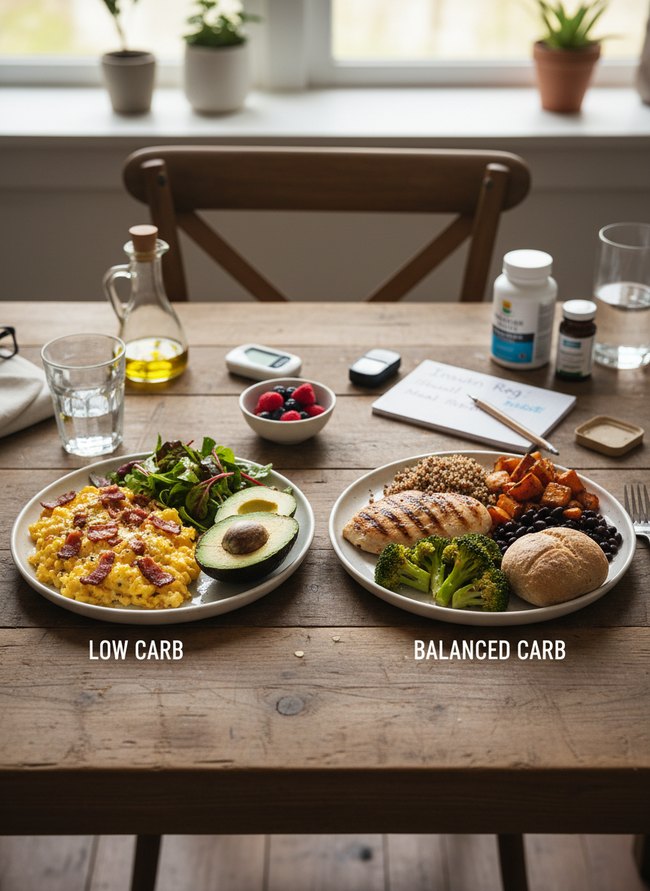
The balanced carb plate offers a varied meal with grilled chicken, roasted sweet potatoes, black beans, and green broccoli florets. The meal helps manage blood sugar without feeling deprived. Always include a good protein source and healthy fats with your chosen carbohydrates.
3. Low Glycemic Meal Planning
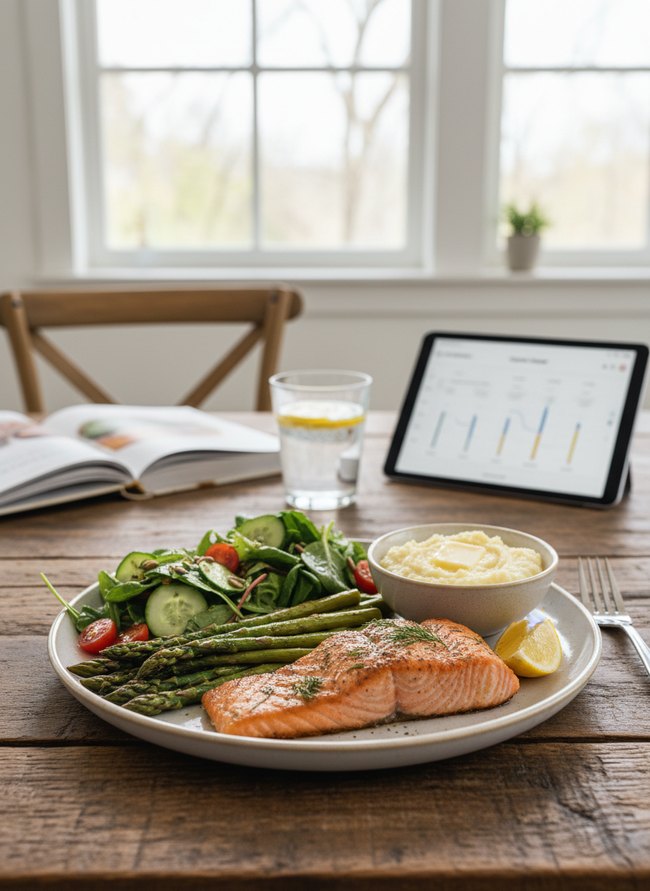
A cooked salmon fillet with green dill rests on a round white plate, surrounded by vibrant green vegetables. The meal shows a smart way to eat for insulin resistance because it provides protein and fiber. Choose low-carb foods to manage blood sugar levels effectively.
4. Moderate Carb Diabetes Protocol
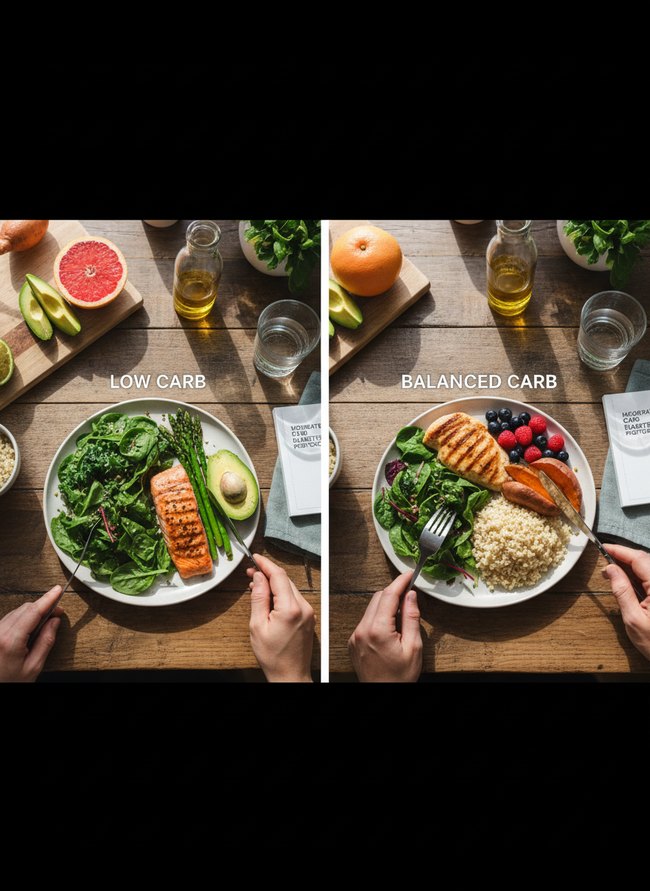
Two white plates on a rough wooden table show different meal options for a low carb vs balanced for insulin resistance diet. One plate features grilled salmon, bright green asparagus, and dark leafy greens, while the second plate holds grilled chicken, small red berries, orange sweet potato wedges, and fluffy quinoa. Consider your own needs and choose the meal that best fits your body’s daily requirements.
5. Restrictive Carb Metabolic Approach
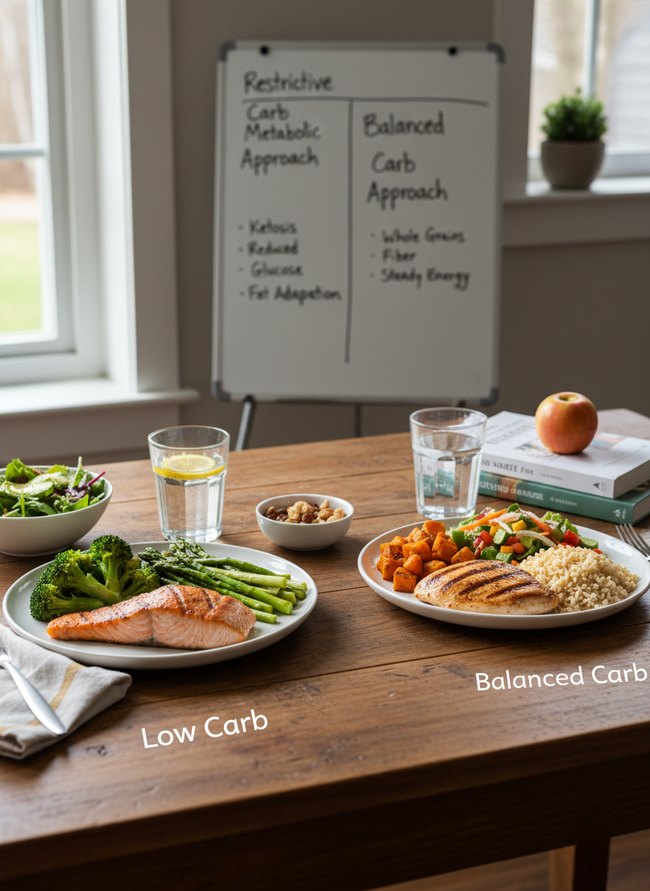
The white ceramic plate on the left showcases a grilled salmon fillet with bright green broccoli florets and tender asparagus spears. A low-carb versus balanced approach for insulin resistance can impact daily meals. For your own kitchen, focus on lean proteins and non-starchy vegetables to create similar low-carb options.
6. Flexible Macronutrient Blood Sugar
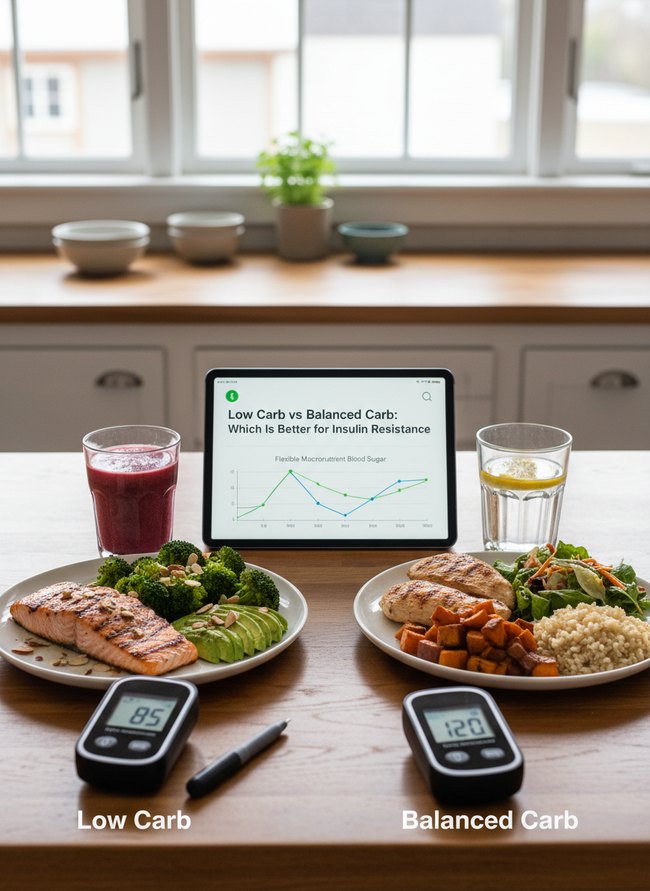
The gray digital screen on the left shows a low blood sugar reading of 85 mg/dL. The number highlights how a low carb meal, like the grilled salmon and green broccoli on the white plate, can help manage insulin resistance. The right-side screen displays a higher 120 mg/dL reading for the balanced carb option.
7. Targeted Carb Insulin Sensitivity
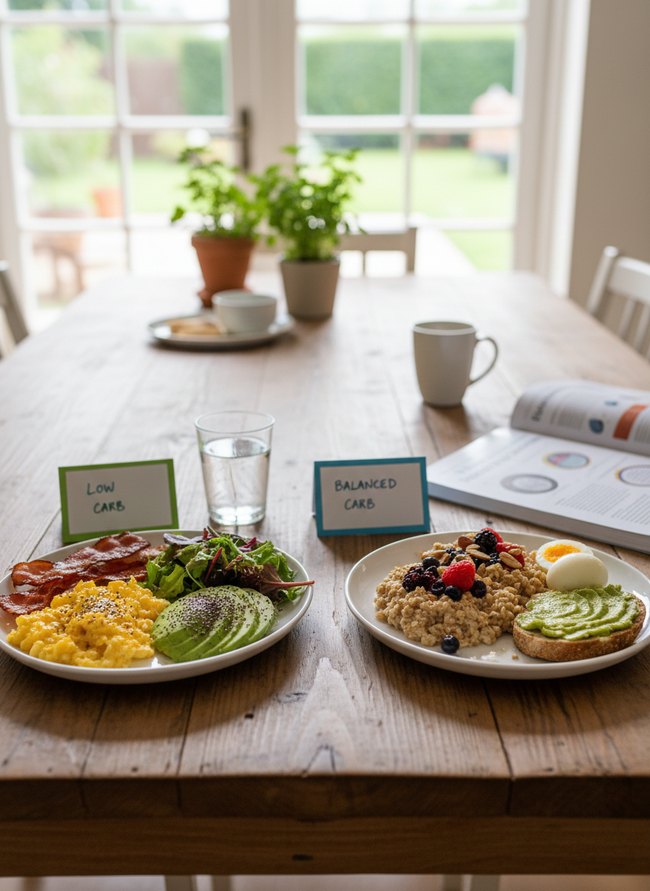
Two white ceramic plates on a natural wood table display distinct breakfast options for low carb vs balanced for insulin resistance. The left plate holds crispy brown bacon, yellow scrambled eggs, and green sliced avocado, representing a low-carb choice. The right plate features tan oatmeal topped with dark berries and nuts, alongside a white hard-boiled egg and green avocado toast, illustrating a balanced-carb meal. Consider your personal health needs when choosing between these different meal compositions.
8. Controlled Carb Lifestyle Balance
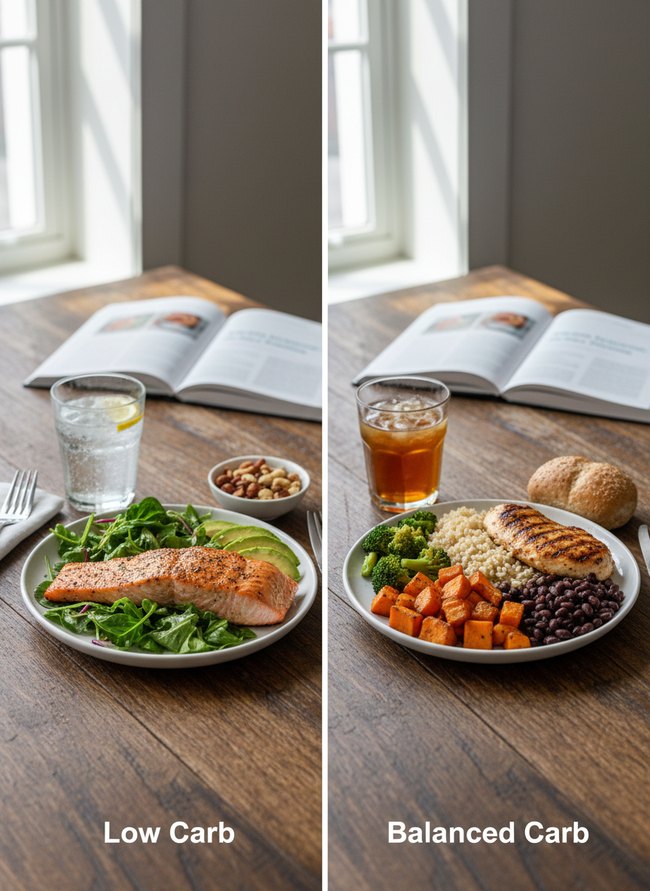
The low carb plate holds a seasoned salmon filet on a bed of fresh green arugula, with bright green avocado slices. A balanced carb plate showcases grilled chicken, small orange sweet potato cubes, dark black beans, and tiny yellow couscous, plus green broccoli florets. The two meals offer distinct food choices. Consider the visual differences in these two meal types when planning your own healthy eating.
9. Optimized Macronutrient Insulin Response
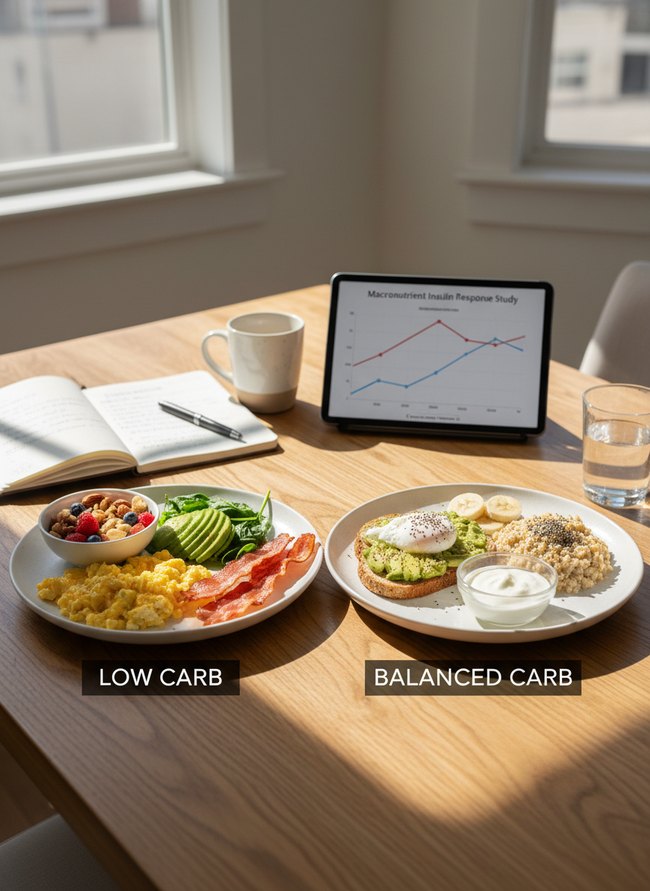
A low-carb breakfast plate presents bright yellow scrambled eggs, crispy bacon strips, green avocado slices, and a small white bowl of berries and nuts. A balanced carb meal includes creamy avocado toast with a poached egg, a pile of oatmeal, sliced banana coins, and a small glass bowl of yogurt. Different foods like oatmeal raise blood sugar more quickly than eggs and bacon; choose meals with fewer fast carbs to help manage your insulin response.
10. Reduced Carb Health Strategy

The low carb breakfast shows fluffy scrambled yellow eggs with green chives, bright orange smoked salmon, and sliced green avocado on a round white plate. The healthy meal offers a good way to manage low carb vs balanced for insulin resistance needs. You can easily make the simple dish at home to support your health goals.
11. Steady Carb Energy Protocol
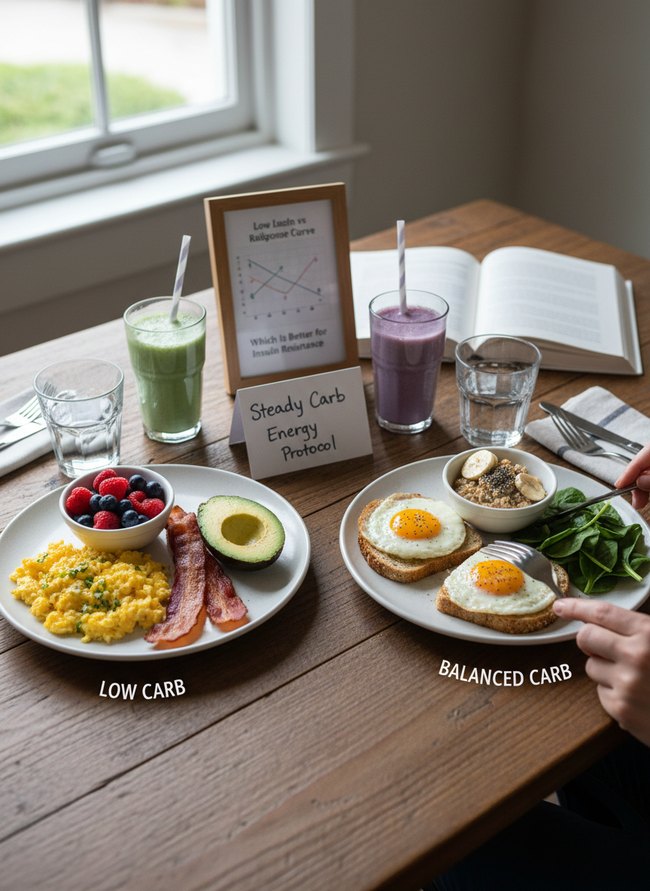
The wooden table displays two distinct breakfast plates, offering different approaches to eating for insulin resistance. One white ceramic plate features golden scrambled eggs, crispy bacon strips, fresh red raspberries, blue blueberries, and a green avocado half. A second white ceramic plate holds two fried eggs on light brown toast, a small white bowl of oatmeal with banana slices and chia seeds, and a pile of dark green spinach leaves. Consider how you feel after eating each meal.
12. Personalized Carb Insulin Guidance
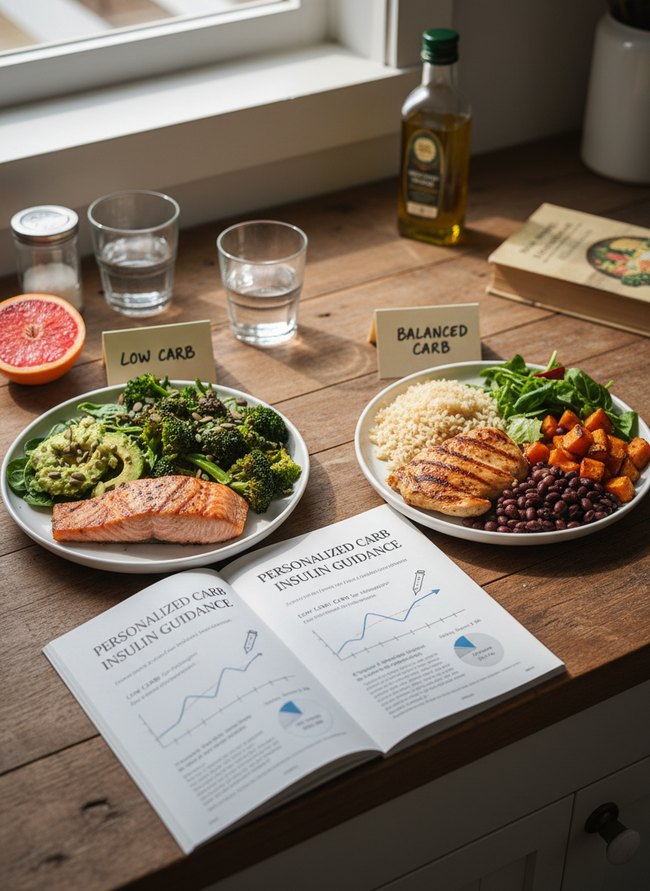
A white book on a warm wooden countertop details “Personalized Carb Insulin Guidance” with blue line graphs. The open book highlights information about low carb vs balanced for insulin resistance, showing how food choices affect your body. Personalized guidance can help you manage your insulin response.
Beyond the Diet: How Lifestyle Tweaks Amplify Insulin Sensitivity (No Matter Your Carb Count)
Many people believe diet alone solves insulin resistance, a common mistake. Your oak kitchen table, covered in meal plans, represents only one piece of a larger puzzle. Deep sleep, a quiet mind, and consistent movement truly amplify your body’s ability to use insulin well.
Most individuals stay up late, watching glowing blue screens, which disrupts hormone cycles. A dark, cool bedroom, with heavy blackout curtains, promotes restorative rest. You need seven to nine hours of quality sleep every night for cells to repair.
Folks often carry heavy mental burdens, letting stress build inside. A daily ten-minute meditation, sitting on a soft wool rug, calms your nervous system. Chronic stress releases cortisol, a hormone that makes insulin resistance worse.
Many individuals skip workouts, preferring to sit on a plush velvet sofa. Short, intense exercise, like lifting heavy iron weights for twenty minutes, builds lean muscle. Muscle tissue soaks up glucose from your blood more efficiently than fat. Consistent physical activity, even a brisk walk around the block, significantly improves insulin sensitivity.
The ‘Hidden Carb’ Traps: What to Watch Out For (Even on a ‘Balanced’ Plan)
Most people believe a striped ceramic bowl of oatmeal offers a healthy start. Many think a tall glass of orange juice provides pure vitamin C. Sugar hides in countless kitchen pantry items, even those labeled “natural” or “healthy.” A bright red ketchup bottle often contains surprising amounts of added corn syrup. Your fluffy white bread might pack more sugar than you realize.
These sneaky sugars, often called hidden carbs, can upset insulin levels. People often reach for an almond flour muffin, thinking it is a low-carb choice. A golden-brown granola bar, marketed for energy, can contain a sugar rush. You must read the small print on food labels, checking the grams of added sugar. Hidden carbohydrates will sabotage your body’s effort to manage insulin resistance. Real ingredients, like a crisp green apple, offer true nutrition without the hidden sugar.
Which Idea Will You Try First?
That’s 12 different takes on low carb vs balanced for insulin resistance. The best ideas above are usually the smallest moves — one material, one layout shift, one piece of furniture in the right place. Pick whichever room feels closest to your space and start there before tackling the rest.
Found an idea worth keeping? Save this post to your Pinterest board so it’s waiting for you when you’re ready to start your own project.