How to Understand Your Glucose Patterns as a Beginner
A sugary snack sits on the counter, a frosted donut with rainbow sprinkles. Your hand reaches for the glazed pastry, then hesitates. You know the sugar rush follows, a quick high, then a tired slump. Learning about your body’s sugar response can feel like a secret code, a difficult language to learn. The exact feeling of uncertainty around everyday foods plagues many people. Understanding your body’s internal rhythms creates a clearer picture of personal health. The guide breaks down the basics of glucose monitoring, making sense of those numbers on the small screen. Practical steps help you track your blood sugar levels and understand the colorful patterns. We offer simple advice for using a personal glucose meter and making sense of the readings.
1. Beginner Blood Sugar Tracking
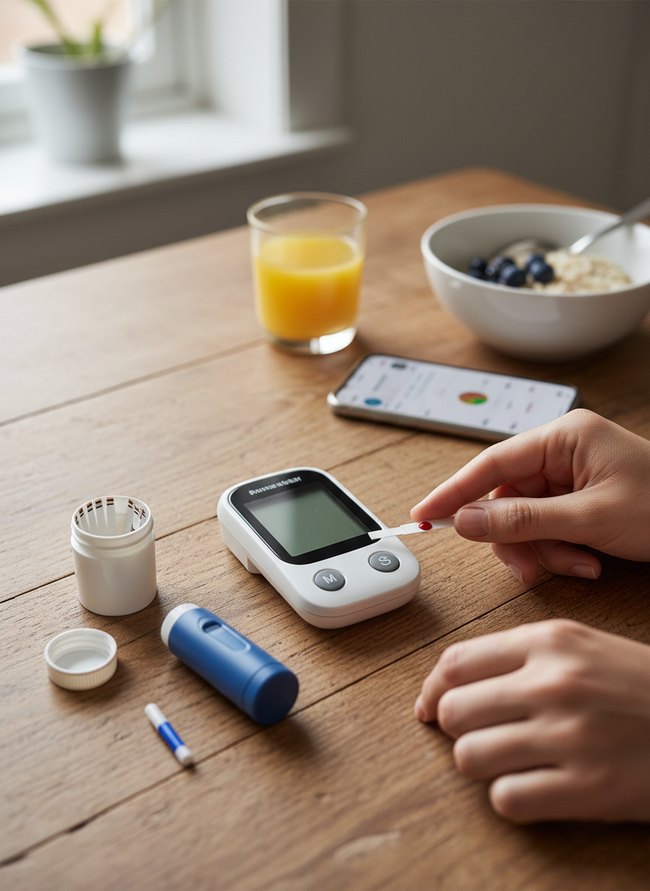
A white blood glucose meter sits on a warm oak wood table, ready to measure sugar levels. A small test strip with a single red blood drop inserts into the meter’s side slot, which then displays the current glucose reading on its black screen. The image clearly shows the simple steps for beginner blood sugar tracking.
2. Daily Glucose Logbook
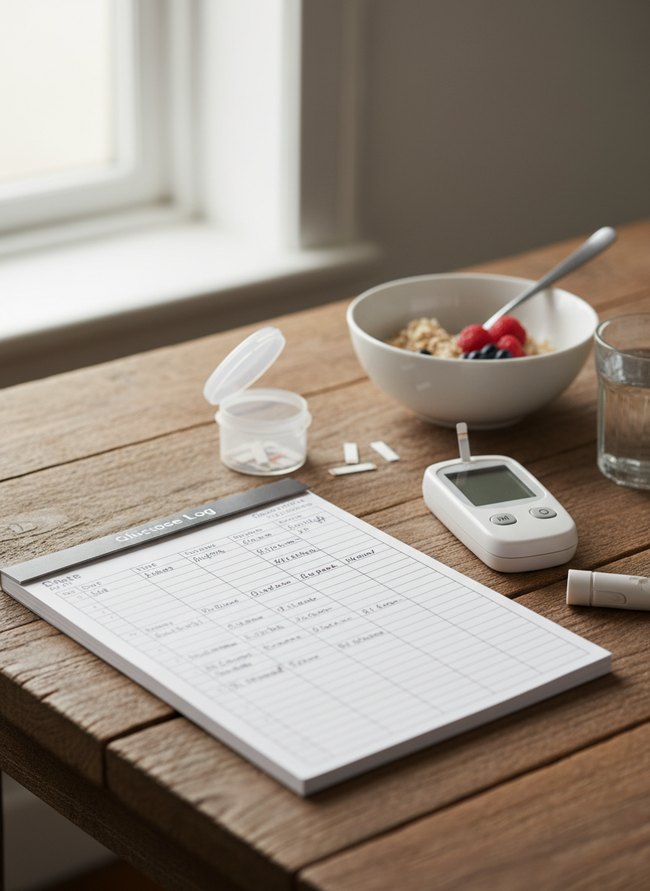
A white paper logbook with gray binding sits on a wooden table, ready for daily glucose monitoring. The small, gray-and-white glucose meter helps users get accurate readings throughout the day. The logbook lets users track important numbers easily.
3. Post-Meal Glucose Check
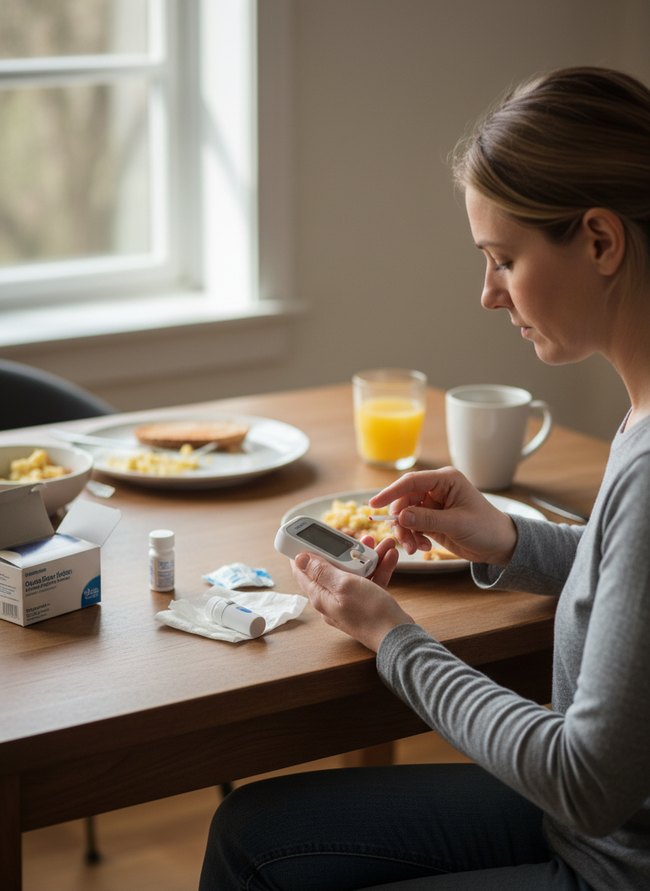
A woman in a gray long-sleeved shirt holds a white glucose meter and a thin test strip, ready to check her blood sugar. The simple process involves placing a small blood sample onto the test strip, which then slides into the handheld device for an accurate reading. The detailed image clearly shows the equipment used for glucose monitoring, offering a practical demonstration.
4. Fasting Glucose Baseline
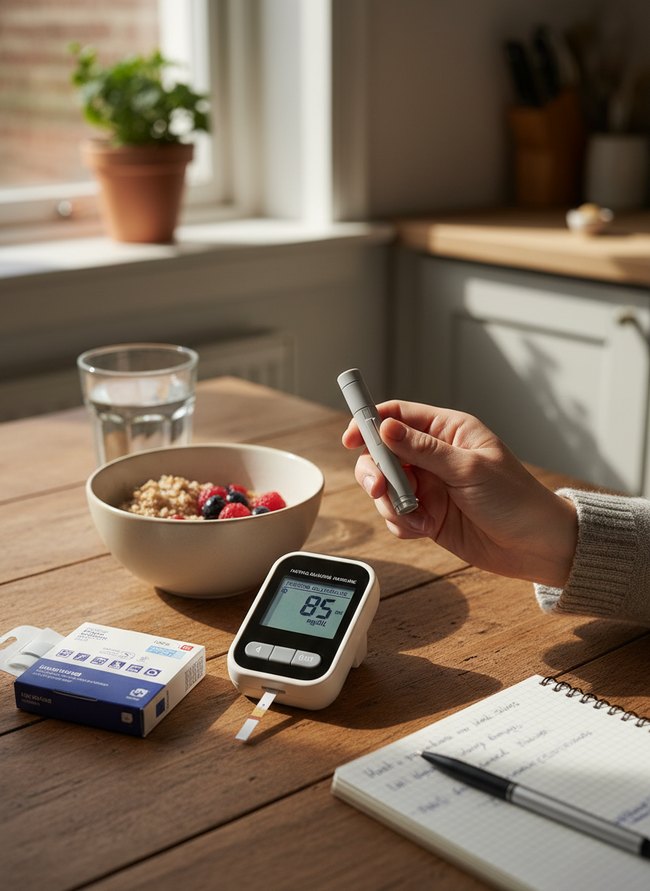
A white glucose monitor with a digital display shows a clear reading of 85 mg/dL, indicating current blood sugar level. Your hand holds a gray lancing device, ready to collect a small blood sample for accurate glucose monitoring. A fresh bowl of oatmeal with colorful berries sits on the warm wooden table, suggesting a morning routine for tracking fasting glucose baseline.
5. Exercise Impact Monitoring
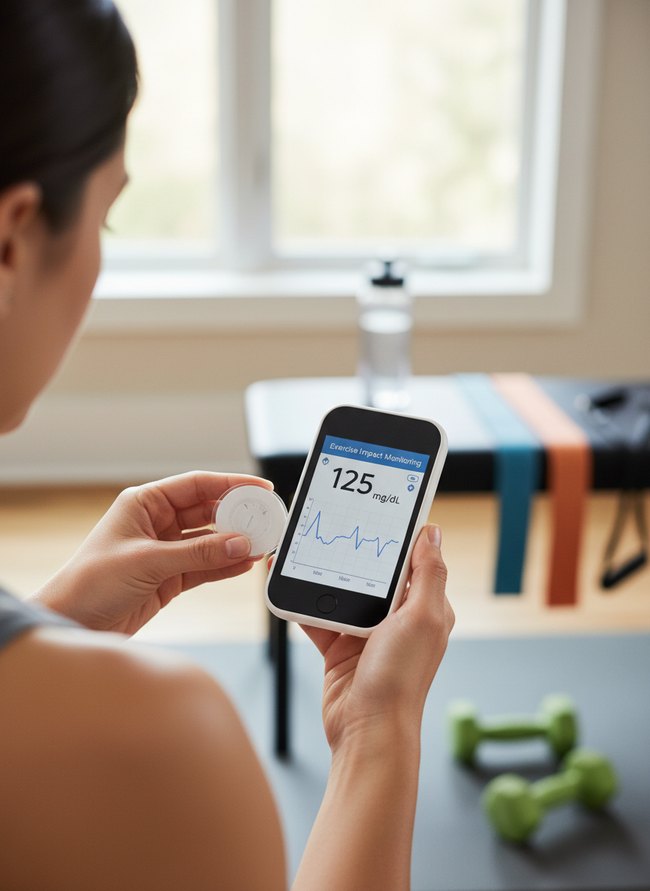
A person holds a white smartphone displaying a blue line graph of glucose levels. The phone’s screen shows the current glucose reading as 125 mg/dL, with “Exercise Impact Monitoring” written at the top. The device allows users to track workout effects on their body’s sugar balance. The system offers precise data to help users adjust their exercise routine for better health outcomes.
6. Food Choice Patterning
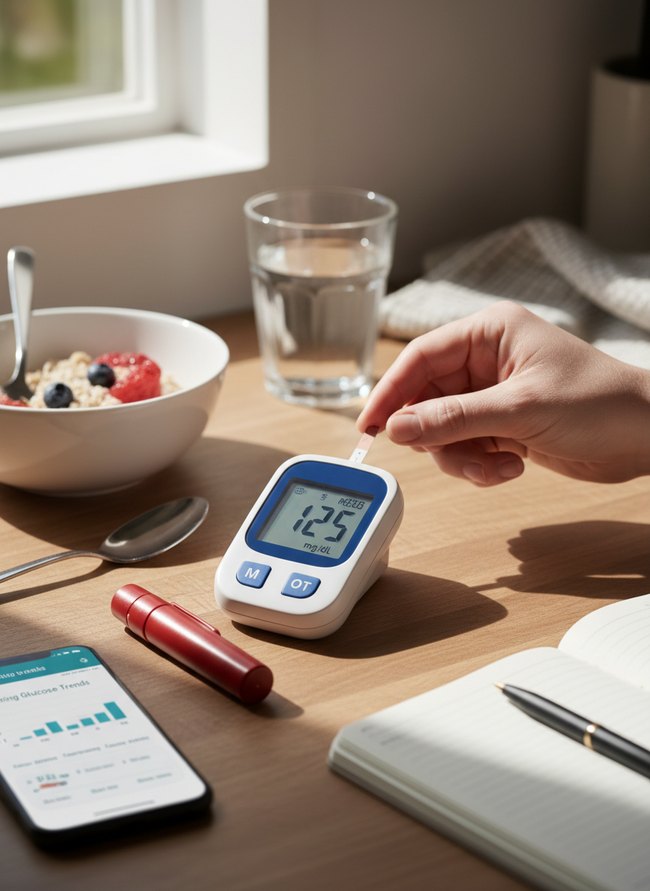
A white and blue glucose meter with a digital screen shows a reading of “125 mg/dL,” giving a clear number for blood sugar. A pale hand inserts a thin test strip into the top of the meter, actively demonstrating the quick process of glucose monitoring. The white bowl of oatmeal with fresh red strawberries and dark blueberries in the background offers a visual cue for tracking how different foods affect levels.
7. Continuous Sensor Setup
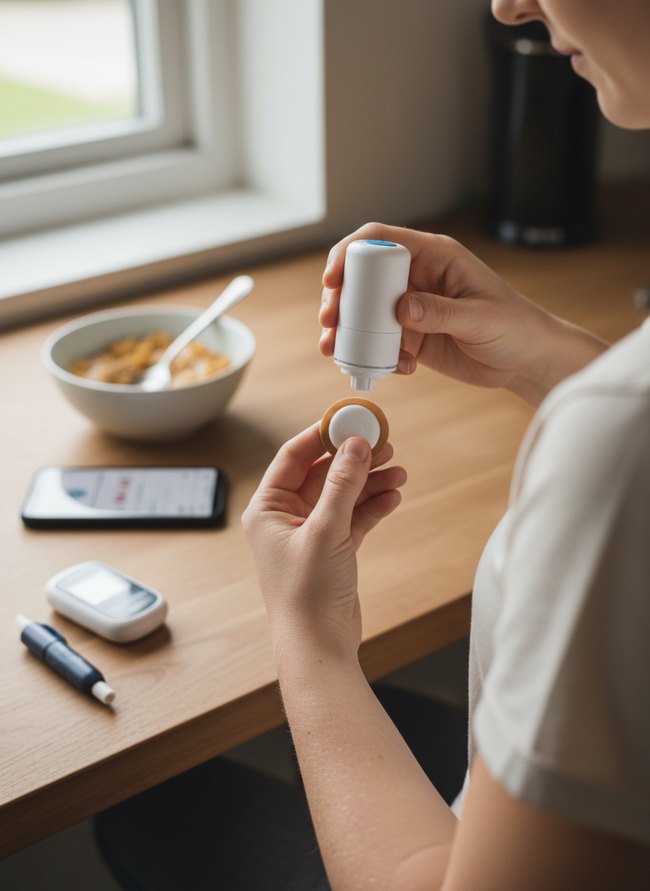
A person’s hands carefully align a white cylindrical applicator with a small, circular brown sensor, preparing for continuous glucose monitoring. The wooden countertop holds a white bowl of cereal, a black smartphone displaying health data, and a compact glucose meter with a blue lancet pen. The scene demonstrates the simple process of setting up a new sensor, making daily glucose checks straightforward and efficient for you.
8. Initial A1C Interpretation
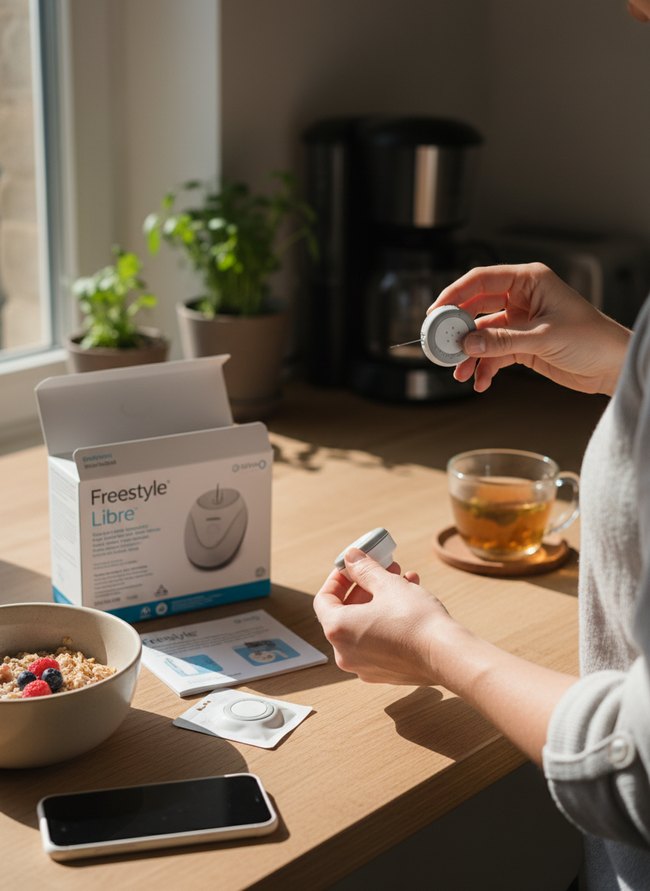
A person’s hands carefully hold a small, round white glucose monitoring device with a thin needle extending from its center. The white box for the Freestyle Libre system rests open on the warm wooden countertop, ready for use. The image clearly shows how to prepare the glucose monitor for accurate readings.
9. Hypoglycemia Awareness Chart
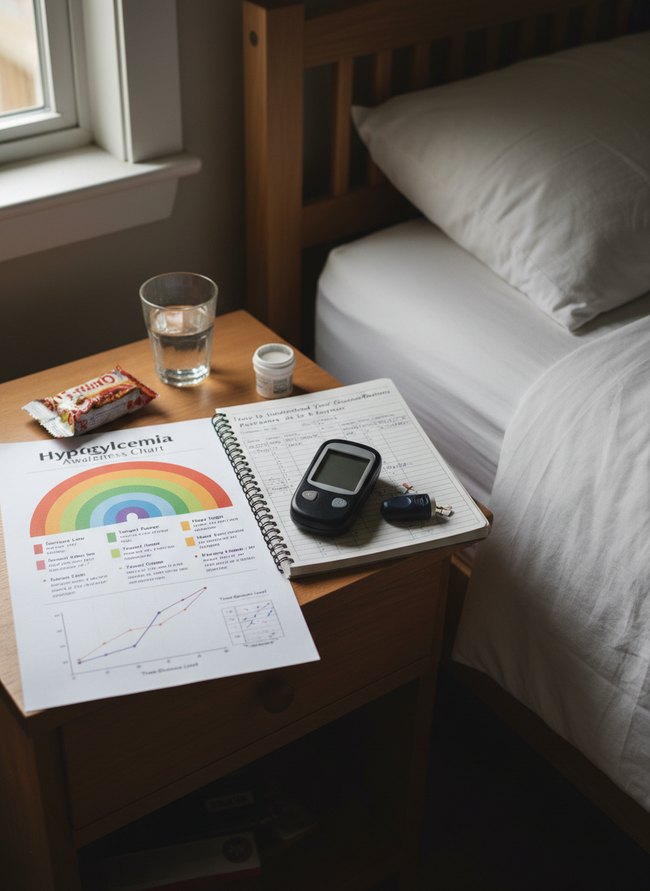
The white paper chart, titled “Hypoglycemia Awareness Chart,” displays a colorful rainbow graphic and two small line graphs, helping you visualize glucose patterns. A black digital glucose meter rests on an open spiral-bound notebook, ready for recording readings. The setup on the light brown wooden nightstand beside a bed provides a simple, accessible way to track blood sugar.
10. Hyperglycemia Trend Spotting
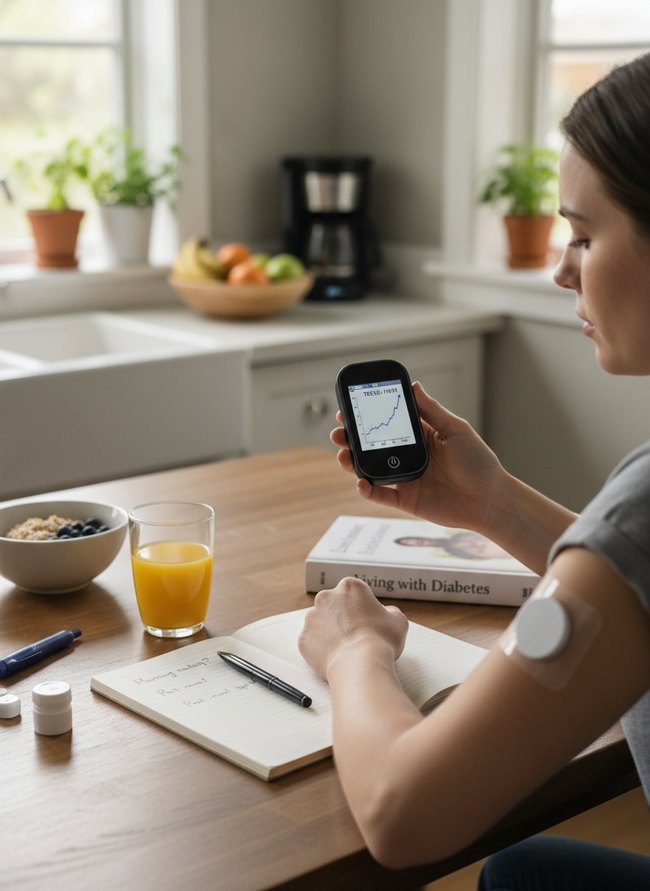
A person holds a small black reader, displaying a blue line graph of glucose levels on its bright screen. The reader connects wirelessly to a white circular sensor on the person’s upper arm, providing real-time data. A wooden table holds a glass of orange juice and a bowl of oatmeal with blueberries, hinting at the impact of food on blood sugar.
11. Stress Response Observation
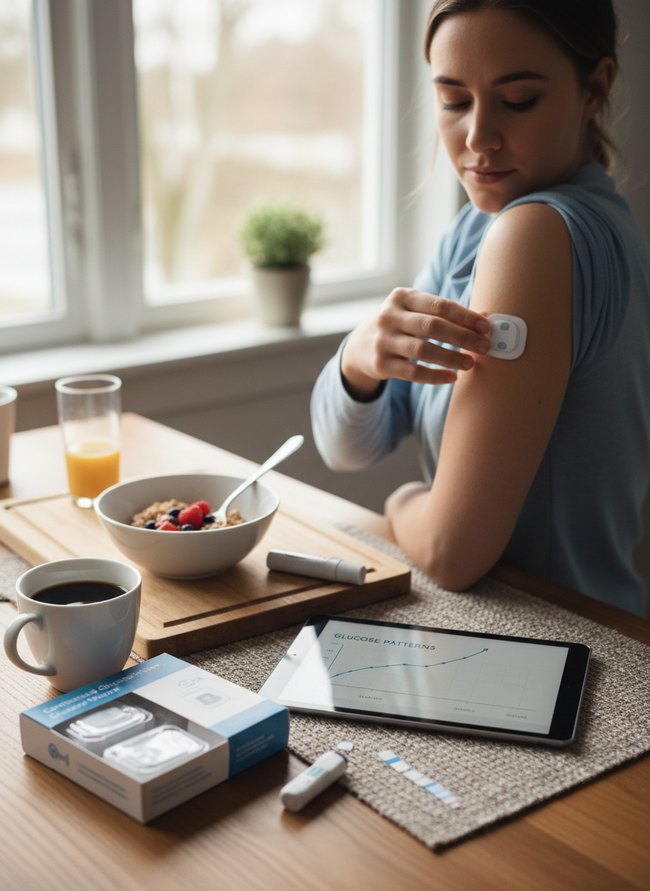
A woman with brown hair applies a small white glucose monitoring sensor to her upper arm. Her left hand gently presses the round device onto her skin, allowing for continuous tracking of blood sugar levels. A sleek black tablet on the wooden table displays a blue graph titled “Glucose Patterns,” providing a visual representation of her body’s responses. The setup helps you easily observe your stress response through changes in your glucose levels.
12. Sleep Cycle Glucose Study
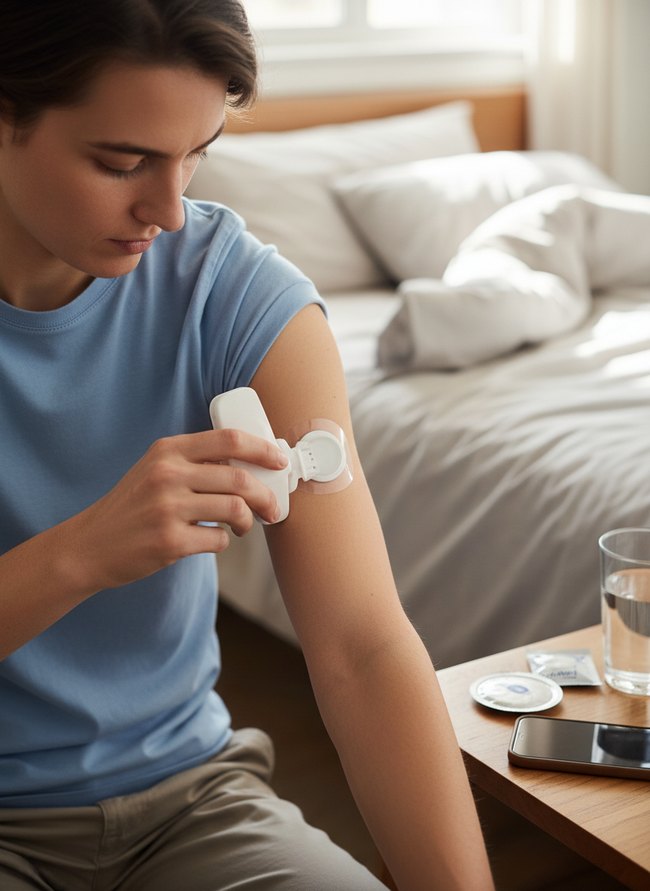
A person in a light blue t-shirt attaches a white glucose sensor to their upper arm with a small applicator. The round, clear adhesive patch will securely hold the sensor in place for continuous glucose monitoring throughout the day and night. The device offers easy, hands-free data collection, especially useful for understanding sleep cycle glucose patterns.
Beyond the Numbers: The ‘Why’ Behind Post-Meal Spikes (and How to Interpret Them Creatively)
Speaking of those tall, narrow bookshelves, you know, the ones with open backs. A rich espresso-stained wood bookshelf looks unfinished against a pale ivory wall. Instead, paint the wall behind it a deep charcoal or a dusty teal. That dark color gives the bookshelf a solid backdrop, making your displayed objects pop with contrast.
Many designers will tell you to paint the whole room one light color. That advice misses a trick for small spaces. A single light color can make a room feel bland and flat, lacking any visual interest. Darker accent walls or even painted ceilings create depth and architectural interest, making a small space feel thoughtfully designed, not just tiny. A low, wide white oak dresser might look lost on a huge empty wall. However, placing a tall, charcoal gray mirror above the dresser instantly grounds the furniture piece. That mirror also bounces light, making the room feel brighter.
Consider adding a large, hand-knotted wool rug in a warm terracotta shade. This textile brings both softness and a bold color statement to the floor. Your feet will appreciate the plush texture.
The ‘Dawn Phenomenon’ vs. ‘Somogyi Effect’: Differentiating Overnight Glucose Surges for Targeted Action
Okay, so those crisp white curtains you picked out? They tell a story your glucose monitor can help you understand. Many folks wake up to a higher morning blood sugar number, then blame their breakfast. Instead, your body could be reacting to a dip or a rise while you sleep.
A quick check before bed, then another around 2 AM, gives you the real picture. If your midnight reading drops low, your liver likely released stored sugar to save you, causing that morning spike. This reactive sugar release is your body’s Somogyi Effect, a protective measure. However, a steady rise through the night, without any low dip, often points to the Dawn Phenomenon. This natural process involves your body releasing growth hormone and cortisol, preparing you for the day.
Knowing the difference matters for your action plan. For the Somogyi Effect, a small, balanced snack before bed, like a few nuts or a slice of whole-wheat toast with a touch of peanut butter, can stop that overnight drop. The Dawn Phenomenon needs different timing for any overnight medication or adjustments to your dinner. Your doctor can guide you there. You gain control when you gather solid data.
Which Idea Will You Try First?
That’s 12 different takes on glucose monitoring. The best ideas above are usually the smallest moves — one material, one layout shift, one piece of furniture in the right place. Pick whichever room feels closest to your space and start there before tackling the rest.
Found an idea worth keeping? Save this post to your Pinterest board so it’s waiting for you when you’re ready to start your own project.