Insulin Resistance Explained for Beginners (Visual Guide)
A soft gray blanket covers your favorite armchair after a long, tiring day. You remember eating lunch, but a few hours later, hunger pangs hit hard again. A warm coffee mug sits on the oak desk, providing a brief moment of comfort before the energy dip arrives. Your body struggles with energy regulation, a widespread problem often linked to insulin resistance. Many people experience these subtle body signals without understanding the root cause. The guide unpacks the basics of insulin resistance, explained in clear, simple language. The guide will show you how your body processes sugar and the challenges it sometimes faces. You can then understand what your body truly needs.
1. Simple Glucose Pathway Overview

The open, thick book on the rough wooden desktop presents a clear diagram of the simple glucose pathway, helping you visualize complex biological processes. A white digital tablet mirrors the molecular structure, offering an interactive way to explore insulin resistance explained concepts. The visual guide makes understanding the glucose pathway straightforward for any beginner.
2. Basic Cellular Uptake Diagram
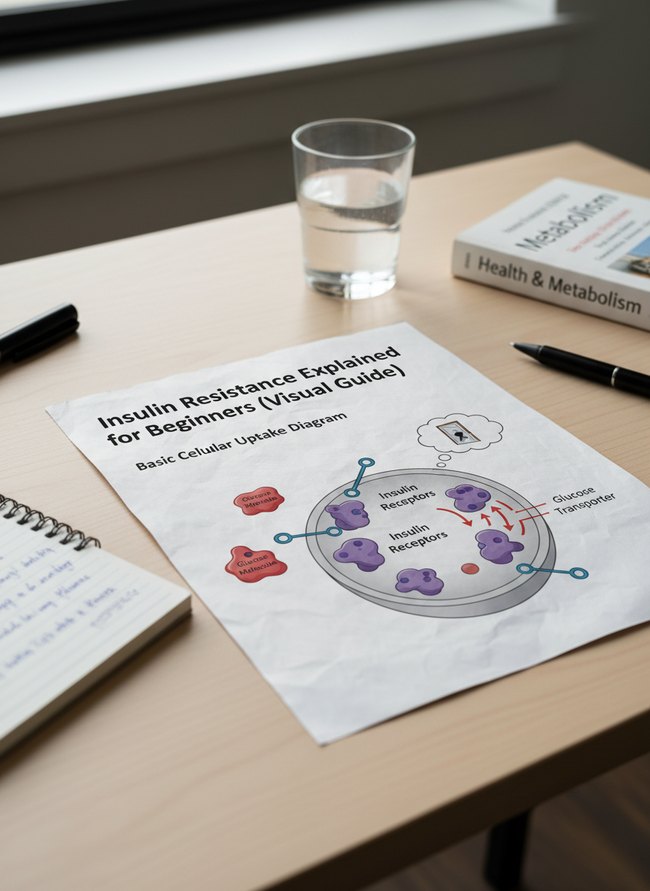
A crisp white sheet of paper lays flat on a light wood desk, showing a colorful diagram of cellular processes. The diagram displays purple insulin receptors on a gray cell membrane, illustrating how glucose molecules enter cells. The visual guide simplifies insulin resistance concepts for easy understanding, making complex biology clear for you.
3. Insulin Key Lock Analogy
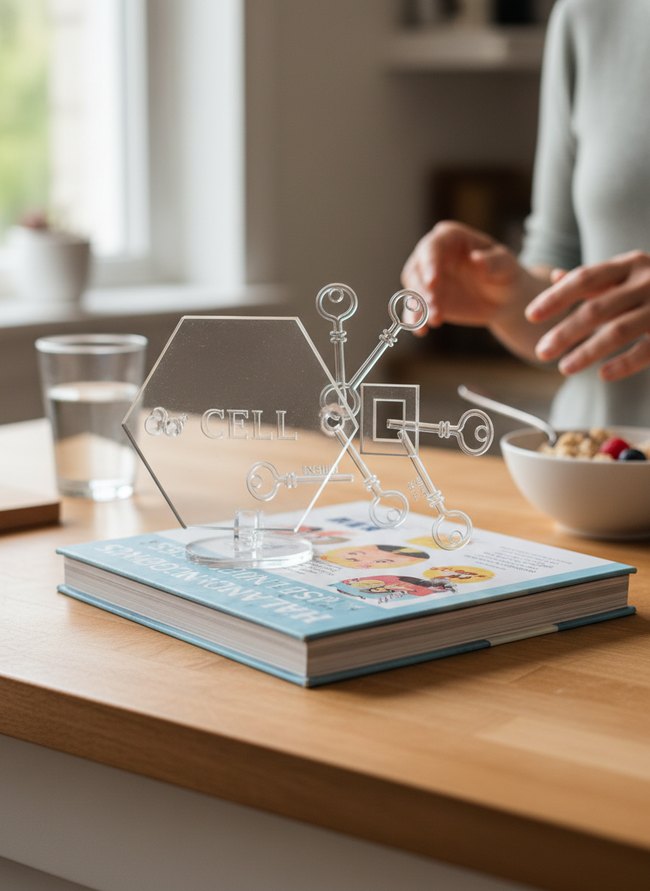
A clear acrylic hexagon stands upright, labeled “CELL,” representing the body’s energy-needing cells. Several small, transparent plastic keys, each marked “INSULIN,” surround a square lock shape, illustrating how insulin opens the cell for glucose. The tabletop visual makes understanding insulin resistance concepts simple, showing how keys fit into locks.
4. Early Warning Signs Illustrated
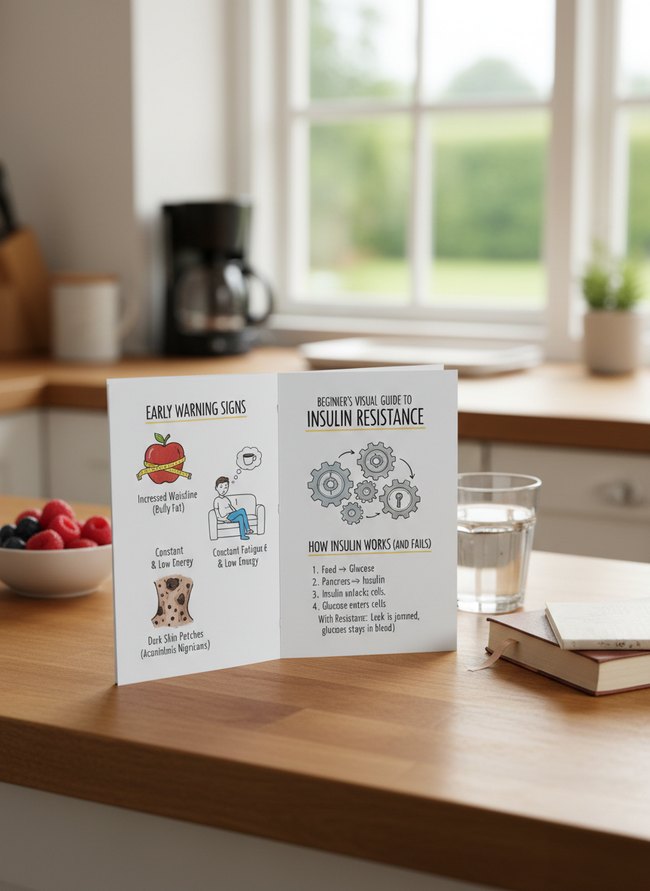
The open white booklet, positioned on a light wooden countertop, clearly illustrates early warning signs of insulin resistance. Colorful graphics on the left panel, including a red apple with a measuring tape, show common physical changes. A simple diagram with gray gears on the right panel visually explains how insulin works, making complex information understandable.
5. Blood Sugar Spike Visual
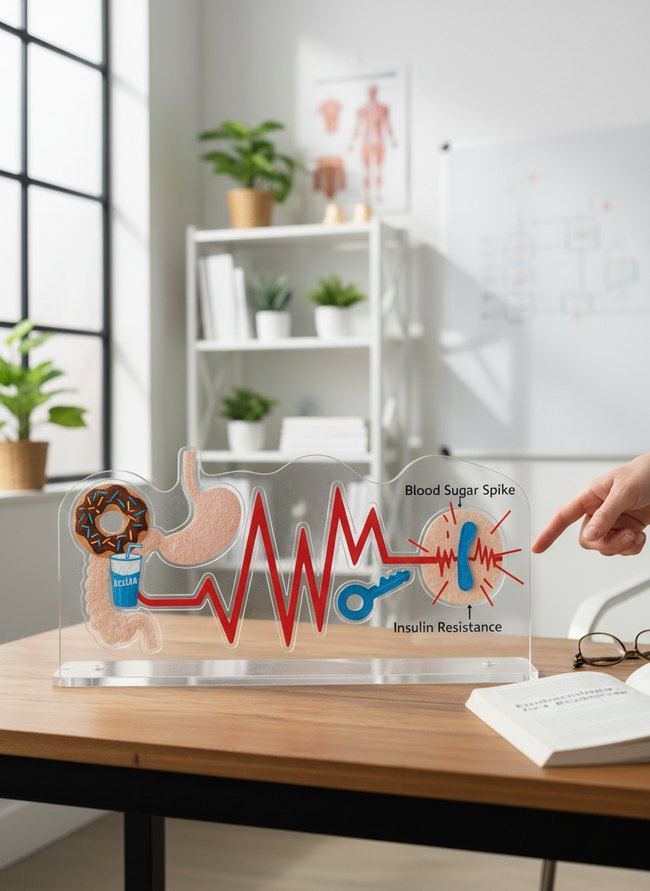
A clear acrylic display stands on a honey-toned wooden desk, showing a visual explanation of blood sugar spikes. Your eyes follow the red zigzag line representing a blood sugar spike, starting from a brown frosted donut and blue soda cup. The red line travels across the clear panel to a circular, skin-toned cell with a blue key stuck inside, illustrating insulin resistance explained effectively.
6. Muscle Cell Insulin Response
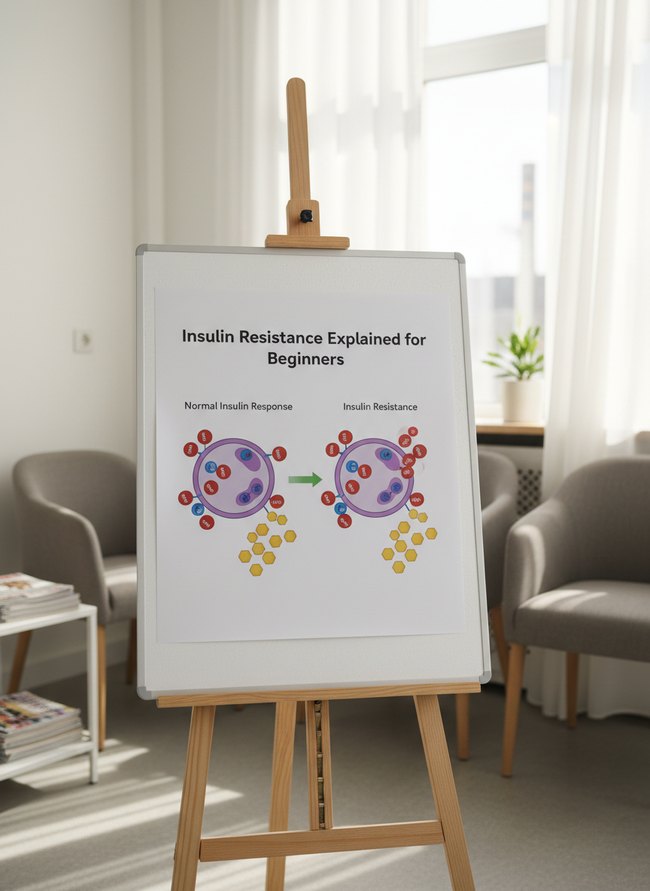
A white easel displays a printed diagram illustrating insulin resistance visually. The diagram shows two purple circular cells; one demonstrates normal insulin response with blue insulin receptors accepting yellow glucose molecules, the other depicts insulin resistance where red receptors block glucose entry. The visual comparison clearly highlights the difference between healthy cell function and insulin resistance.
7. Fat Cell Storage Mechanism
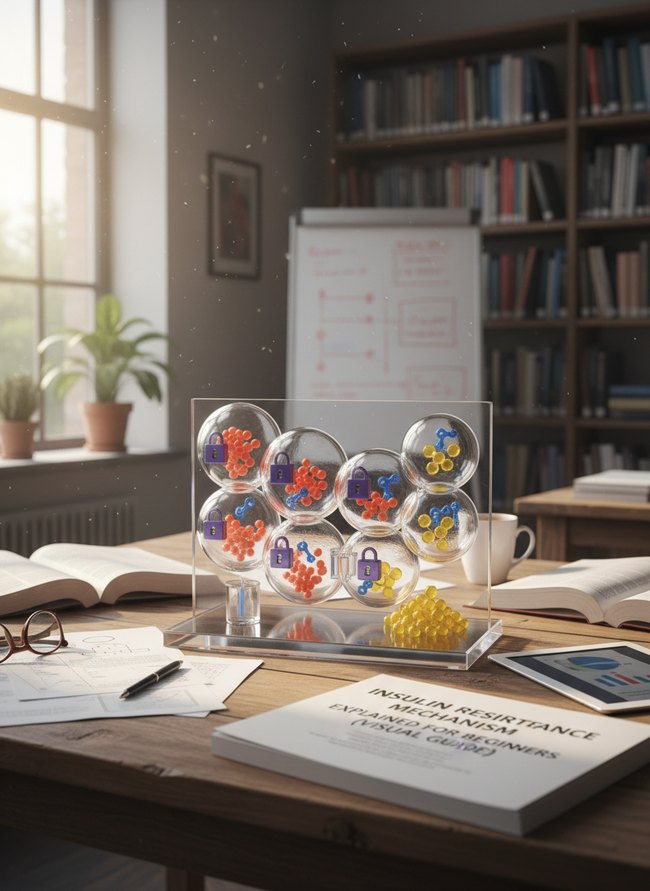
Clear acrylic spheres form a display on the wooden desktop, visually representing how a fat cell storage mechanism works. Small red and yellow beads, along with blue key shapes and purple padlock icons, fill individual clear globes, showing how insulin resistance impacts your body’s energy use. A white book titled “Insulin Resistance Explained” rests on the dark wood surface, providing further information on this important topic.
8. Pancreas Insulin Production
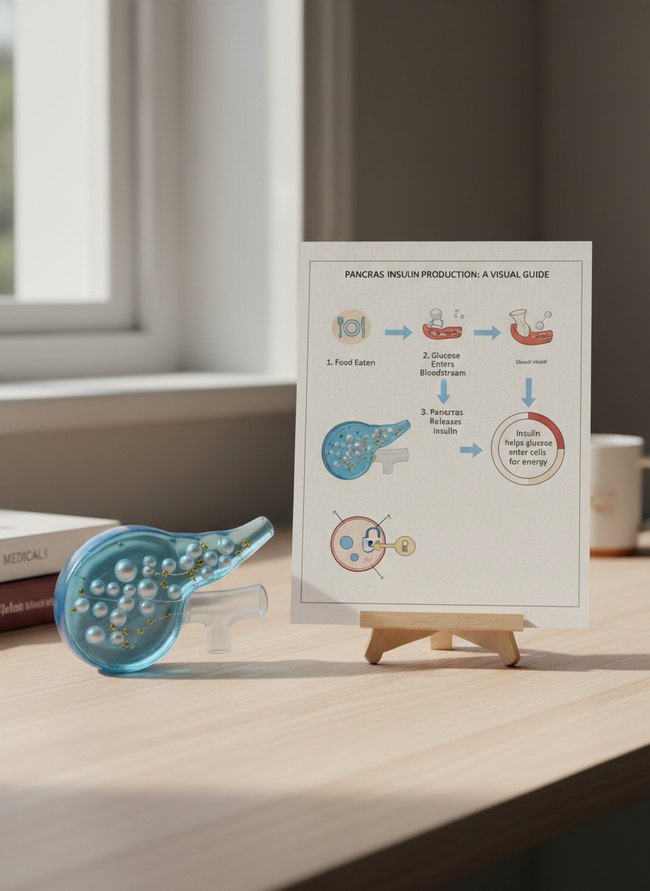
A clear acrylic pancreas model, filled with small white and gold beads, sits on a light wooden desk. The model helps visualize the organ’s structure, while a paper infographic on a tiny wooden easel plainly illustrates the three-step process of pancreas insulin production. The infographic simplifies a complex biological process into easily understandable stages, explaining how insulin resistance often begins with issues at this foundational level. The guide makes understanding a difficult health concept straightforward.
9. Dietary Impact Flowchart

A cork board with a white flowchart poster hangs on a bright white wall, clearly outlining the dietary causes of insulin resistance. The poster’s dark text and simple diagram show how high sugar foods lead to frequent insulin spikes, which then cause cellular spikes and cellular resistance. A doctor in a white lab coat points to the flowchart, helping you understand the connection between diet and your body’s response.
10. Exercise Sensitivity Explained
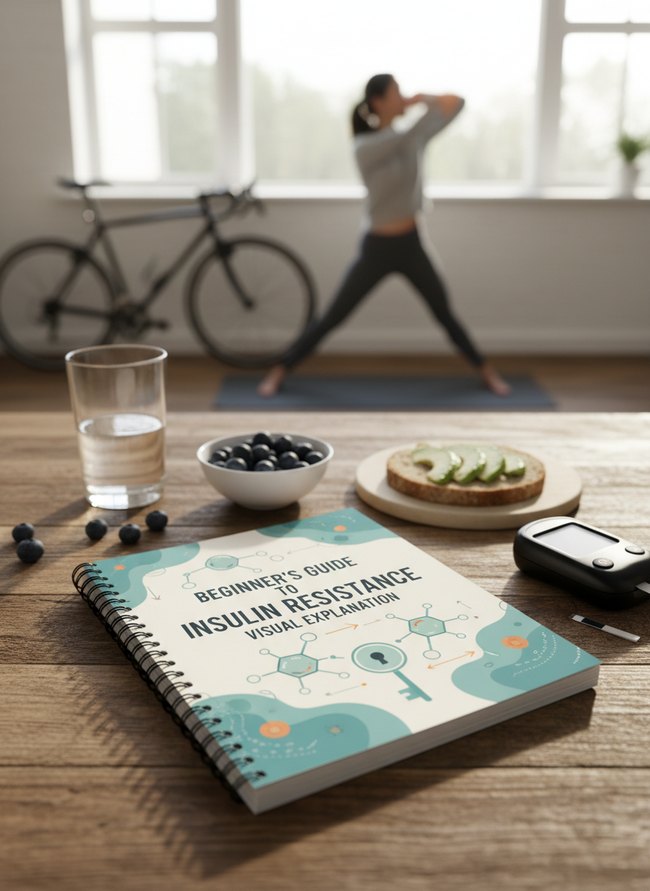
A light blue cover for a “Beginner’s Guide to Insulin Resistance Visual Explanation” rests on a rustic wooden table. The guide offers clear, step-by-step pictures to explain insulin resistance. The book provides a direct, simple path to understanding complex health ideas.
11. Genetic Predisposition Guide
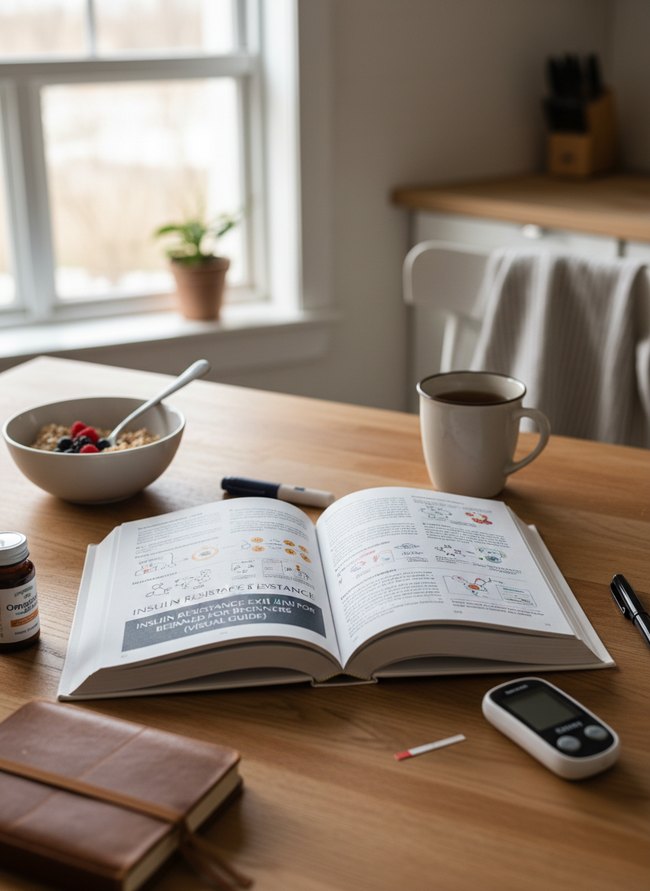
A large open book on the blonde wood table displays an “Insulin Resistance Explained for Beginners (Visual Guide)” spread, making complex medical information accessible. Clear diagrams and bold text on the crisp white pages help you understand how your body processes sugar. The visual guide offers a straightforward path to understanding insulin resistance.
12. Reversal Strategies Snapshot

A white paper titled “Reversal Strategies Snapshot” lays flat on a honey-toned wooden desk, presenting a clear flowchart of how the body handles insulin. Small, colorful diagrams like a pink pancreas and a red liver illustrate different organs involved in insulin resistance. The visual aid simplifies complex biological processes, helping readers grasp core concepts quickly.
Beyond Blood Sugar: The Unseen Hormonal Ripple Effect of Insulin Resistance
A woven rug, a soft chenille throw, or dark wood furniture all build a cozy living room, but the right combination truly changes everything in your space. Many people pick a large velvet couch first. Choosing your couch before other pieces often limits your options for smaller, more flexible items. Instead, consider beginning with a striking piece of wall art, perhaps a large abstract painting with bold orange and sapphire blue colors. A painting offers rich tones and sets a mood. Then, select an armchair or two in complementary shades, like a mustard yellow wingback chair or a charcoal gray recliner. These chairs provide comfortable seating. Next, add a weathered oak coffee table, its sturdy surface ready for mugs and books. Many designers say to match all wood tones perfectly. However, varied wood finishes, like mixing light maple with deep walnut, add depth and visual interest to a room. A tall brass floor lamp, its dome shade pointing downwards, casts a warm glow. You want your room to feel inviting. Finally, layer in textile elements: plump linen throw pillows, a chunky knit blanket draped over the armchair, and a flat-weave area rug. These soft textures make any room feel more welcoming.
Your Gut Microbiome’s Secret Role in Insulin Sensitivity (and How to Nurture It)
…Fiber-rich foods feed beneficial gut bacteria, directly improving your body’s insulin response. Many people think all carbs are bad, but complex carbohydrates from plants are actually great for your gut health. A plain white pasta noodle offers little for your gut microbes; it gets broken down too fast. However, a dense whole-wheat kernel in a fresh sourdough loaf provides indigestible fibers, a real feast for those tiny helpers inside you. These helpful bacteria then produce short-chain fatty acids, small compounds that tell your cells to listen better to insulin. You can easily add fermented foods like tangy kimchi or creamy Greek yogurt to your daily meals. These foods introduce new, helpful bacteria directly into your digestive system. Sugary drinks, on the other hand, hurt your gut lining and feed harmful bacteria. Eliminate sweet sodas for a clearer gut environment. Healthy fats, like the rich olive oil on your salad greens, also support a strong gut barrier. This strong barrier keeps bad stuff from leaking into your bloodstream, which can cause inflammation and make insulin resistance worse. Small, consistent changes to your diet make a big difference in your gut microbiome.
Which Idea Will You Try First?
That’s 12 different takes on insulin resistance explained. The best ideas above are usually the smallest moves — one material, one layout shift, one piece of furniture in the right place. Pick whichever room feels closest to your space and start there before tackling the rest.
Found an idea worth keeping? Save this post to your Pinterest board so it’s waiting for you when you’re ready to start your own project.