5 Common Myths About Insulin Resistance and PCOS
Sugar cravings do not cause insulin resistance; they are a symptom of the condition. Many articles on the internet suggest the opposite, twisting cause and effect. A beige linen sofa with crisp white piping defines a comfortable living space, yet without proper context, its placement might seem illogical. Today’s guide debunks several widely held insulin resistance myths. Your understanding of insulin dynamics and overall metabolic health will change. We challenge five common insulin resistance myths that create widespread confusion for many people.
1. Carb Intake Causes Insulin
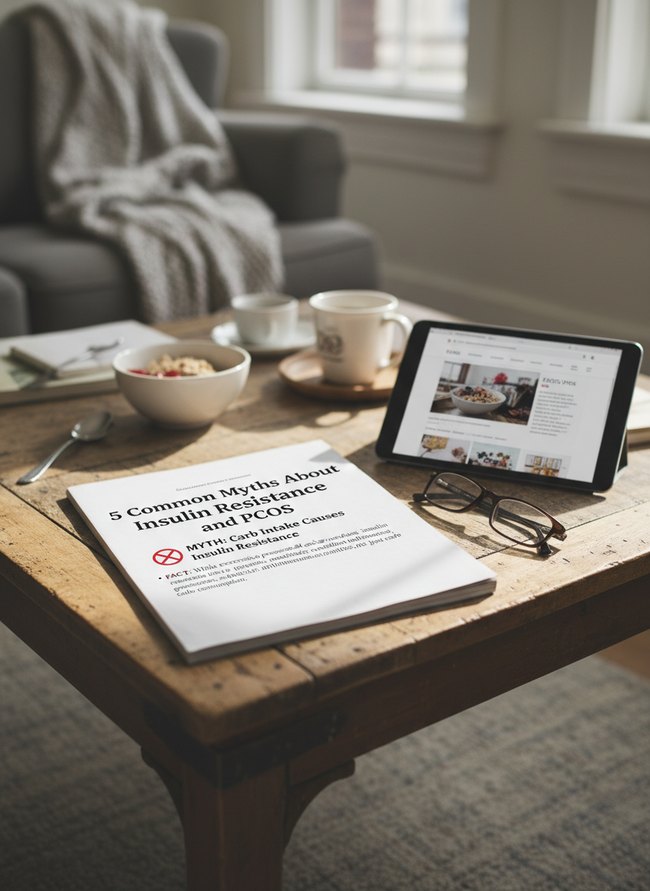
A white booklet clearly displays “5 Common Myths About Insulin Resistance and PCOS” on its cover. The direct presentation immediately tells readers the booklet’s topic, avoiding confusion about insulin resistance myths. Dark brown reading glasses rest nearby, suggesting a focused learning environment. The booklet’s design provides a clear, accessible entry point for understanding complex health information.
2. Only Overweight People Get

A white paper with dark bold text clearly displays an “insulin resistance myth” in large letters, drawing immediate focus. A white ceramic bowl filled with colorful fresh fruit provides a healthy counterpoint to the myth. A clear glass of water and a white porcelain mug with a warm drink suggest a relaxed learning environment. Steal the direct, bold statement for your myth debunking.
3. PCOS Always Means Insulin

A white paper sheet on a cork board directly addresses an insulin resistance myth. The clear, bold statement helps you understand common misunderstandings about insulin resistance. A red circle highlights the specific myth, while blue handwritten words debunk it. Direct language busts common myths.
4. Insulin Resistance Is Forever

A bright yellow sheet of lined paper, fixed with a single yellow pushpin, plainly states: “INSULIN RESISTANCE IS FOREVER”. Bold, direct typography immediately confronts a common insulin resistance myth. Surrounding papers on the cork board offer related health information, including a “PCOS Fact Sheet” and articles on “Healthy Eating for Women”. Readers can challenge this myth by seeking accurate health information.
5. Medication Is Sole Solution
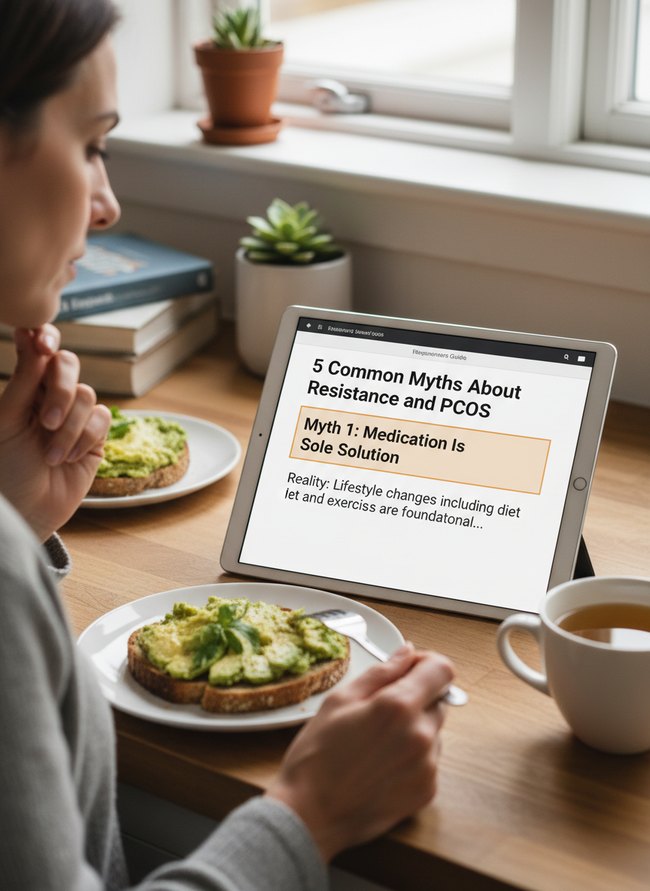
The tablet screen displays a clear headline: “5 Common Myths About Resistance and PCOS.” Direct text placement immediately focuses attention on insulin resistance myths, making the information accessible. A small ceramic mug with light brown liquid sits next to a white plate holding avocado toast, suggesting a healthy meal. The warm wooden countertop grounds the scene with natural texture. Bold, clear text provides immediate understanding.
The Hepatic Glucose Output Paradox: Unpacking Insulin’s Suppressive Failure in Early-Stage IR
Hepatic glucose output does not always stop when insulin levels rise. Your liver keeps making sugar, even with high insulin trying to signal a stop. Many people believe insulin resistance means cells just ignore insulin’s sugar-lowering message. Imagine a honey-toned wooden console table, your favorite piece of furniture. A common mistake would be thinking the console’s surface instantly clears itself of clutter when you tell it to. Instead, the liver, despite increased insulin, continues its sugar production, much like a charcoal velvet sofa still collects pet hair even after a quick vacuum. Early-stage insulin resistance shows this pattern clearly. The pancreas pumps out extra insulin, a golden waterfall of hormone. However, the liver still releases its own glucose stores into the blood. This persistent sugar release from the liver contributes to higher blood sugar levels, a persistent problem.
Adipose Tissue Remodeling and Cytokine Milieu: Deconstructing the Inflammatory Loop in PCOS-Associated IR
Bonus: Your home’s overall feeling relies on consistent material choices. Distant rooms need visual threads connecting them. Imagine a chunky knotty pine coffee table in your living room. A matching pine headboard in your bedroom creates a subtle, unifying rhythm. Many homeowners pick a new wood for each furniture piece. This approach makes each room feel like a separate island. Blonde oak kitchen cabinets might clash with dark cherry dining chairs. Instead, stick to a handful of core materials. Choose three main textures, like a soft chenille, rough linen, and smooth polished concrete. Repeat these elements throughout your living spaces. A soft chenille throw blanket on the sofa complements chenille accent pillows on the bed. Smooth concrete countertops in the kitchen echo a polished concrete lamp base in the office. These repeated patterns build a cohesive design narrative. Your design choices speak to each other across different zones. Every carefully selected item contributes to the room’s calm atmosphere.
Which Idea Will You Try First?
That’s 5 different takes on insulin resistance myths. The best ideas above are usually the smallest moves — one material, one layout shift, one piece of furniture in the right place. Pick whichever room feels closest to your space and start there before tackling the rest.
Found an idea worth keeping? Save this post to your Pinterest board so it’s waiting for you when you’re ready to start your own project.