How to Read Ovulation Test Strips When You Have PCOS
The pink box of strips on your bathroom counter holds more frustration than hope. Hormones from polycystic ovary syndrome make predicting ovulation a real headache. Many women with PCOS try ovulation test strips, but the mixed signals from the plastic wands can drive you nuts. Your body works differently; standard instructions do not always cut it. The guide breaks down how to read ovulation test strips when you have PCOS, offering clear, actionable steps for better understanding your unique cycle. We will simplify the process, helping you find your actual fertile window amidst the noise. You deserve straightforward answers, not more guesswork, from the tiny white strips. Let’s get this figured out.
1. Baseline PCOS Strip Reading
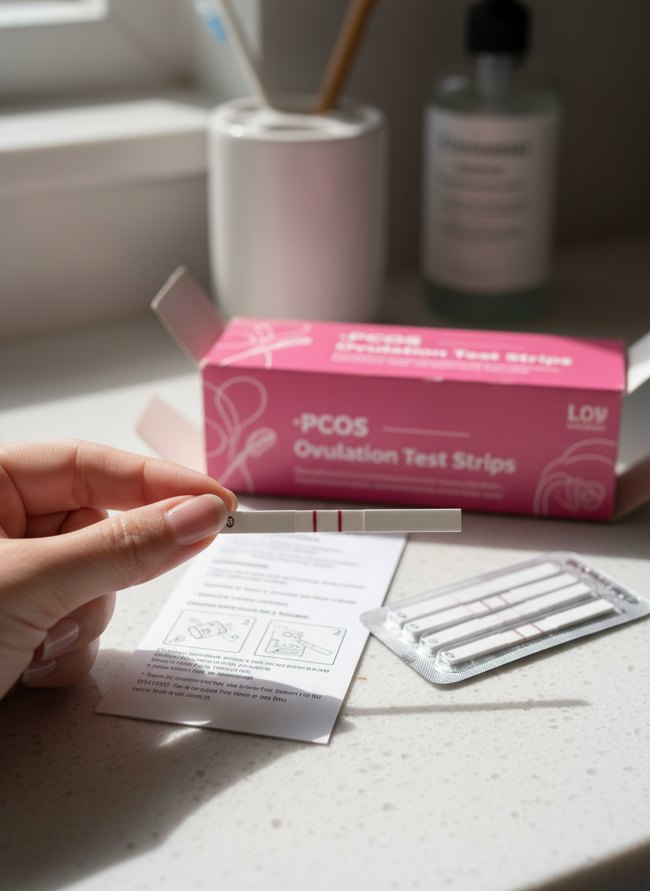
A woman’s hand holds a white ovulation test strip with two faint red lines, indicating a baseline reading. You compare the lightness of the bottom test line to the top control line to track changes. If the test line never darkens beyond the control line, the strip suggests you might have PCOS.
2. Faint Line Ovulation Interpretation
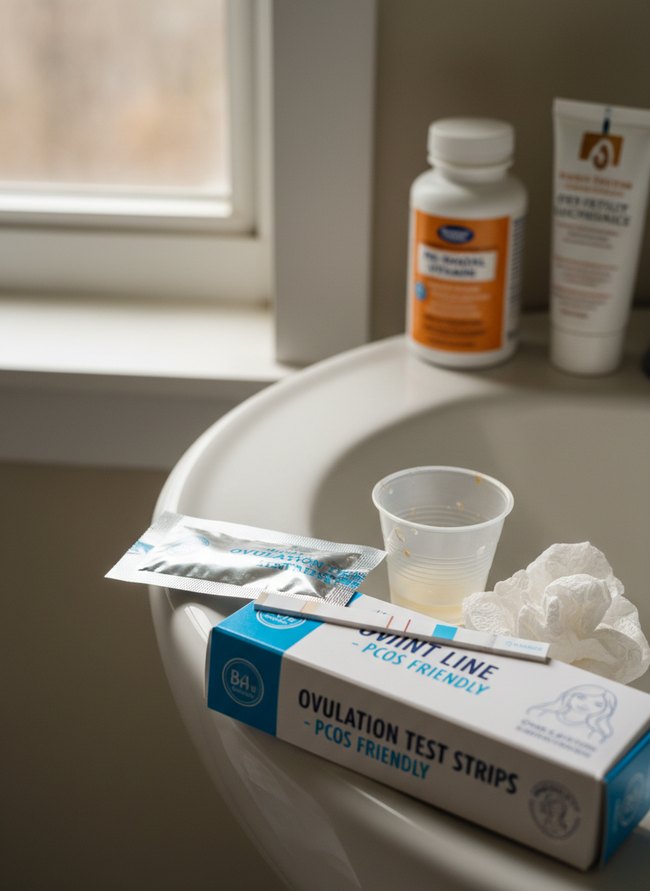
A faint control line on an ovulation test strip shows a lighter color than the test line, indicating a negative result. The blue and white box of ovulation test strips lies on a white sink, near a small plastic cup holding a yellow liquid. A test line that is as dark or darker than the control line indicates a positive reading.
3. Peak LH Surge Identification
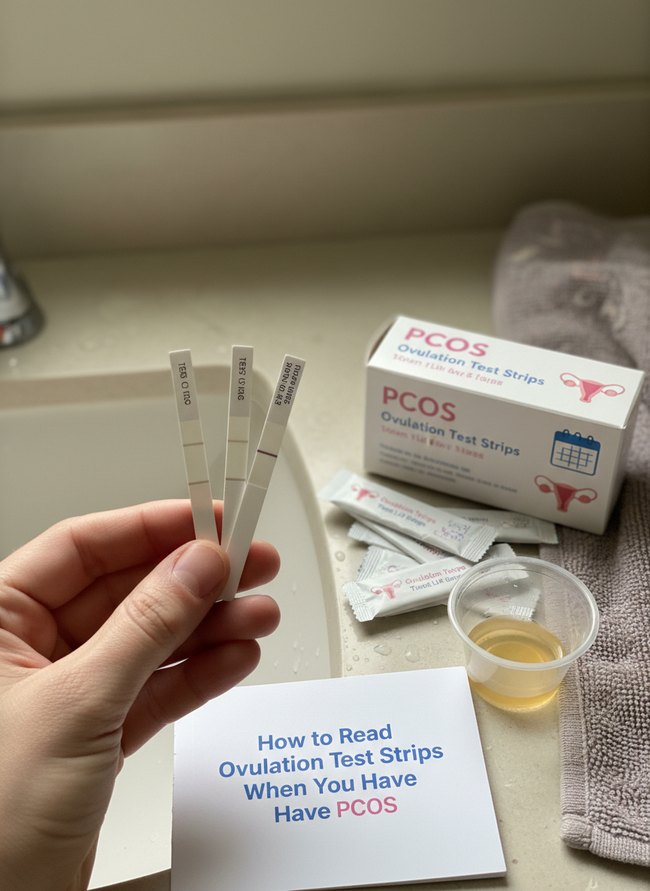
Three white plastic ovulation test strips show different test line strengths. The darkest purple test line on the third strip indicates a peak LH surge, signaling ovulation. Compare your test strip’s color to other strips to find your darkest line.
4. Post-Peak Ovulation Tracking
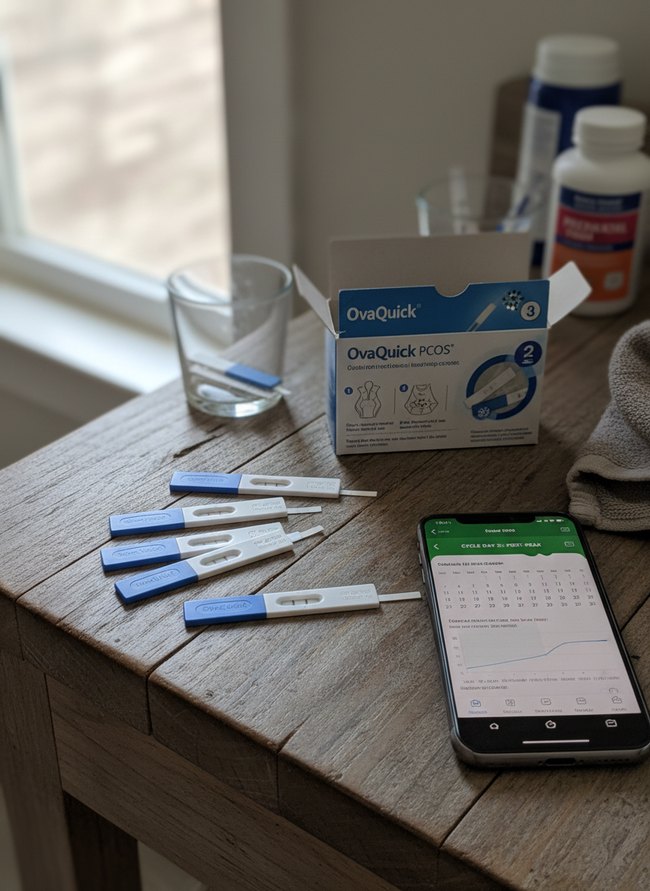
Several white and blue ovulation test strips show faint lines on a rustic wooden table. Ovulation test strips for PCOS help track hormone changes after peak fertility. Users compare test strip results to a phone calendar to understand their cycle. Keep testing for a few days past peak.
5. PCOS Irregular Cycle Analysis
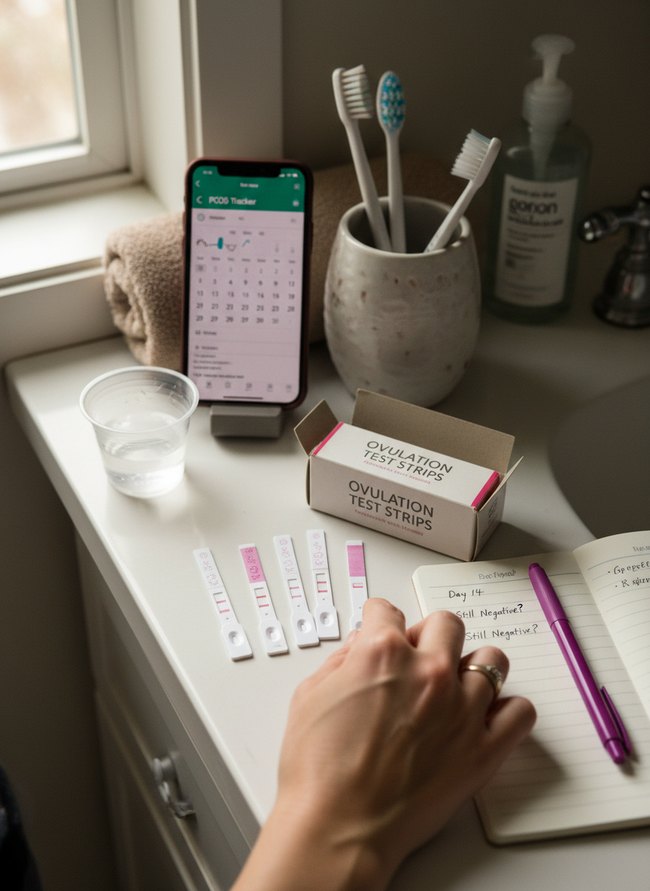
A woman’s hand holds a white ovulation test strip with a pale pink control line, showing a negative result on a white countertop. Several used ovulation test strips with varying pink line intensities lie beside an open cardboard box of ovulation test strips. Visual cues help analyze ovulation test strips for PCOS. Track results carefully in a small notebook like the one shown, noting each day’s outcome.
6. Multiphasic Pattern Ovulation Detection
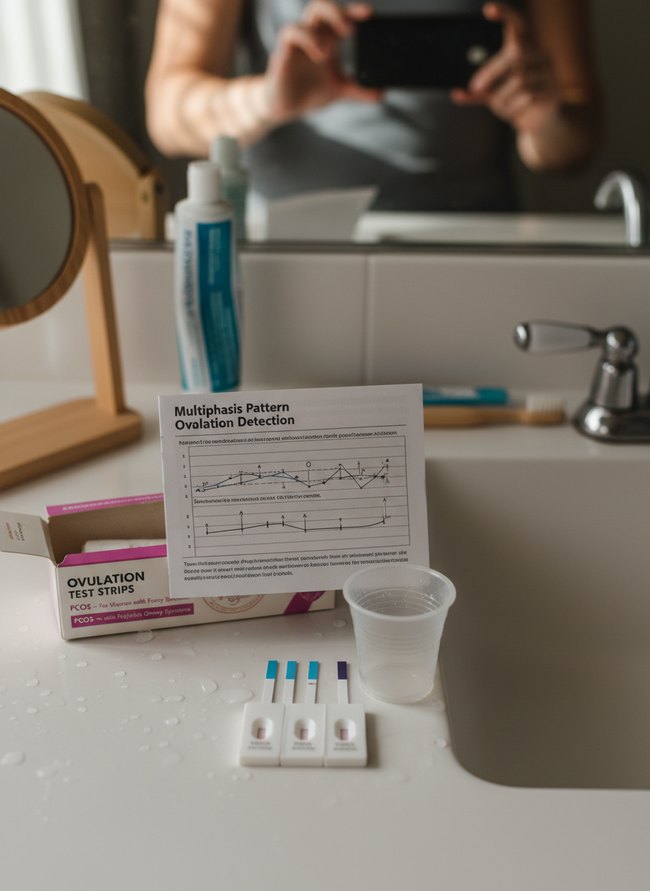
A printed instruction sheet displays a black-and-white graph showing a multiphasic ovulation pattern. The detailed graph helps you understand how your hormone levels change over several days. You should carefully compare your ovulation test strips with the patterns shown on the instruction sheet.
7. Daily Strip Comparison Method
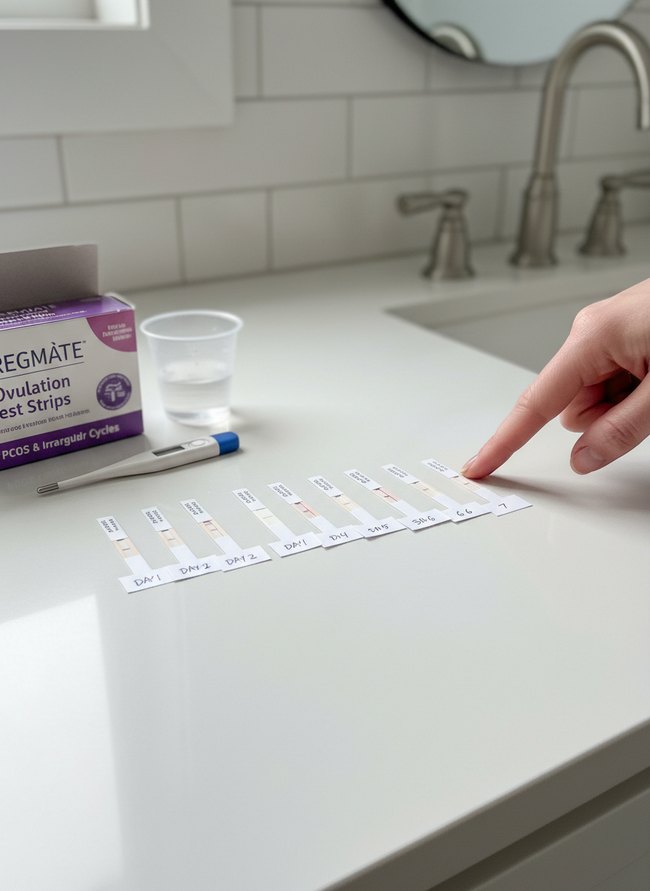
The row of white paper ovulation test strips with handwritten labels shows a clear progression of line darkness over several days. You can easily track daily hormone changes by lining up the strips on a clean, light-colored countertop. Comparing faint pink lines across multiple days helps you spot your ovulation window even with irregular PCOS cycles.
8. Early Morning Test Protocol
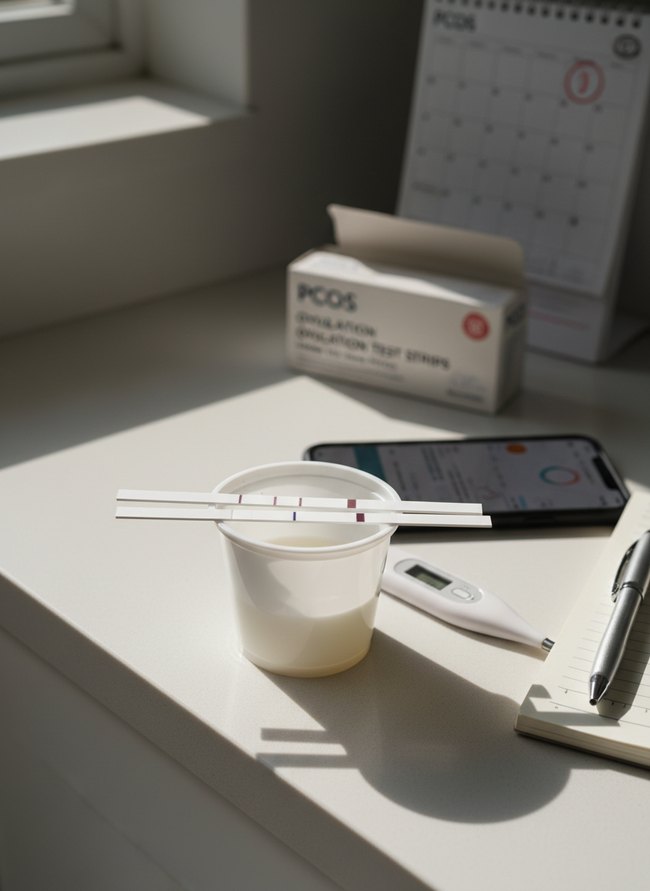
Two white ovulation test strips rest across a small white plastic cup, showing clear purple lines. Ovulation test strips provide the most accurate result when tested first thing in the morning. Collect the urine sample in a clean, dry cup.
9. Diluted Urine Result Clarification
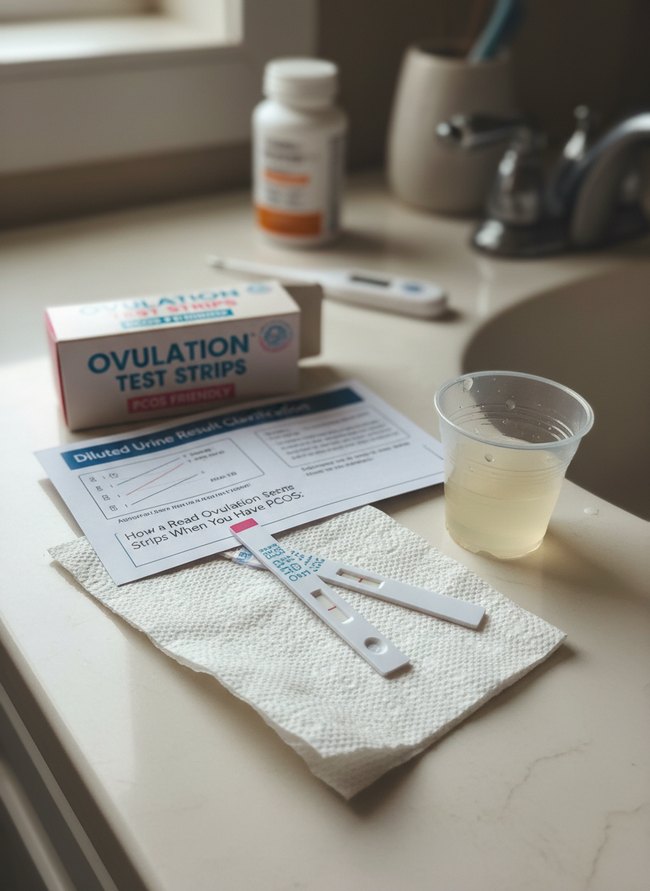
Two white plastic ovulation test strips rest on a crumpled white paper towel, showing faint red lines. Paper instructions explain how to read ovulation test strips when you have PCOS, especially with diluted urine. Concentrated urine provides the most accurate results.
10. Consistent Testing Timeframe
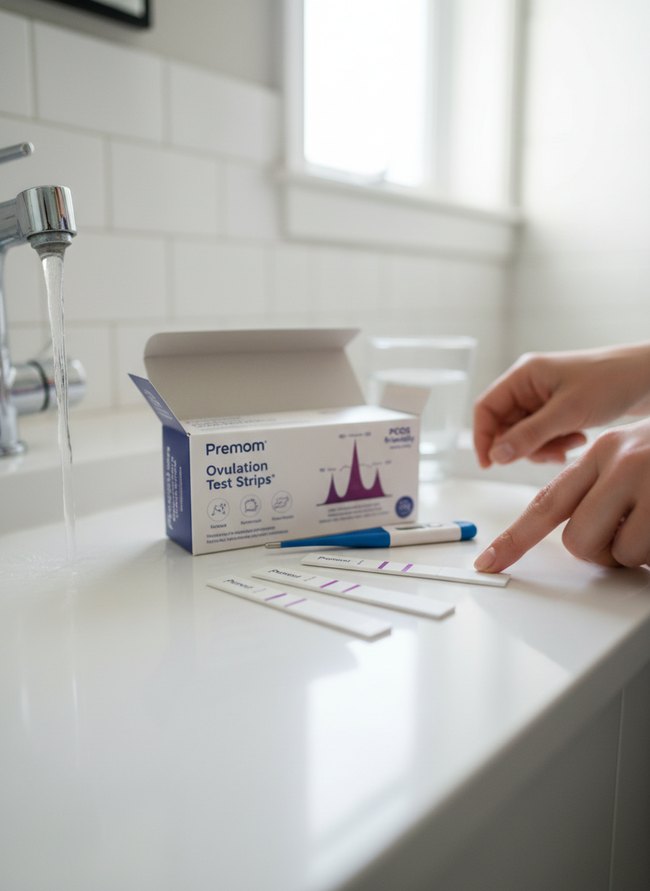
White paper ovulation test strips lay flat on a smooth countertop with purple indicator lines. A woman’s fingers gently point to one of the three paper strips, showing the result. Test ovulation test strips for PCOS at the same time each day for accurate readings.
11. Negative Result Ovulation Insight
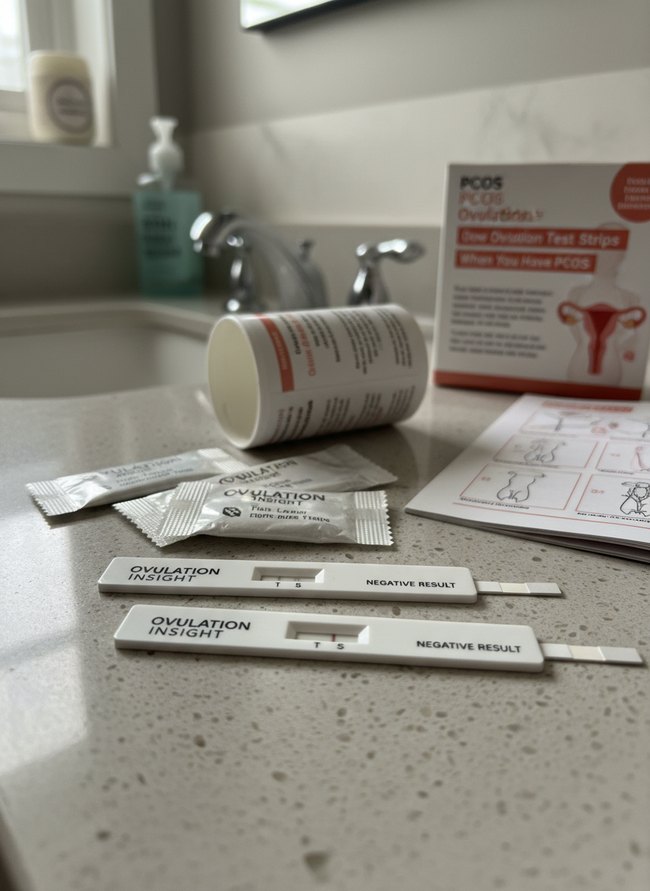
Two white ovulation test strips lie flat on a speckled gray countertop, each showing a single faint pink control line and the clear words “NEGATIVE RESULT.” A negative test result means the body is not experiencing its luteinizing hormone surge right now. You should continue testing daily to track your fertility cycle.
12. Progressive Line Darkening
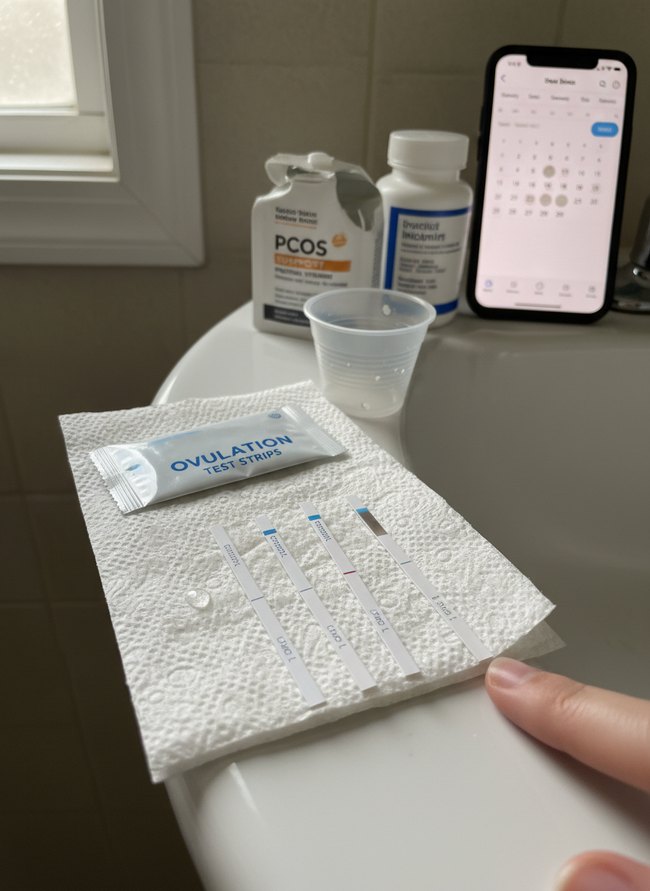
Four white ovulation test strips show a clear progression of line darkening on a textured paper towel. The strip on the far right displays a dark gray test line, indicating a positive result. Tracking ovulation test strips with PCOS helps identify a fertile window.
Why My Strips Never Look ‘Positive’ (Even When I Know I Should Be Ovulating)
White porcelain strips often show a pale, blurry line, leaving many women confused about their ovulation test strips PCOS results. Most people assume a dark purple test line means a positive result, just like with a home pregnancy check. However, that standard advice often misses the mark for women with polycystic ovary syndrome. Your body likely has higher baseline luteinizing hormone (LH) levels, which causes those persistent faint lines. A golden oak kitchen counter provides a stable surface for comparing your daily tests.
Many women keep testing until they see a super dark line, wasting many precious strips. Instead, compare each new pink test line to the previous day’s strip. Look for a true, noticeable jump in color intensity. A small stack of dried plastic strips, perhaps held together with a silver paperclip, offers a visual record. The darkest line in your personal sequence is your actual LH surge. That specific strip shows the moment your body prepares to release an egg.
The ‘Shadow Line’ Dilemma: Is This a True Positive or Just My PCOS Hormones Messing With Me?
Many women believe a faint line on an ovulation test strip means a possible positive. Traditional advice often suggests any line at all indicates luteinizing hormone presence. Your dusty teal test strip might show a light gray mark, leading to confusion. This approach works for women with typical hormone patterns, but it truly misleads those with polycystic ovarian syndrome.
PCOS often causes persistently elevated baseline LH levels, which creates those frustrating “shadow lines” on ovulation test strips. A true positive result requires a test line as dark, or darker, than the control line. You are looking for a bold indigo stripe, not a whisper of charcoal. Most people keep testing until they see any line, but this method wastes valuable strips and causes unnecessary stress.
Instead, track your progress daily, comparing each new test to the previous day’s strip. Place the old plastic strips on a clean white countertop to see the subtle differences. Your goal is to identify a clear, dark jump in line intensity. A sustained dark line, appearing for two or three days, often signals an actual ovulation surge. Focus on the sharp, visible contrast between the two painted lines, not just the mere appearance of a second mark. This specific method helps you pinpoint your fertile window more accurately, even with the complex hormonal landscape of PCOS.
Which Idea Will You Try First?
That’s 12 different takes on ovulation test strips pcos. The best ideas above are usually the smallest moves — one material, one layout shift, one piece of furniture in the right place. Pick whichever room feels closest to your space and start there before tackling the rest.
Found an idea worth keeping? Save this post to your Pinterest board so it’s waiting for you when you’re ready to start your own project.