6 TTC Mistakes Women With PCOS Often Make
A thick brown envelope arrives, filled with bills, landing on the dark wooden table with a soft thud. Your heart sinks a little, a familiar ache for something else, something bigger than just monthly expenses, weighing on your chest. Many women understand that quiet, heavy longing for a tiny crib in the corner, a small cotton onesie hanging on a closet door. Frustration builds when conception feels like a puzzle with missing pieces, especially with a PCOS diagnosis. The article points out common TTC mistakes PCOS women often make, offering practical, concrete steps. You will discover practical changes for navigating your fertility journey, understanding how to improve your chances with PCOS. Let’s make sure your journey moves forward with informed confidence.
1. Neglecting Stress Management

A woman sits at a cluttered desk, her hands pressed to her temples, showing the deep strain of neglecting stress management. Various pill bottles, crumpled papers, and an open laptop surround her, suggesting a chaotic environment that adds to her burden. A purple yoga mat lays rolled on the wooden floor beside her, a clear reminder of a healthy practice left untouched.
2. Focusing Only On Ovulation
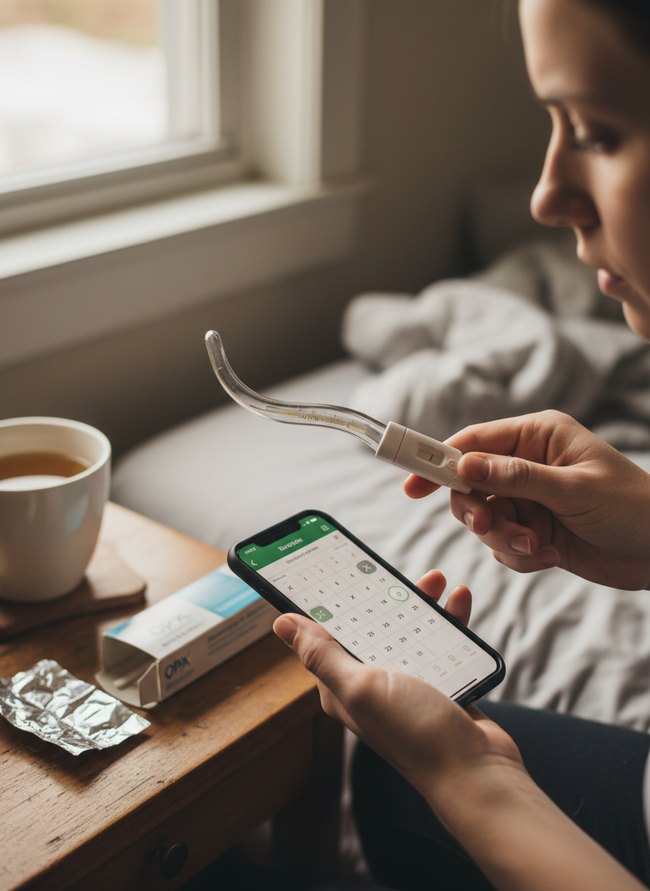
A woman holds a small, curved thermometer, preparing to track her body temperature. Her left hand grips a black smartphone displaying a calendar app with marked dates, showing how monitoring ovulation can be a common ttc mistakes pcos. A white ceramic mug filled with amber tea rests on a warm wooden nightstand, offering comfort during this detailed process.
3. Delaying Professional Guidance
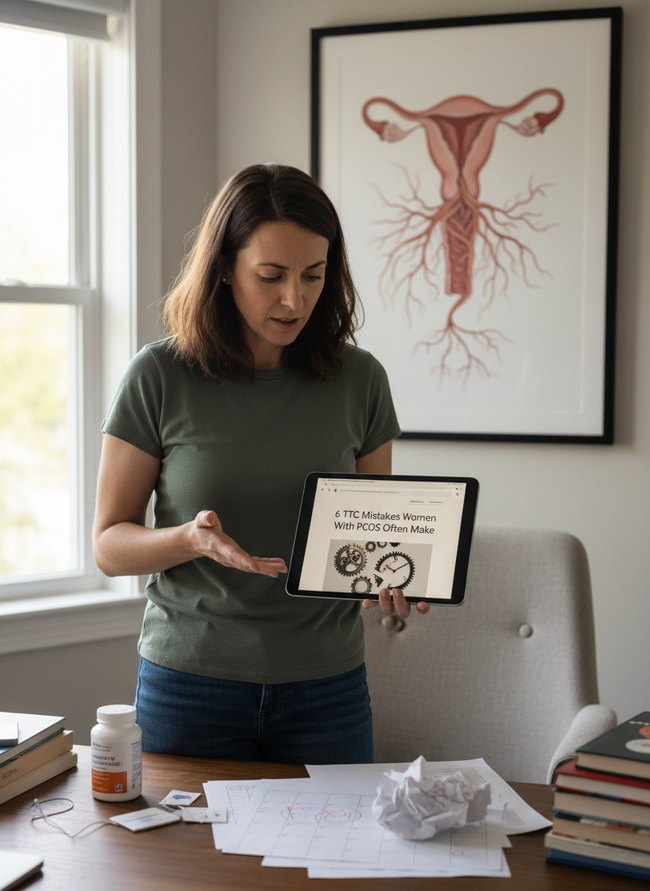
A woman in a dark olive green t-shirt holds a black digital tablet, displaying a title about ttc mistakes pcos. Her focused expression suggests she is explaining how to avoid common pitfalls. The image highlights the importance of seeking early professional guidance.
Mistake #3: Relying Solely on Ovulation Predictor Kits (OPKs) – And Why That Can Be Misleading With PCOS
A single high LH reading on an ovulation predictor kit (OPK) does not confirm ovulation for women with PCOS. Many women with polycystic ovary syndrome have naturally high baseline Luteinizing Hormone levels, creating false positive results on those little test strips. You need to understand how your body works. A daily OPK test shows a dark purple line, suggesting a coming egg release, but a true LH surge is short and strong. Basal Body Temperature (BBT) charting gives you a second important data point. This method tracks your morning temperature, a sustained rise in temperature provides concrete proof of ovulation after the fact. A digital thermometer with two decimal places offers precise measurements. Cervical mucus changes also give clues; clear, stretchy discharge indicates high estrogen and possible fertility. You must combine tracking methods for real accuracy. Only using OPKs leaves you guessing, wasting time and emotional energy. A doctor can order blood tests for progesterone, which definitively confirms ovulation within your cycle. These blood tests offer clear medical evidence.
Mistake #4: Overlooking the Impact of Gut Health on Hormone Regulation and Ovulation
…dark stained oak floors really warm up a room. Natural textures like the chunky wool throw blanket or the woven jute rug make a big difference. Many folks think a bigger space feels more open. A small room with clever furniture actually feels grander. Your home’s feeling comes from its details. You can install a floating ash wood shelf with recessed lighting. A deep charcoal accent wall draws the eye inward. People often fill every corner. Open spaces let your mind breathe. A single large ceramic vase holds dried pampas grass. Your personal style shines through the choices you make. You can paint an old dresser a bright robin’s egg blue. A patterned throw pillow adds a pop of color. The living room is your sanctuary. A tall fiddle-leaf fig plant brings life inside. Your comfort matters most.
Which Idea Will You Try First?
That’s 3 different takes on ttc mistakes pcos. The best ideas above are usually the smallest moves — one material, one layout shift, one piece of furniture in the right place. Pick whichever room feels closest to your space and start there before tackling the rest.
Found an idea worth keeping? Save this post to your Pinterest board so it’s waiting for you when you’re ready to start your own project.