Trying to Conceive With PCOS: A Beginner’s Guide
Your body is not broken. Many women get frustrated by the extra hoops with PCOS when trying for a baby. Doctors often hand out a packet of papers and send you on your way, leaving you to sift through conflicting advice online about how to get pregnant with PCOS naturally. The path gets confusing, doesn’t it? A thick forest of different voices, different opinions, and a lot of old wives’ tales obscures the real facts. You need a clear, paved road through the woods. The guide lays out a simple, actionable plan for making that little pink line appear.
1. Holistic Cycle Regulation Plan
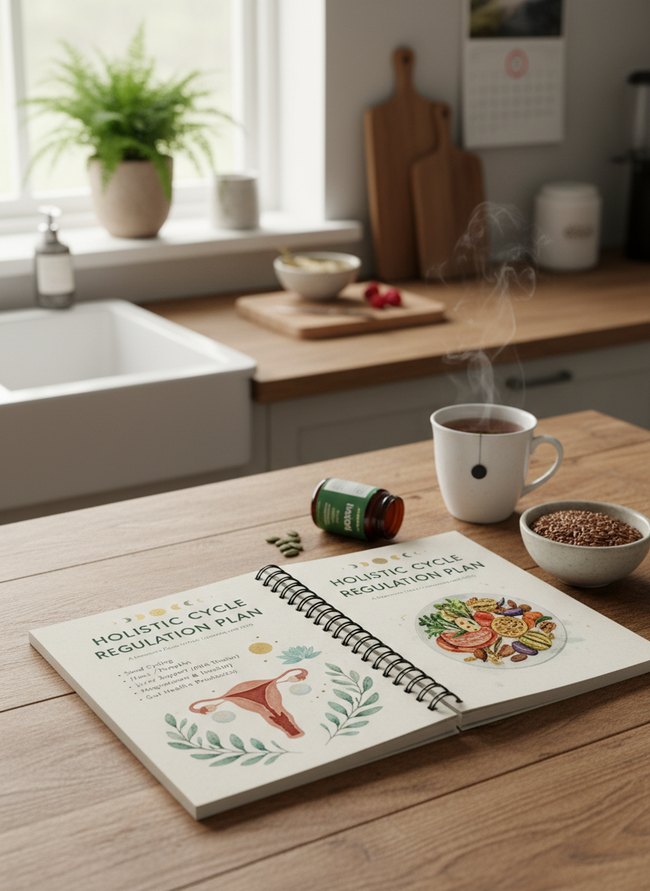
A spiral-bound “Holistic Cycle Regulation Plan” notebook lays open on a warm wooden countertop, offering a structured approach to natural PCOS conception. The pages feature a soft watercolor uterus illustration and a colorful plate of healthy foods. A clear, organized plan like this book provides guides your journey to better health and possible conception.
2. Balanced Nutrition Strategy
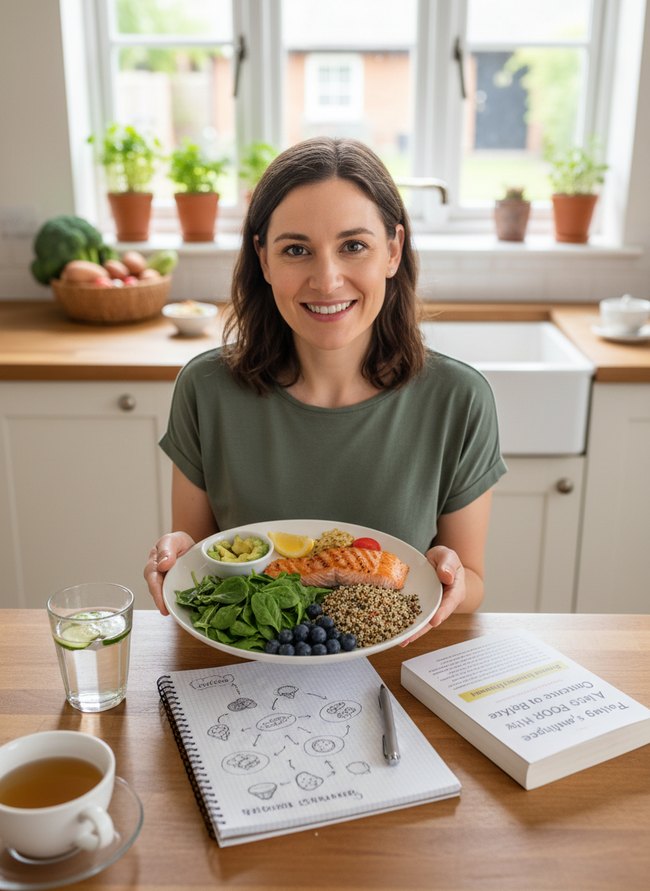
A white ceramic plate holds a colorful, balanced meal with grilled salmon, green spinach leaves, and dark blueberries. Eating a variety of whole foods is a simple way to how to get pregnant with pcos naturally. You can build healthy eating habits by picking lean protein, fresh vegetables, and fiber-rich grains for each meal.
3. Mindful Stress Reduction
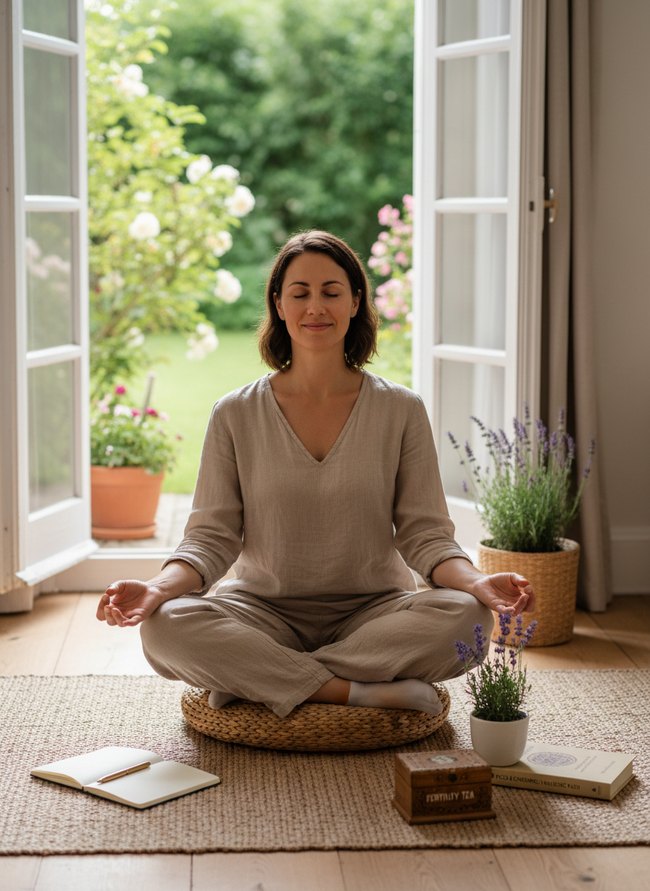
A woman sits cross-legged on a round woven mat, eyes closed in deep meditation. Her soft beige linen clothing drapes comfortably as she focuses inward to help get pregnant with PCOS naturally. Finding a quiet spot in your home to practice mindful breathing each day is a good idea.
4. Gentle Movement Routine
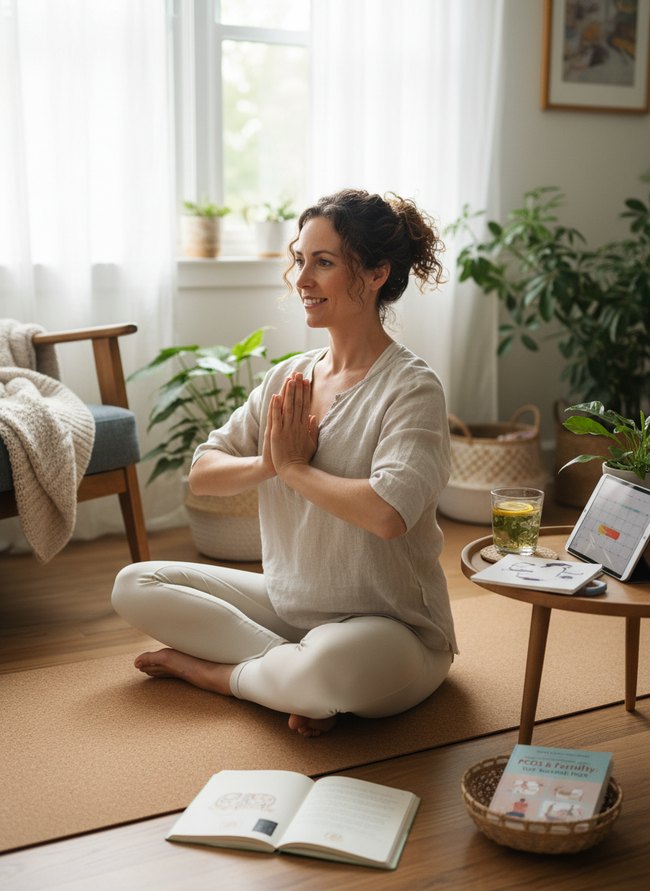
A woman sits cross-legged on a cork yoga mat with hands pressed together at her chest, showing a calm pose. Her light gray shirt and white leggings suggest comfortable clothing for movement. Gentle movements help manage PCOS symptoms and support a natural pregnancy journey.
5. Herbal Support Protocol
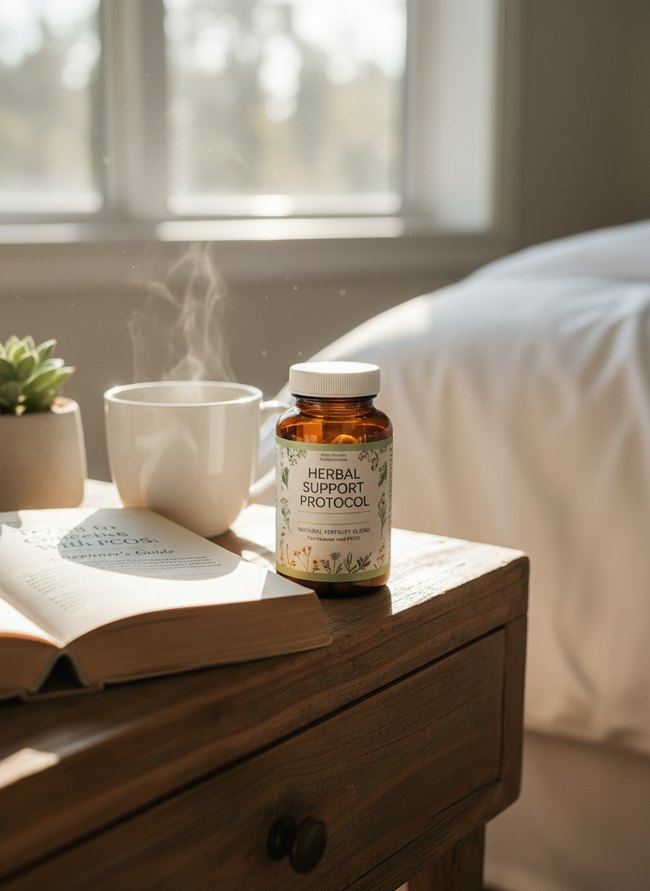
A brown glass bottle labeled “Herbal Support Protocol” stands prominently on a dark wooden nightstand, suggesting a natural approach to wellness. The bottle holds small, round pills, offering a direct method for those trying to get pregnant with PCOS naturally. Integrating herbal supplements into a daily routine can support this journey.
6. Supplement Optimization Guide
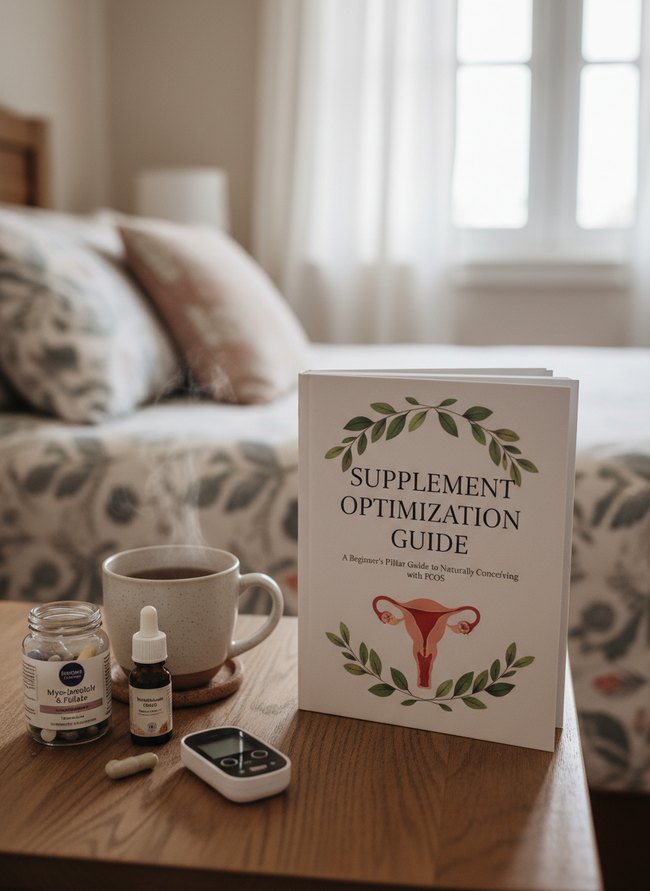
A white paperback guide book with green leaves and a red uterus drawing stands open on a light wood bedside table. The guide offers a simple path for how to get pregnant with PCOS naturally, showing you ways to support your body. Consider starting your day with a warm drink and the book to learn more about supplement optimization.
7. Environmental Toxin Detox
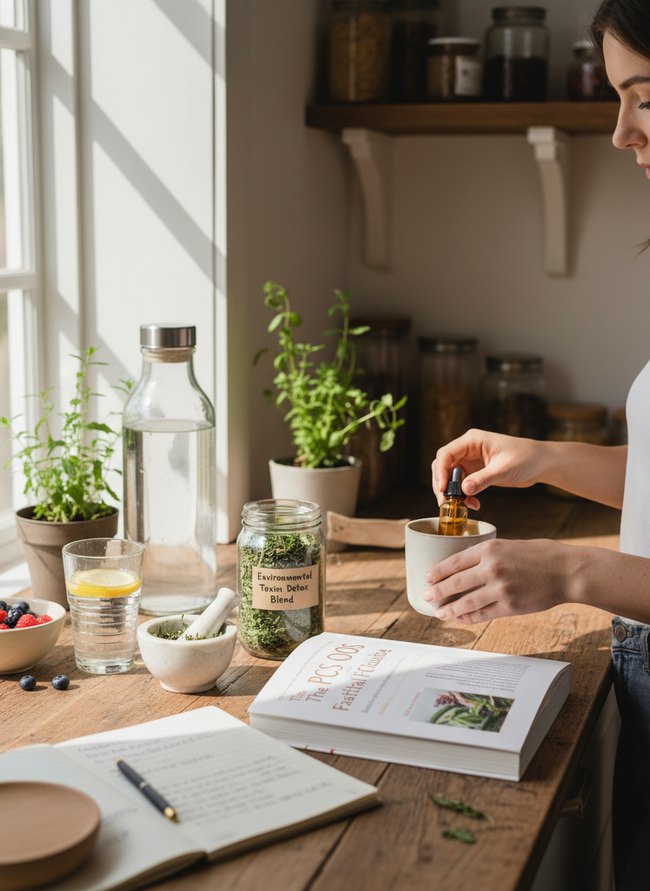
A woman’s hands add drops from a small amber bottle into a beige ceramic mug on a warm wooden countertop. A glass jar labeled “Environmental Toxin Detox Blend” sits nearby, showing how to get pregnant with PCOS naturally. Natural remedies support your body’s health.
8. Fertility Awareness Method
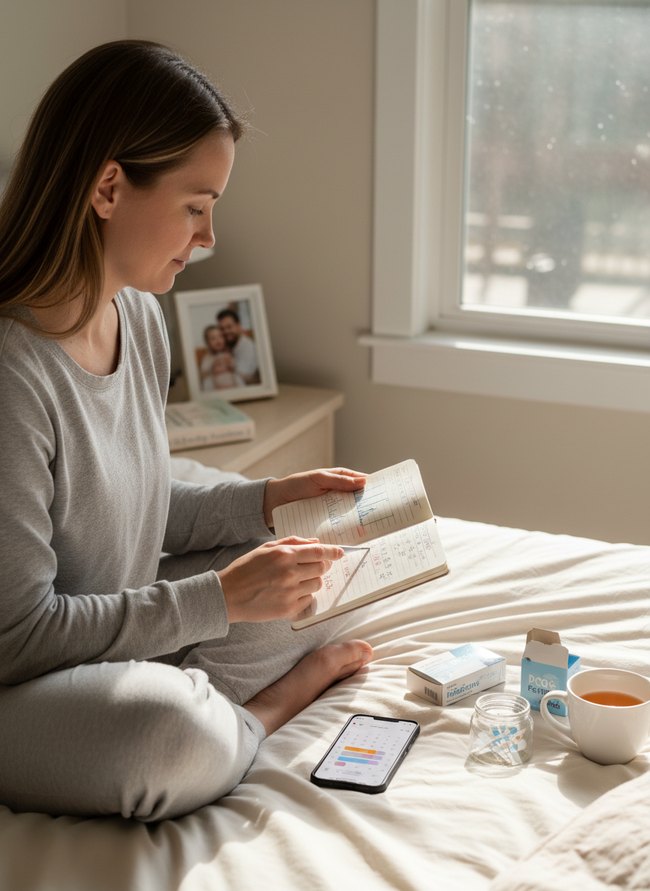
A woman in soft gray pajamas carefully writes notes in a small brown notebook, tracking her body’s signals to get pregnant with PCOS naturally. Her phone screen shows a colorful calendar, a common tool for the Fertility Awareness Method. Daily records of your cycles are essential.
9. Partner Support Integration
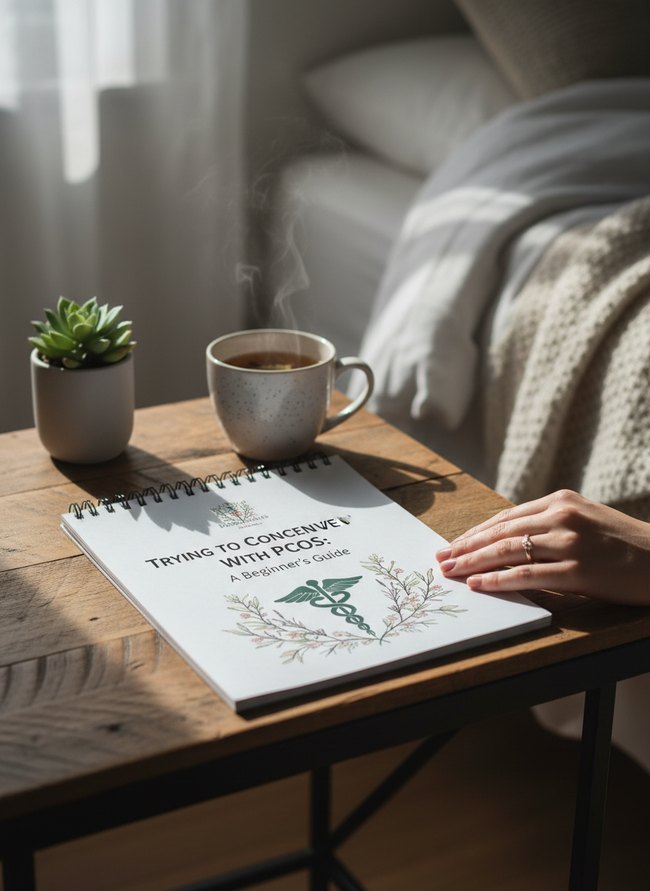
A white spiral-bound book, “Trying to Conceive With PCOS: A Beginner’s Guide,” rests on a honey-toned wooden side table. The guide offers clear information on how to get pregnant with PCOS naturally, providing valuable support. Readers should consult the book to understand how to involve a partner in their journey.
Beyond the Pinterest Board: How to Create a Cohesive Look When You’re Starting from Scratch (and Not a Design Pro)
Most people think a designer look needs lots of money and fancy training. Your new home doesn’t need a massive budget for a cohesive feel. Buying everything new at once feels like the only way for many. Instead, you can build a sharp, pulled-together space over time.
Many folks grab furniture they like, piece by random piece. This method often leaves a room feeling disjointed, like a thrift store jumble. Start with a neutral base color on your walls, perhaps a soft gray or warm beige paint. Your large anchor pieces, a charcoal sofa or a natural oak dining table, should also stay simple.
You then add splashes of personality. A deep teal throw pillow on the sofa or a bright mustard ceramic vase on the table can introduce color. Most people try to match every single item. A better way uses repeating textures or shapes across the room. A chunky knit blanket and a woven jute rug offer similar tactile appeal.
Don’t buy matching sets; they often look sterile and uninspired. Mix wood tones, like a dark walnut coffee table with a blonde wood bookshelf. Your space will gain depth and visual interest. Over time, you will create a harmonious, custom living area without professional design help.
The ‘Oops, I Bought It’ Regret: Avoiding Impulse Purchases That Don’t Fit Your Vision (or Your Budget)
Most people think buying things one by one works. They see a honey-toned wooden chair. Then a plush, charcoal sofa appears in their cart. Many folks just add individual items to their online baskets. However, this piecemeal approach often leads to a mismatched room.
Smart shoppers avoid buying random pieces. They instead map out their entire room first. Grab a large sheet of graph paper. Draw your floor plan, including all four walls. Next, sketch in all existing furniture with its precise measurements. Then, mark out new pieces you need, like a double-wide antique dresser or a new oak coffee table. This visual plan shows how everything fits. A clear plan prevents costly returns. It saves precious time too. This method keeps your spending in check. You won’t accidentally buy a king-sized bed for a tiny bedroom. Your living space will look complete and feel cohesive, not like a furniture showroom jumble.
Which Idea Will You Try First?
That’s 9 different takes on how to get pregnant with pcos naturally. The best ideas above are usually the smallest moves — one material, one layout shift, one piece of furniture in the right place. Pick whichever room feels closest to your space and start there before tackling the rest.
Found an idea worth keeping? Save this post to your Pinterest board so it’s waiting for you when you’re ready to start your own project.